WEEKLY HIGHLIGHTS 2025 FIRST HALF
Free Will
I recently attended a very interesting philosophy lecture by Professor Larry S. Temkin, entitled “Pluralism and egalitarianism”. In his lecture, Larry Temkin discussed human health and access to health care from an equality and comparative fairness perspective.
Prof. Temkin elaborated on various interesting questions, such as the conflict between equality of opportunity and the necessity of rationing in the context of scarce medical resources, and the importance of the “first come, first served” principle. He discussed the fictional scenario where a patient with a low likelihood of survival is placed on a machine to potentially save the patient’s life. Subsequently, another patient arrives at the hospital who has a much higher chance of survival, but also needs the machine that is used for the patient with a low survival chance. This is an obvious ethical dilemma, and also not a far-fetched scenario, especially during conflicts where availability of doctors and nurses, medications and medical equipment is limited.
However, the most interesting topic to me was the issue of individual responsibility to one’s own health and the question of whether acting irresponsibly with regards to one’s health should affect access to or cost of health care. In other words, should someone who “chooses” unhealthy habits receive the same care and pay the same as someone who consciously tries to make healthy choices in his or her life.
This then raises another important question – are humans actually free to choose how healthy they live, or is their behaviour towards health, or anything else for that matter, determined by their genes, social upbringing, environment, socioeconomic status etc. In other words, does free will to choose one’s behaviour truly exist?
A book recommended by one of my students, which I started to read, argues that from a scientific perspective free will does not exist.
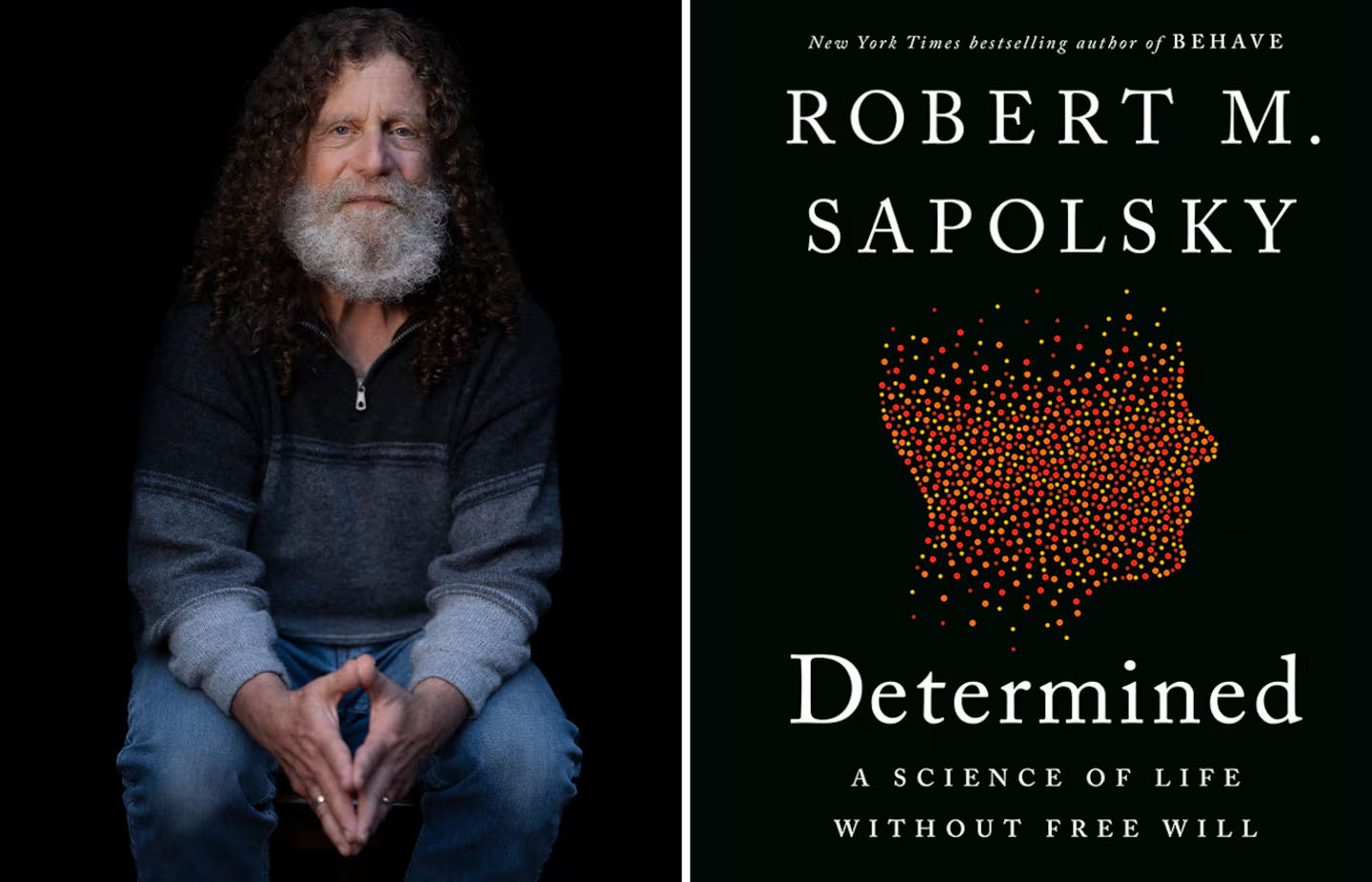
In his book “Determined, A Science of Life Without Free Will”, author and neuroscientist Robert Sapolsky argues that we have much less free will than is generally assumed and that we are highly constrained in terms of our behaviour. To substantiate this claim, he cites and explains much recent scientific evidence.
Robert Sapolsky believes that if we were to believe that we have very little free will, our lives would improve. It could for instance lead to forgiveness and better understanding between humans and for seeing “the absurdity of hating any person for anything they’ve done”.
Of note, the question of whether free will exists has never been proven or disproven and is subject to an ongoing debate between so-called determinists and compatibilists.
Determinists such as Robert Sapolsky are of the opinion that the decisions that we make are determined by the neurons in our brains. Our neurons become activated or deactivated as a result of the sum of their inputs, which in turn are ultimately determined by genetic (and epigenetic) as well as environmental factors and are not subject to free will. As such, something that occurs happens because of what became before that, and so on. In order to understand a behaviour, one needs to understand what happened seconds before the behaviour as well as minutes, days, years and even millennia before the behaviour occurred. Needless to say, the factors, or inputs, that determine our action at one time are nearly infinite, ranging from our levels of various hormones to the specific microbes in our gut (microbiota) and the metabolites they produce.
On the other hand, there are the compatibilists, who include most present day philosophers. Compatibilists believe that our actions are in fact determined, but that we nonetheless have free will.
I personally agree with a compatibilist view. On the one hand, I often find it very difficult, if not impossible, to control my will in the moment. For instance, if I have planned to go for some difficult exercise but when the time comes do not feel motivated, then there is little I can do to change my mind. It feels nearly impossible to ‘force’ myself to do something that I do not want to do.
Similarly, given the choice of a free delicious meal, most people would indulge even when they know that it would be better if they didn’t.
However, I believe strongly that we can influence our free will, not in the moment, but by building habits or structures that prevent us from having to make decisions at moments when we may be emotionally weak.
In a very insightful commentary by Dr. Alexander Horwitz on D. David Puder’s Psychiatry podcast website, I came across a couple of very fitting quotes by two contemporary philosophers:
“Daniel Dennett in response to the idea that we have no control over our biology or environment noted that autonomy is a process that initially is beyond one’s control but as time goes on, we have the opportunity to refine our activities, choices, thoughts, and attitudes. Similarly, philosopher Robert Kane has noted that free will is more than free action and concerns what he terms “self-reflection.“
And finally, “… psychiatrist Sean Spencer … believes that we have the ability to exert free will during optimal moments and not while in crisis“.
As such, while in “crisis moments” we often are incapable of doing what is best for us (or avoiding what is bad for us), we can use our willpower to create “optimal moments” during which we reflect and come up with approaches to avoid these “crisis moments”.
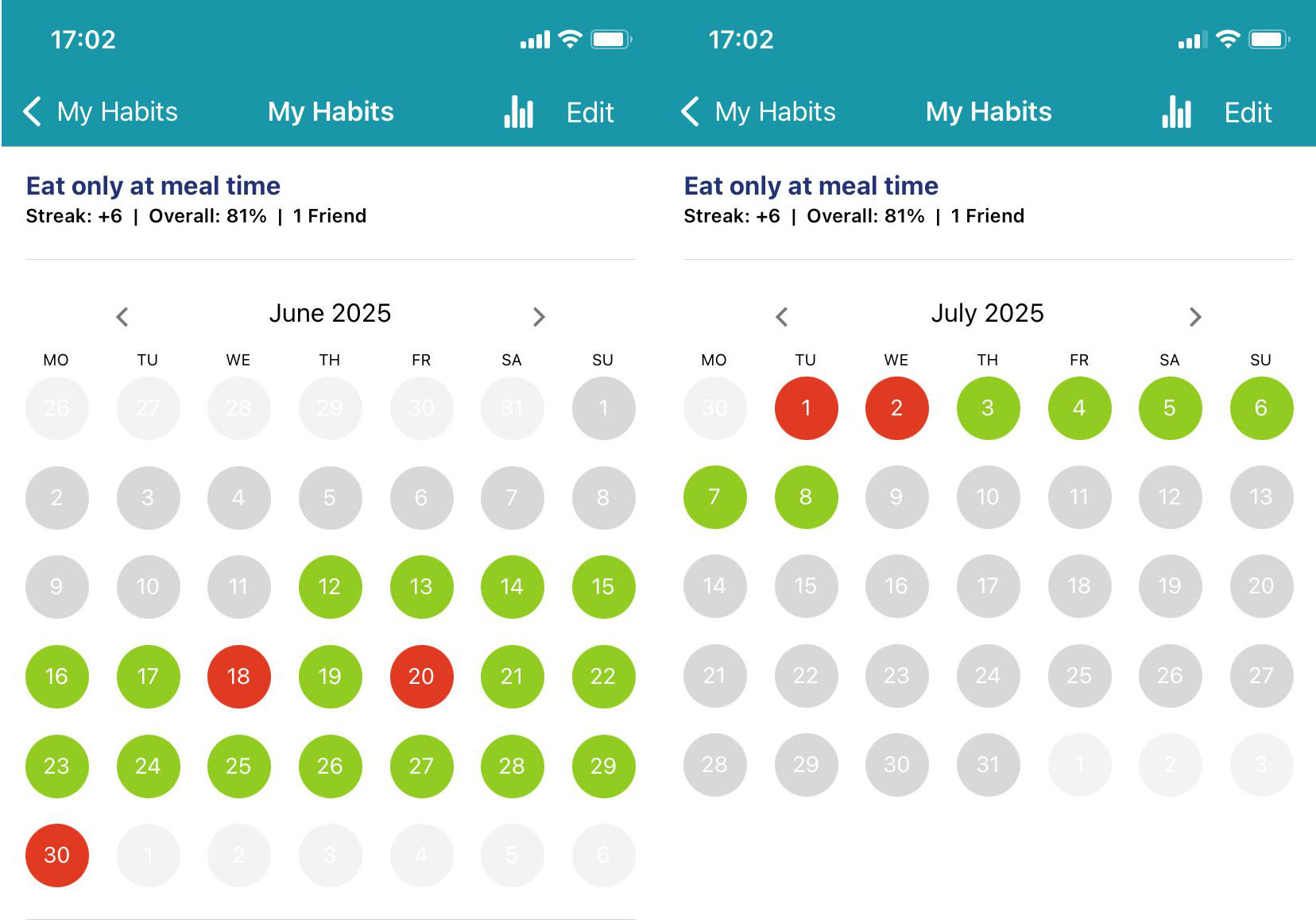
And this is precisely what I have done recently to stop myself from constantly feeling tempted to snack between meals. I committed (using my Habitshare app, which I share with my accountability partner) to only eat during my planned meal times (with the exception of being allowed to eat apples inbetween). So far, this approach has worked out well!
HIGHLIGHTS FOR WEEK OF 30 JUNE – 6 JULY
Spending time with my family
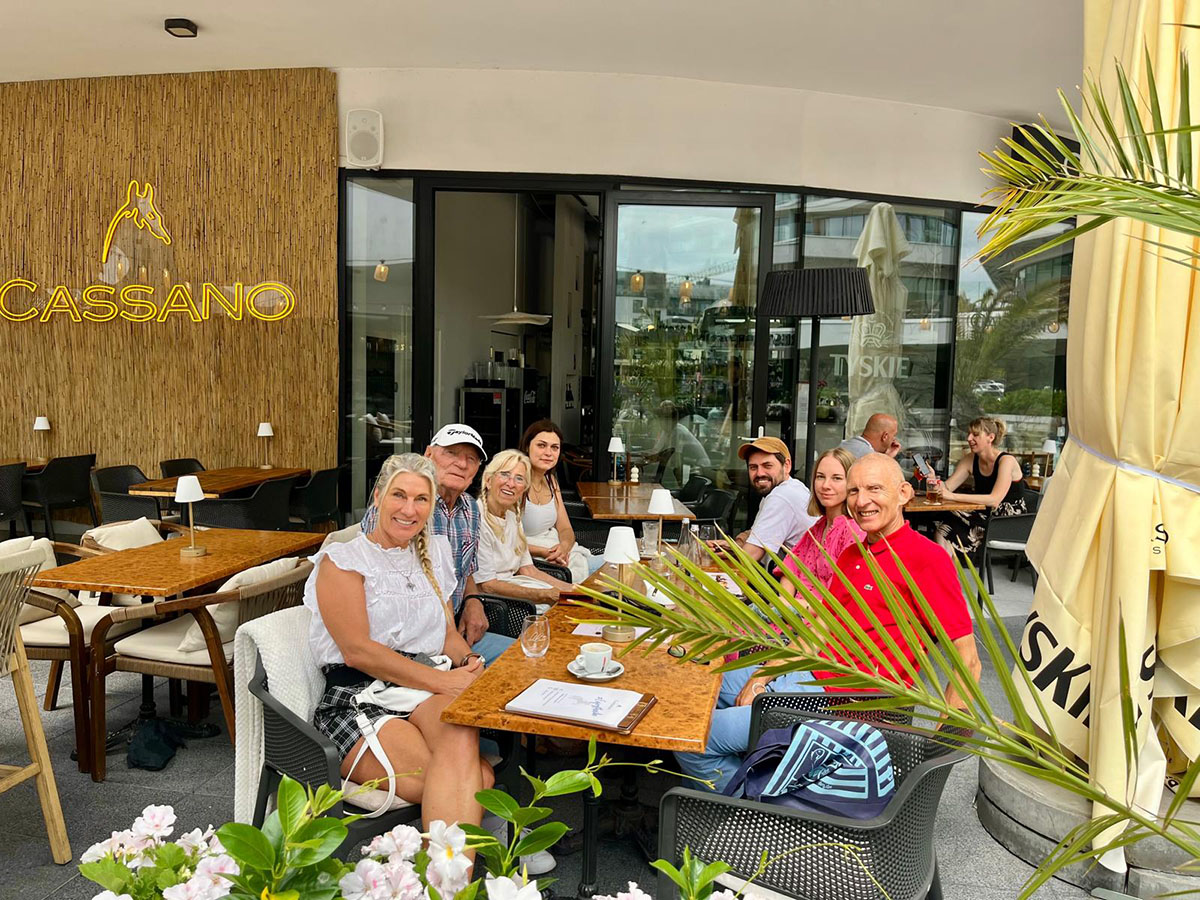
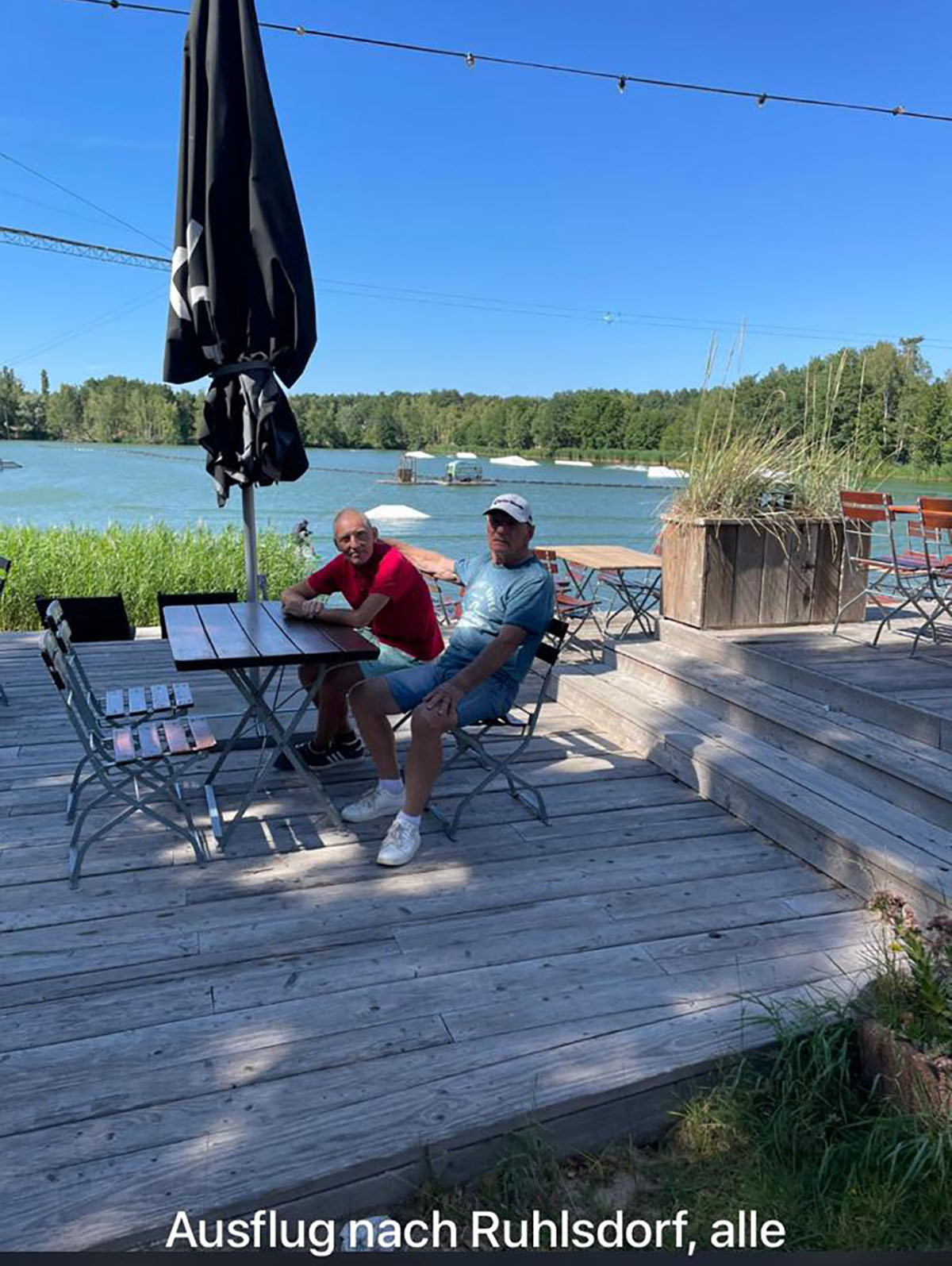
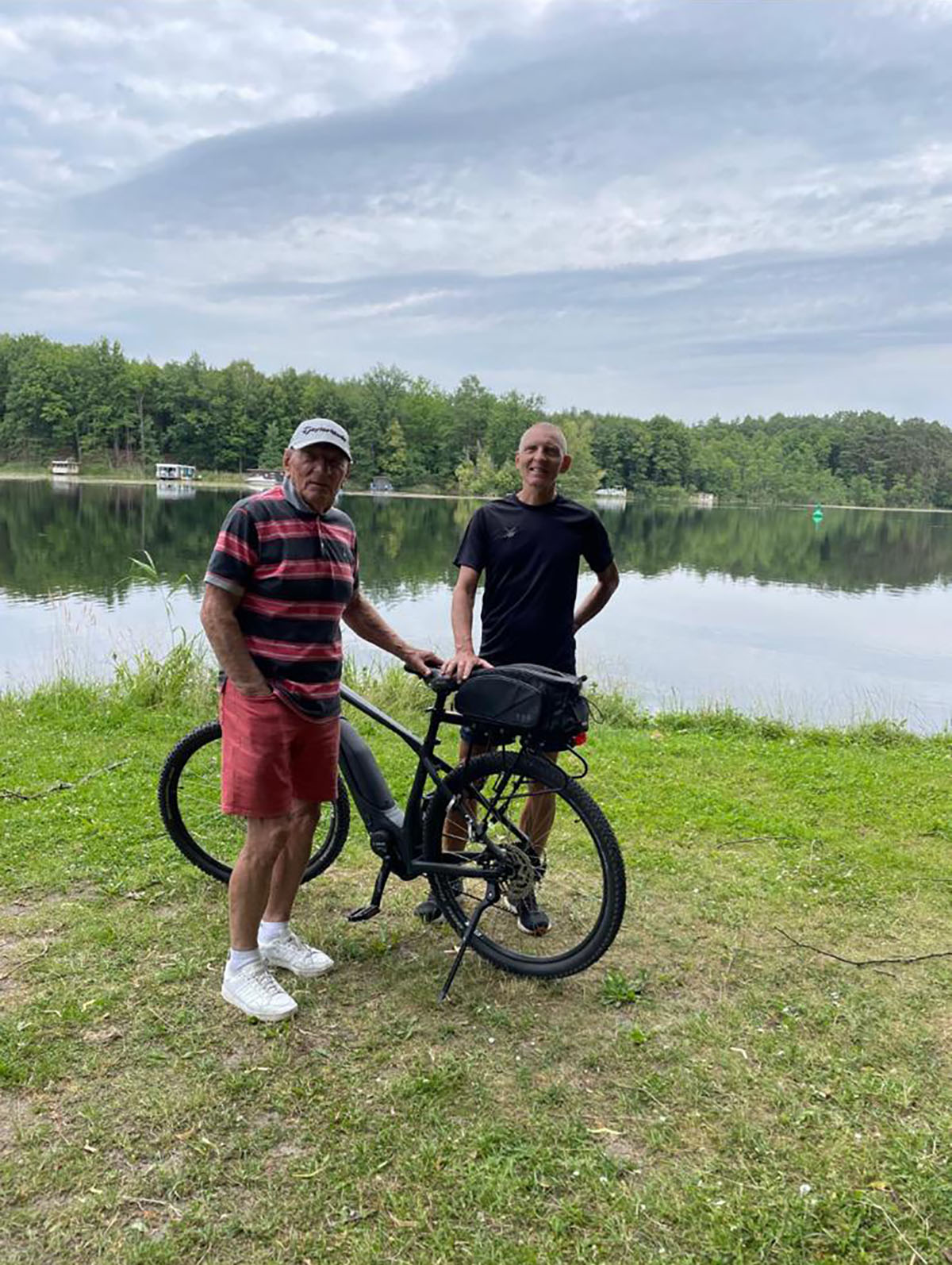
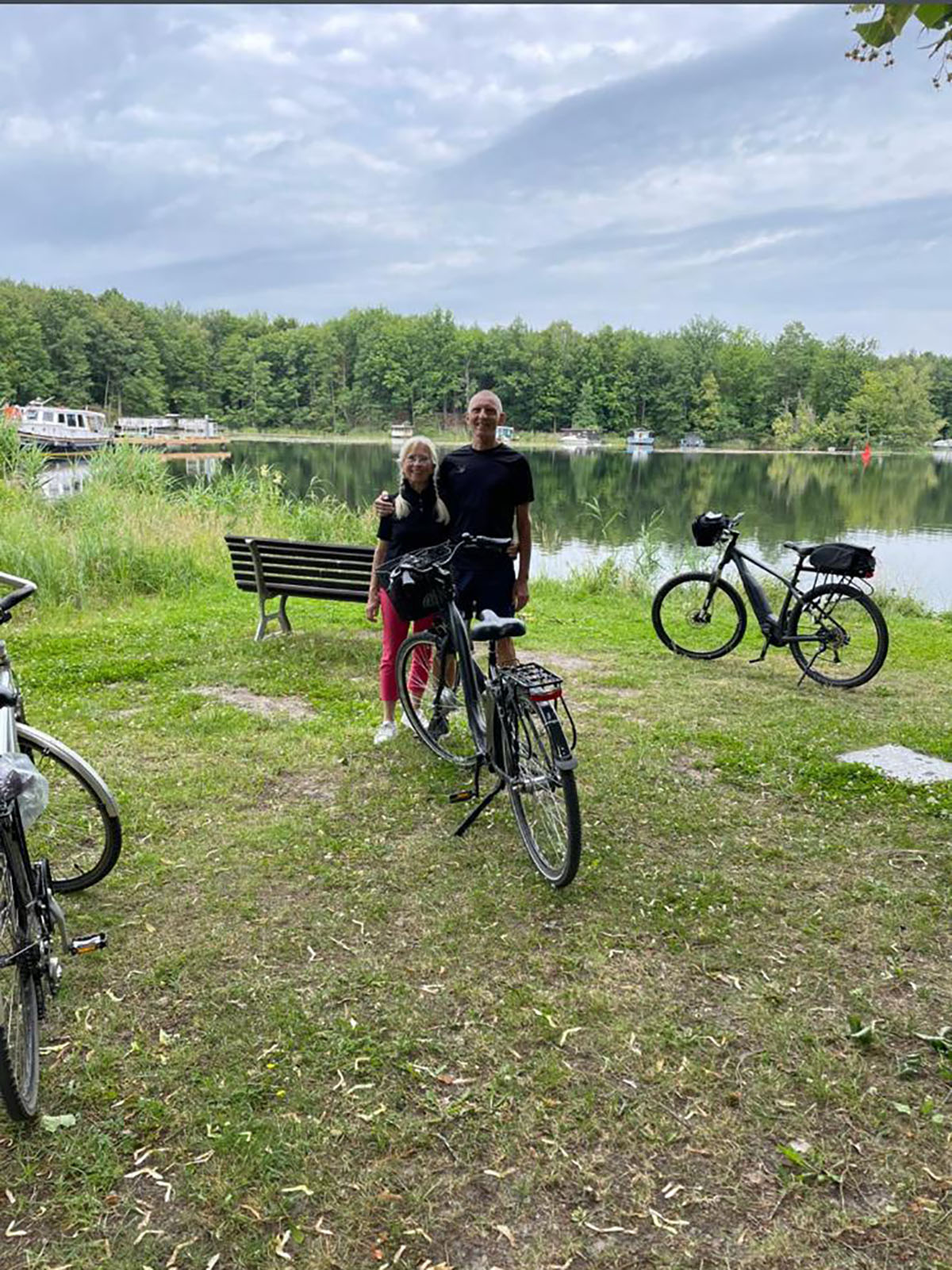
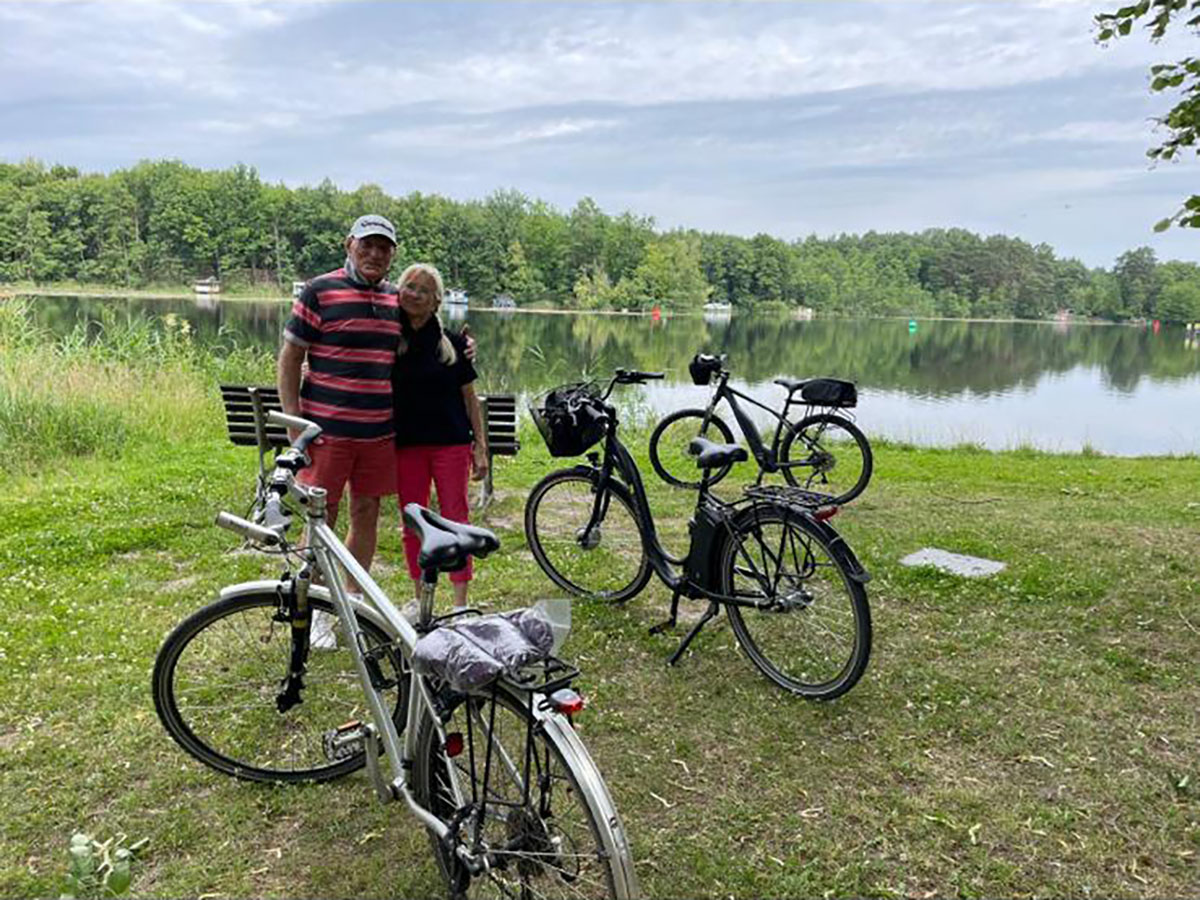
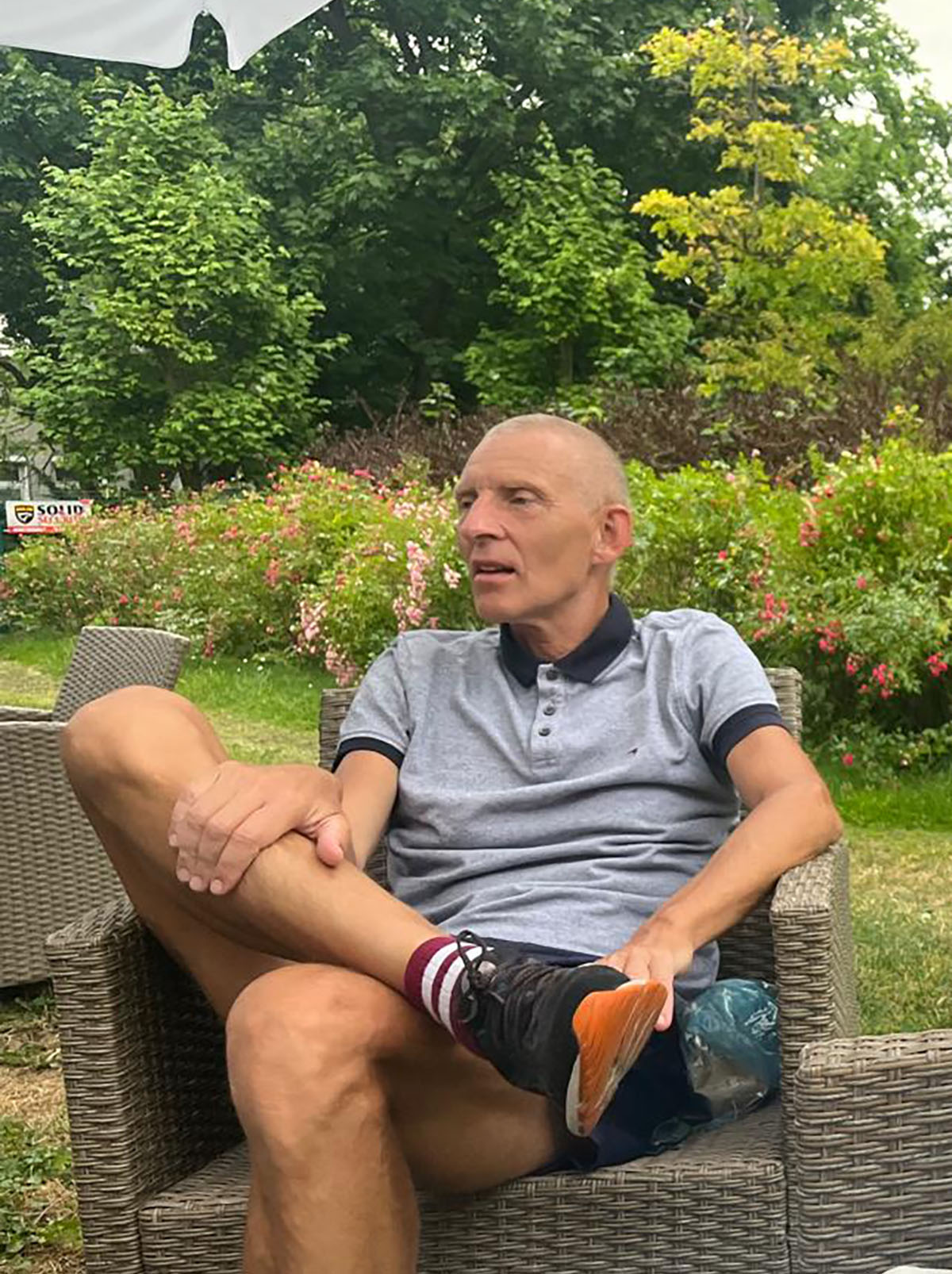
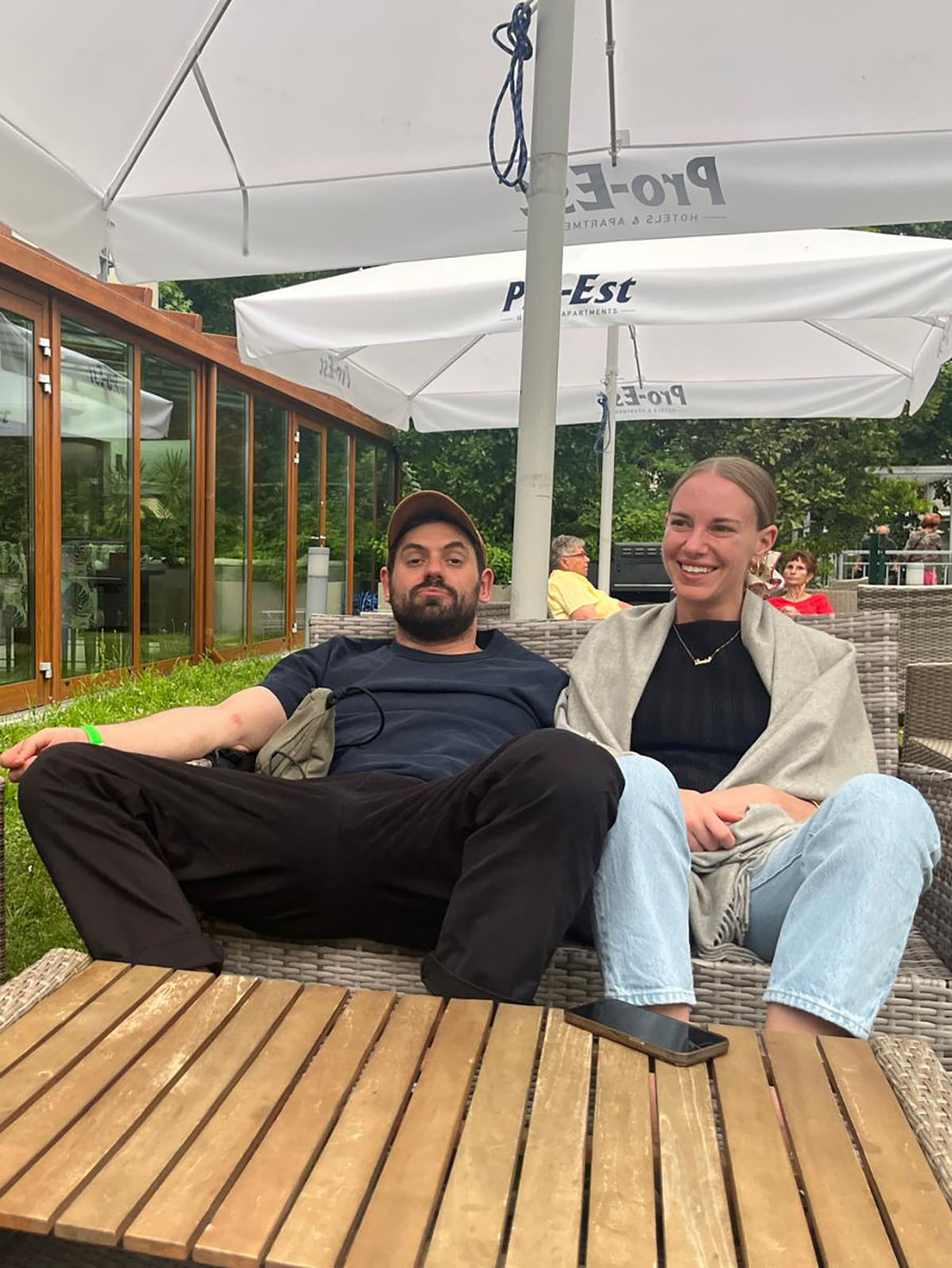
I spent a wonderful week at home with my parents, during which we did many memorable things. We went on a long bicycle tour (which became even longer because we got lost several times when we were trying to head home). We also made a trip with my extended family, including my sister, nephew and niece, to the baltic sea, where I managed to submerge myself for about 30 seconds in the ice-cold sea water. It was also fun to relax at my parents home, at the local mall food court or at a nearby lake, where I went for a (slightly longer) swim.
I already look forward to my next holiday at Christmas!





HIGHLIGHTS FOR WEEK OF 23 – 29 JUNE
What exactly determines whether professors are successful?
I recently read an interesting article in Science magazine. The article was penned by a new Assistant Professor who described the struggles and difficulties he had to overcome in order to finally secure his tenure track position.
The author Jary Delgado faced various challenges, including a non-privileged background and origin from Puerto Rico, scarce research funding during his PhD, extremely difficult job-hunting during the 2008 economic crises, a conflict-ridden relationship with a supervisor and setbacks during the COVID-19 pandemic.
Jary Delgado describes how unexpectedly his track record of being perseverant played a role in being awarded a faculty position. He writes:
“The interviewers were friendly and I felt good about my performance, but I wasn’t expecting the offer I received a month later. To my surprise, I later learned the committee had valued a factor rarely considered in an academic world obsessed with publications and impact factors: my resilience.“
As the quote suggests, perseverance seems to be a rather uncommon criterion for hiring academic faculty. I would argue that most researchers who succeed to become Assistant Professors have encountered relatively favourable conditions during their training. Indeed, without experiencing favourable conditions during one’s PhD and postdoc it is very difficult to achieve the outstanding publication record that is required to be considered for Assistant Professor positions in many institutions.
Jary Delgado argues that scientists who struggled to overcome professional and personal hardships may in fact have an advantage when coping with the challenges that young faculty will inevitably face. In other words, these researchers have developed the “resilience to get through tough times”.
I do agree about the importance of resilience wholeheartedly. Nonetheless, I must admit that among faculty that I know there is no good correlation between how difficult someone’s path to landing a faculty position has been and how successful he or she has been as a researcher. In fact, if anything I feel that there is a trend that those who experience fast success as a trainee tend to continue to do so when they are a professor, suggesting that success is more dependent on how researchers work.
What is true is that researchers who have worked hard as a student and postdoc tend to work hard as a professor. But hard work does not necessarily translate into research success.
This then raises the interesting question on what exactly determines success, in particular research success, of academics.
This question seems particularly relevant for universities and colleges, who invest greatly in recruiting new faculty and whose success as an institution is linked to the success of their researchers.
Based on my own experience of the hiring process, the primary focus is on past success (mainly in the form of high impact research papers) and alignment with the university’s strategic research directions. However, a search of this topic suggests that there is little evidence that those factors are particularly good predictors of future success.
The question of what determines faculty’s research success is also of interest to me personally because despite considering myself very knowledgeable and being able to come up with interesting questions, I have not been very successful as a faculty in terms of my research achievements.
Of course, as I have discussed previously, “success” is a highly subjective term, and in terms of making an impact on students, which could be considered as the primary role of a university professor, I think of myself as being successful. However, most research intense universities consider (probably wrongly) that making an impact on students is the default outcome of hiring any professor, and thus primarily value research papers and research grants.
So what factors actually do predict research success of university faculty?
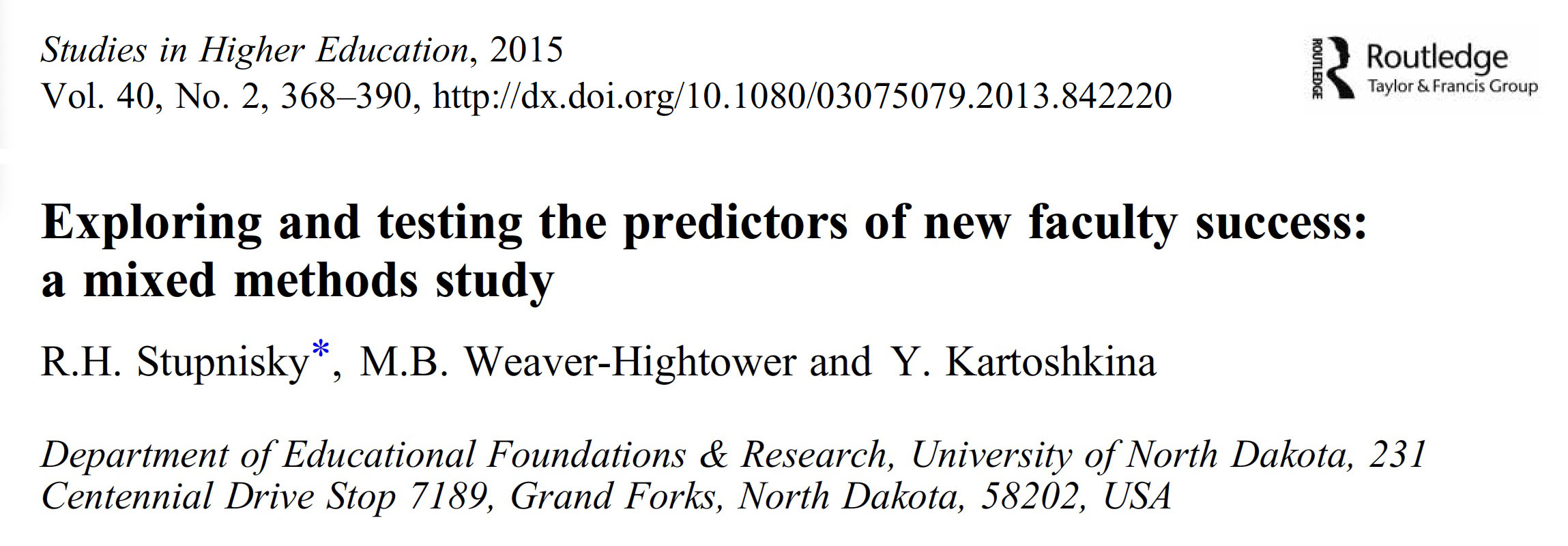
According to a paper by Stupnisky and co-authors, published in 2015 and entitled “Exploring and testing the predictors of new faculty success: a mixed methods study”, there are three recurrent themes that consistently emerge in the literature. These themes are “clarity of expectations, finding balance, and collegiality”.
Upon reading this article I feel that these three themes resonate with me well. As such, I would like to discuss them in some detail.
Clarity of expectations
Stupnisky et al. highlight that many new professors lament a lack of clearly expressed expectations, or frequent changes in expectations, as reflected in the statement ‘tenure is like a moving target.
In truth, I personally feel that it seems rather obvious that what matters most is doing impactful, original research, for which one’s research papers and record of obtaining external research funding function as an important proxy. The main problem appears to be that many young Assistant Professors, probably including myself in the past, are not taking the right steps to meet these expectations. What could be helpful, and what was certainly lacking in my own case, are guidance and discussions about what the right steps, best approaches and most promising directions could be.
Finding balance
With regards to the second factor, finding balance, Stupnisky and co-authors highlight that there are two types of balance – balance between the professional roles of research, teaching and administration and balance between professional and personal life. I believe that both of these types of balance are important, and as a new faculty I have neglected both.
Important qualities to achieve balance include for instance good time management by establishing routines, developing ‘priorities, being able to delegate tasks and learning to say no. I certainly lacked these qualities when I started out as an Assistant Professor, and it took me many years to develop them.
Collegiality
The final factor is collegiality, and I could not agree more about its importance. Success as a young Principal Investigator requires not only the exchange of ideas with others, but also mentorship. As a young faculty, there is the temptation to focus primarily on our own work, but investing time to build relationships with senior and often influential faculty is certainly beneficial in various ways. Even more important is to engage in scientific collaborations. Indeed, my own most impactful publication have come from collaborations. Yet, there have been too few collaborations that I have initiated.
Focus on meeting expectations, finding balance and valuing collegiality and collaboration are criteria that are relatively easy to spot when hiring faculty. They are also not that difficult to pursue as young faculty, provided we are aware of these requirements and take actions on them.
Although I cannot turn back the clock, I am very happy that things have worked out in the way they did and that I have found a way to make an impact that feels very meaningful to me.
Nonetheless, it has been useful to compare my own experience with that of young faculty featured in a series of articles called “Career pathways”, which has been published by the journal Nature Metabolism and which I will write about in one of my next posts.
HIGHLIGHTS FOR WEEK OF 16 – 22 JUNE

My teaching feedback – Part 2
In last week’s post I discussed the various positive aspect related to my teaching feedback for the past semester. However, the feedback comments also revealed that there was a handful of students who felt demoralised throughout the course. This is of course greatly concerning and prompted me to think about what makes the course discouraging for some students and what I can do to address these points.
In my post from two weeks ago I began discussing a very insightful book by Sheila Tobias (“They’re not dumb, they’re different”), in which the author describes the experience of non-science majors taking foundational physics or chemistry courses.
One particularly insightful case described in the book is that of Vicki, a senior in anthropology at the University of Nebraska, who audited an introductory physics course. Among all the social science majors in the study who took science course, Vicki felt the most discouraged. As such, her experiences may exhibit resemblances with those students who felt discouraged in my course.
Vicki stated that her frustration firstly originated from receiving poor grades on homework and short exams. Sheila Tobias writes: “Like the typical college student, Vicki had got into the habit of judging herself by her grade-point average, and when she found it difficult (as it turned out, impossible) to win honour grades in physics, she was frustrated and resentful.”
Secondly, Vicki had particular difficulties with timed tests. She stated:
“Why can’t I have the time I need to show what I know?” And also … “That [what I know] is not what they’re measuring. They’re trying to find out how I do in relation to others …”
A final contributing factor to her frustration was feeling stressed about the pressure to catch up due to her lack in background knowledge, particularly in math.
Vicki wrote in her reflections: “More than in social sciences class, I felt the pressure of not falling behind. Once I started to slack off, I would always slow too far down.”
She found herself having to spend too much time to pick up the missing mathematics background, so that staying on top of the physics course content became difficult.
As such, Vicki’s experiences identified three factors that likely contribute to students feeling discouraged in science courses:
1. Not doing well on interim tests.
2. Time pressure in tests and exams.
3. A lack of background knowledge, which makes it difficult to catch up with new course content.
All of these three factors likely also play a role in the frustrating experience of some students in my course.
What could I do to address these issues?
With regards to the first point, I feel reluctant to make the course problems, quizzes and tests easier, partly because solving challenging problems is one of the main factors that make my course interesting. What is more, the truth is that interpreting research data and answering real world research problems is difficult.
One major reason why some students have difficulties with solving these research data related problems, despite trying hard, is that they may have different backgrounds and as such lack relevant knowledge and skills. As Vicki noted:
… the “range of expertise” varied more in her physics course than in social science. She never got over the shock of having students leave a review session in the middle, or just when problem solving was about to begin. It was as if she were in a beginning language class with students, some of whom spoke that language at home. “In social science there are people who are more advanced than others as far as knowledge is concerned,” she wrote. “But in science the more advanced are more advantaged. They can better capitalize on their knowledge.”
As Sheila Tobias points out, the discouragement that the students who possess a lower initial level of mastery experience is even more pronounced because these students were in many cases used to performing well throughout their secondary school education.
To address this, one measure that I plan to introduce next year during the first half of the course is to divide up my weekly quizzes into an easier graded one and a difficult (aspirational) one, for which students only obtain marks for participation. Only during the second half of the course will I then make all graded quiz questions more difficult.
The way to improve is through practice. Hence, by providing the opportunity to practice solving difficult problems without applying a penalty for getting it wrong, the students may be more motivated to practice.
The second factor that contributes to student discouragement is time pressure in tests and exams.
Why do I make my tests so limited in time? Firstly, I always worry about setting exams that are too easy and that consequently do not test the students’ level of mastery well.
My reasoning is that if students are familiar with how to solve the problems in the exam, they will be able to do so within a reasonable time. In contrast, students who are less familiar will spend a large amount of time to look up their notes or read through the research paper that is the subject of the exam. The problem that students may spend large amounts of time trying to find an answer as opposed to coming up with their own answer is further exacerbated by the availability of chatbots (which thus far I have allowed in my exam due to the research data based format of my questions). As such, I try to avoid that large numbers of students finish their exams early.
That said, some students clearly do need longer to figure out problems than others. As such, it would be good to try to find a solution that provides more flexibility. A good compromise could be to allocate more time for the bulk of the questions but to also include a number of difficult questions with very low mark allocation. As a result, students who need more time are still able to answer the majority of the questions without losing too many marks, while faster students remain engaged until the end of the exam.
Finally, with regards to the lack of background knowledge, one student has suggested that I should “dumb down” the course. However, the course is in fact a year 2 course. Yet, many students choose to take the course during year 1, which means that these students choose to take a risk.
What is more, I feel strongly that a University course should be challenging in order to achieve its objective. While many other year 1 and year 2 university courses may convey more basic knowledge, I believe that university education is about meeting challenges and doing difficult things, provided that they are meaningful.
I do try to make students aware of the degree of difficulty of the course with my readiness quiz, which students can take before the start of the semester. Even though one student commented “… saying that people should drop the course and come back next time if they don’t really understand the prerequisite quiz doesn’t give students confidence in the teacher”, the point of the quiz is for students to determine if they are confident in themselves, or to take action to become more confident.
What I could do is to provide students at the beginning of the course with more awareness of the challenges ahead and with some advice on how to meet these challenges. This may include that it is necessary to study consistently, that students need to fill any gaps in background knowledge when they encounter them, as catching up with course content and concepts later on is difficult, and that success is proportional to the number of practice opportunities that students engage in. Another useful piece of advice is that it helps greatly to have a group of friends to work with all the time to explain concepts and solutions to problems to each other. It will be a good idea to include these tips in my course intro video!
HIGHLIGHTS FOR WEEK OF 9 – 15 JUNE
My semester teaching feedback
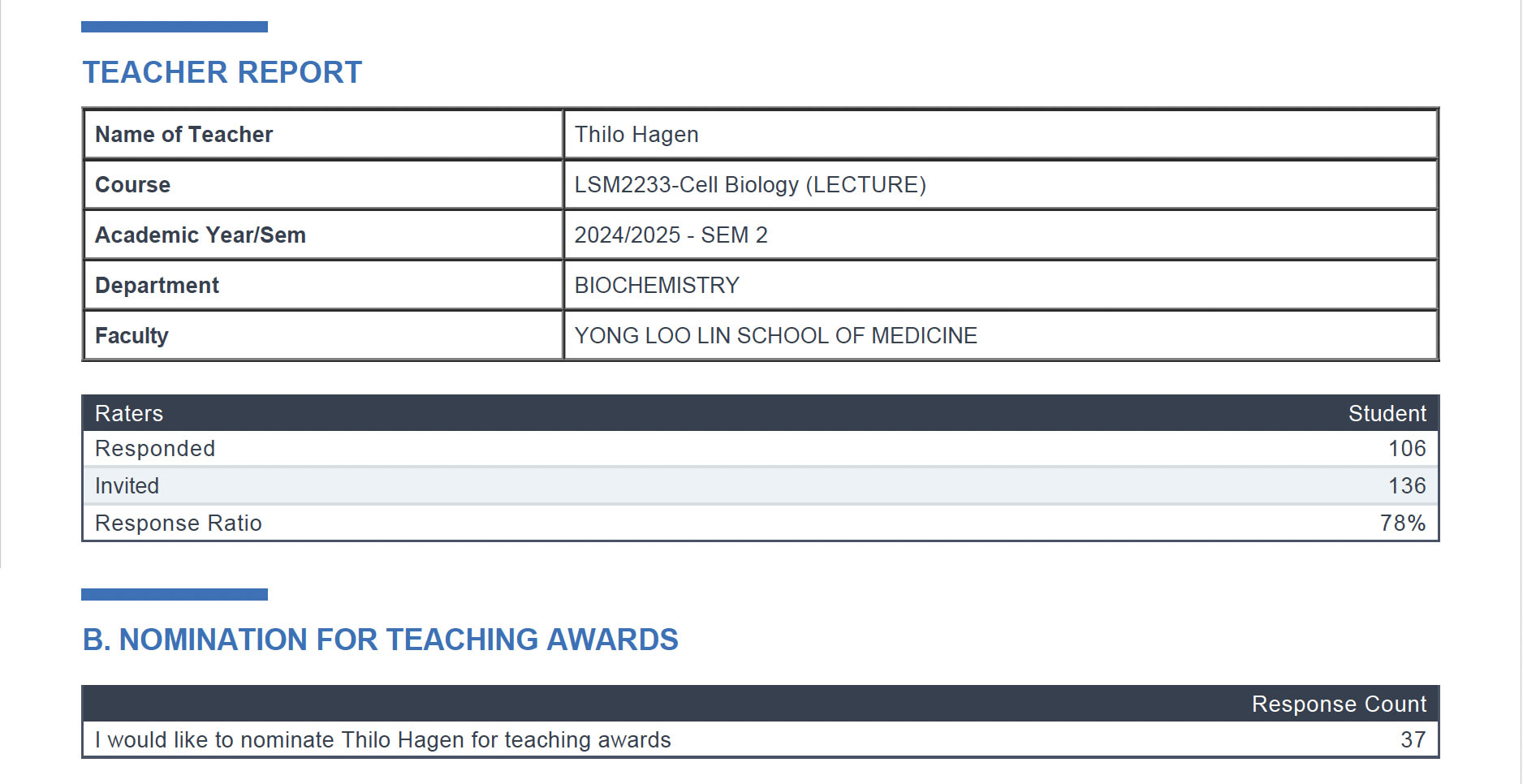
It is once again teaching feedback time. I received my scores and comments from the students who took last semester’s Cell Biology course, and overall the scores and comments made me very happy.
I was very pleased that my teacher feedback scores were my highest ever. They were even slightly better than back in 2020 during the Covid pandemic, when students tended to be more lenient with Professors and awarded more generous scores.
Most of all, I was happy about my “best teacher nominations”, both in terms of their number and the justifications that the students wrote. There were 37 students who nominated me for a teaching award, which is more than a third of all students who responded and more than one fourth of all students who took the course, and which is my best ratio of nominations ever.
I am very happy about this, not because it means that I might get a teaching award. (To be recognised with a teaching award one has to actually apply for it, which requires preparing a lot of documentation. And since the decision process is not very transparent, I have not applied for teaching awards in recent years.) The main reason is that getting this many nominations feels very encouraging. Even more importantly, the comments or justifications that many students wrote are simply amazing and have moved me greatly!
In contrast to my teacher scores, my course scores were overall only average. However, I am not too concerned about this, in part because of the way the questions are formulated.
For instance, the first question, “What is your overall opinion of the module?“, is so broad and undefined that as long as students have something about a course that they disliked, they would not give the highest score on the scale of 1 to 5.
Another question, “The integration of technology – blended learning, digital tools, AI, and online resources – has enhanced my learning experience.” must be very difficult for a student to answer, because it firstly implies that a course has in fact employed these tools. From a student’s viewpoint, it remains unclear if the expectation is that all of these tools should have been employed. How is a student supposed to rate a course that did not use these tools or used only some and if some of the tools were effective and others were not.
The third question in the feedback survey focusses on the difficulty of the course. As always, students rated my course as much more difficult compared to other courses, but as the verbal comments illustrated, a challenging nature of a course can be perceived as a negative or a positive experience.
Indeed, it is the verbal comments that are are always most insightful and useful. When looking at the negative comments, there were really only two groups of comments, both of which were expressed by many students (around 25 students each, which corresponds to one quarter of all students who completed the feedback).
Firstly, many students commented that the course content and in particular the application exercises and assessments were in fact too difficult. Again, this comment was not surprising.
However, on the other hand there was an equal number of students who in their positive comments expressed that they liked that the course focussed on thinking skills and not on memorisation. There were even some students who expressed that they enjoyed the challenging character of the problems.
As such, coming up with the right level of difficulty is always a balancing game. In Sheila Tobias’ book about students who felt reluctant to pursue Science majors, which I discussed in last week’s post, many of the students lamented that the exams were too easy. Too easy exams can lead to an overemphasis of luck and a focus on minor points, which can set back students who normally have good mastery of the course content. Although my problems are difficult, I feel that my tests reliably identify those students who have a good understanding and those who do not. Due to the curve grading, the difficulty level ultimately also does not negatively affect the student grades.
The second group of comments related to students essentially wanting more guidance. Although there are always students who want more “instruction”, I was surprised that nearly one quarter of the students requested more information in the lecture slides or to “lecture” more instead of letting students learn on their own through exercises such as my so-called self-learn quizzes.
In a self-learn quiz, the students learn by answering questions after discussing the problems with their neighbours and subsequently read the provided explanations. I in fact started using this approach in lecture 1, because one of my goals this past semester was to “lecture” as little as possible. This clearly came as a surprise to some students. One students commented “the very first lecture was quite the shock”.
What I personally think this illustrates is that students are used to receiving a lot of guidance and are not accustomed to a way of teaching in which they are the main driver of their learning. I firmly believe that the teaching approach is both engaging and effective. And compared to previous semesters where students often felt disengaged during the first lecture because they did not appreciate how the discussed concepts were relevant, I felt a much greater sense of satisfaction when seeing the students immediately active in solving problems, discussing with their class mates and learning.
On the positive feedback side, the most frequent comments related to the focus on application (more than 20 comments), on critical thinking as opposed to memorisation (also more than 20 comments) and on the fact that the students felt the course was “interesting” (around 15 comments). The latter I believe is primarily related to how engaged the students felt during classes.
However, what surprisingly received the most mentions were my passion for teaching and my dedication to students. Especially the latter made me genuinely happy!
Overall, the feedback confirms again that students care mainly about three things, whether the teaching focusses on applying knowledge, whether the students feel engaged and enjoy the course and whether the lecturer cares about the students.
I was somewhat surprised that only few students commented on specific aspects that are likely different from other courses, such as the team based learning and use of learning catalytics (positively mentioned by seven students) or the focus on research data. There were also only few comments on things that I introduced this semester, for example the various research talks that students watched throughout the semester (positively mentioned by two students) and the AI related discussions (positively discussed by three students and negatively by two). Presumably there is a limited number of points that students can focus on and write about, given that they have to provide feedback on numerous teachers and courses.
The course feedback also revealed that there was a handful of students who felt demoralised throughout the course. This of course is greatly concerning and I will be discussing this point separately in next week’s post.
There are of course always some comments that make me feel frustrated or defensive, such as those where instead of expressing their own experience or opinion, students speak on behalf of everyone else, such as “The module in general needs to be “dumbed down” for us students. The quizzes are way too difficult and the lecture content is impossible to follow at times.” If this was true, then all students should do badly all the time.
What feels even more discouraging are what I perceive as unfounded criticisms, such the feedback comment of a “lack of transparency of assessments or more of announcement of them?” In actual fact, the answers to all quizzes and tests, including the final exam, were published. Students also knew their scores and the class average for all assessments. With the exception of the final exam, they also knew their scores for every individual question.
Similarly, the comment that my “Canvas announcements that were given were often so lengthy that it was both tiring to constantly receive and at the same time difficult to discern important information” felt disappointing given that I make a great effort to make the course materials and announcements easy to navigate. Based on other students’ feedback, the way my materials are organised appears to be much more conducive compared to other courses. With regards to the announcements, I clearly indicated what the announcements were about and as such, students can choose whether they want to read it or not.
Another comment, “I felt like I had no way of improving myself and my knowledge to achieve the grades that I desired”, felt disheartening. With regards to the grades, students were given the opportunity to make up for a poor midterm test result if they improved in the final exam, in which case I counted their final exam result for both the midterm and the final exam itself. Indeed, more than one third of the students improved, some of them dramatically.
I was also surprised that two students criticised the (in my opinion rather limited) focus on generative AI. For example, one student commented “… I would like less emphasis on AI. I understand the importance of being aware and being able to differentiate between AI and human, but I think it is not ideal to spend one lecture on AI”. It seems to me that given how generative AI will affect the future, one almost cannot spend enough time on the subject.
Of course, there were many comments that made me very happy, including this comment that highlighted things that I in fact wanted to achieve in my course:
“I liked the content covered, Prof Thilo especially, as he puts in lots of extra effort to rekindle the scientist’s passion within me, and to get me to think creatively using my brain rather than constantly relying on ChatGPT/AI,, which will kind of makes me slave to the internet one day. This course, although tough to score, has taught me many life skills, such as perseverance and resilience, since everyone is trying to score A, and there are many people who will do better, I should not give up even if it is tough. I should just enjoy the learning process and do my best.”
I was also happy about the comment “Thinking is not limited to the syllabus and alternative hypotheses are encouraged.” These are things that I indeed wanted to achieve.
Finally, there were also a couple of very kind and moving comments:
“Not an improvement but rather to not be so stressed over the increasing usage of AI, he looks very stressed already :(“
“Prof I am saying this as someone who is simply concerned for your well–being please consider having more work–life balance.”
THANK YOU!
HIGHLIGHTS FOR WEEK OF 2 – 8 JUNE

Sheila Tobias: The second tier study
I have recently started to (re-)read Sheila Tobias’ book “They are not dumb, they’re different – Stalking the Second tier”. It is a rather old book, published in 1990. Yet, it provides some amazing insights into why students drop out of science courses or do not choose to pursue science in the first place. It also illustrates that not that much has changed in science education in the last few decades.
In her book, Sheila Tobias looks at college students who based on their academic abilities and high school prerequisites could have gone into science, but chose not to and instead pursued other fields of study that they considered a better option for themselves. The author refers to these students as “second tier”.
The book describes Sheila Tobias’ study aimed at trying to find out what happens when these second tier students took a university science course, with the ultimate goal to figure out what deters students from taking or continuing science.
The three commonly assumed reasons why students avoid science are that science courses are too difficult, that other fields are more interesting to students and that students perceive a lack of good job prospects. However, as the study reveals, the are other important reasons, including the classroom culture and the demands on students’ time. What makes this study so relevant is that these concerns have not changed in the last 25 years, and in some respects have gotten worse.
The first student, whom I focus on in this post, was Eric, an English literature major and summa cum laude graduate from Berkeley. He entered college with a strong background in mathematics and “the full complement of high school science courses”. Eric was asked to take an intense five-week introductory physics course.
The first thing that Eric noted on the first day of the course was that “no one seemed particularly excited … and everyone seemed either bored or scared”. Later, Eric observes: “In my literature classes … people took courses mainly because of interest in the topic or because they thought the professor would be good. It is not that a science course cannot be or isn’t interesting, only that it’s not required or expected by the students that it be so.” This seems sad, but it reflects a reality that I also encounter. Science students do not expect that a course might actually be interesting.
Eric was asked to observe his own experience of the course as well as that of his fellow students and ultimately to describe how the course was different from college courses in his own field of study. Learning about the things that Eric did not like about the physics course turned out to be very useful for me because it helped me to see what I am doing right and wrong in my own teaching.
The first thing that Eric found unsatisfactory was that there was only one answer to every problem and that there was no room for individual opinions and views.
Eric writes “that unlike [in] a humanities course, here the professor is the keeper of the information, the one who knows all the answers. This does little to propagate discussion or dissent. The professor does examples the “right way” and we are to mimic this as accurately as possible. Our opinions are not valued, especially since there is only one right answer, and at this level, usually only one [right] way to get it.”
My main goal in my own teaching is to teach students how to interpret and predict scientific data. I have to admit that the way my practice problems, quizzes and assessments are set up, there often is indeed only one “correct” answer. Although I do use student-centered and interactive approaches to make this learning process more engaging and fun, in this process there is no emphasis on individual opinions.
I believe that here lies one fundamental difference between literature and science studies. While in literature two opposing views can be equally valid, in science one interpretation is usually, based on available evidence, objectively more valid than other interpretations. In fact, one of my main goals is to teach students to make valid judgements based on provided evidence. Of course, scientists do frequently differ in their views on certain issues, but this is usually because they have obtained or have been exposed to different evidence or they view the validity of available evidence differently.
Eric suggests at one point to introduce dissent artificially, e.g. by exposing students to various potential solutions, and then let them discuss these options. This is in fact what most of the discussions in my classes are based on.
Discussing alternative solutions is important. Otherwise, as Eric writes, “students are only focussed on finding the right solutions [presumably because this is being tested) and not in real life ramifications of what they were learning”. In other words, in real life, students need to find the best among a number of possible solutions. As such, merely teaching students the right solutions is not sufficient.
This past semester I have also started to include some group exercises where opinions do matter and where there is not just one right answer. These exercises include a research-based creative thinking exercise to come up with a research hypothesis and plan and an evaluation of prose written by a human writer versus ChatGPT, as discussed two weeks ago.
Going forward, I want to include more individual opinion and reflection exercises, discussing questions like what it is that makes research interesting or discuss Artificial Intelligence related questions such as whether AI is likely to make our world and lives better and if and how AI progress can and should be controlled.
A second major critique in Eric’s evaluation was that in the physics course there was “no sense of community within the class”.
Eric writes: “When we got our exams back this week, everyone was concerned about how other people scored. I understand that natural curiosity and in my literature classes there was always some comparing done between friends. However, I’ve never experienced the intense questioning that has happened this week. Almost everyone I talk to at some point or another asks me about my grade. When I respond I scored an “A”, I get hostile and sometimes panicked looks. It is not until I explain that I’m only auditing and that my score certainly will not be figured into the curve, that these timid interrogators relax.”
Eric expressed that the sense of competition “automatically precludes any desire to work with or to help other people,” he wrote. “Suddenly your classmates are your enemies.”
He concludes: “If one is truly interested in reforming physics education in particular and science education more generally, de-emphasizing numeric scales of achievement and rethinking the grading curve is certainly one place to start.”
This raises once again the important question of whether grading students on a curve indeed precludes any meaningful collaboration.
Firstly, my position for the past years has been that in a society where grades are used to make all sorts of decisions, grading on a curve is necessary in large classes to maintain fairness. If on the other hand the society does not care about grades, then of course there would be no need for students to be overly concerned with their grades and hence maintaining a consistent standard would be less important. Perhaps, in the humanities grades are less important because what matters to succeed in finding jobs or in pursuing the career of choice depends more on other skills.
Secondly, is it possible to engage students in team work despite grading on a curve?
Based on my experience the answer is yes. My team based quizzes and activities have been very successful. Students value and enjoy these activities, despite the fact that they are ultimately graded on a curve. Factors that contribute to the successful implementation of group work include making the team work compulsory by grading it, but making the assessment low stake by awarding only low percentages or marks for participation. In addition, the team work must be based on real problems that provides opportunities for students to discuss, explain and persuade each other. As such, the lack of team work is not intrinsically linked to the fact that students are graded on a curve.
I would also add that when the class size becomes reasonably large, competition between students becomes a minor issue. For instance, the benefit of helping each other within a group becomes greater than the potential outcome that the fellow group members outperform a student. In addition, even if a strong student mostly explains things to a weaker student in their group, it is unlikely that the weaker student will become better than the stronger student. What is more, the stronger student will benefit by mastering the concepts better through the process of articulating them.
In conclusion, introducing group work is possible, even under conditions of curve grading. Introducing group work is also important. As such, I agree with Eric’s assertion: “My class is full of intellectual warriors who will some day hold jobs in technologically-based companies where they will be assigned to teams or groups in order to collectively work on projects. [But] these people will have had no training in working collectively.”
Eric highlights two additional points. Firstly, the physics course was simply not interesting and secondly, the workload was way too high and the pace way too fast.
What gets students interested in a science course?
Real interest can only come from engagement, and the best way for students to engage with science is by doing science, in other words, by trying to answer questions that have not been answered. Achieving this in a large classroom stetting is somewhat difficult. The next best tings we can offer students is to let them experience how scientists try to answer contemporary problems by engaging them with primary research data and literature and to mimic this process by letting them solve problems based on provided fictional or actual research data.
Eric writes: “The lack of community, together with the lack of interchange between the professor and the students combines to produce a totally passive classroom experience … The best classes I had were classes in which I was constantly engaged, constantly questioning and pushing the limits of the subject and myself. The way this course is organized accounts for the lack of student involvement… The students are given premasticated information simply to mimic and apply to problems. Let them, rather, be exposed to conceptual problems, try to find solutions to them on their own, and then help them to understand the mistakes they make along the way.”
Eric’s comments highlights that in addition to problem solving, the other important factor that determines how interested students are in a course is to create a classroom culture where students constantly engage with the lecturer and with each other.
With regards to the high workload and fast pace, Eric elaborates: “Most of the other students I have talked to take six or seven hours a day to do the work. .. Aside from the pure misery of devoting that much of your life to physics, I wonder how much they, or rather we, will retain. I think that a slower pace and more in-depth discussions of the contents would, in the end, prove [more] beneficial.”
I agree that in depth discussion of a topic is more useful to promote learning of concepts and being able to apply them to solve real world problems, as compared to covering lots of content on a level were students imitate what the lecturer teaches or demonstrates. Perhaps even more importantly, the high workload leaves students with little time to to pursue educational experiences outside their course work, which ultimately will be more important for their future.
A fast pace further exacerbates a high workload because it puts pressure on students to continuously stay on track with their studies. Eric writes: “So much is based on what you should have learned the day before, that the course is a bit like a race where if you falter and don’t immediately recover, you are sure to go down and be trampled.” and “There is no time to enjoy the success, no time to use those skills in order to discover more or dig deeper.”
Eric’s final verdict is not encouraging: “There are no sad faces on this, the last day of class. No one will miss this chore. No one will say to himself or herself, “I really enjoyed that,” or “that was an interesting learning experience.” Instead, people will congratulate themselves on having made it, will be happy with their “B” or their “C,” and will very soon forget anything pertaining to physics.”
Among the total of seven “second tier” students in the book who took college science course, all but one were among the top ten percent. Nonetheless, only two of the seven would continue in science if they had a choice. The main reason is likely the combination of the following three characteristics with which Eric describes his introductory physics course: “1) difficult to get a good grade; 2) time consuming; or 3) boring, dull, or simply not fun”.
HIGHLIGHTS FOR WEEK OF 26 MAY – 1 JUNE
Attending a scientific symposium
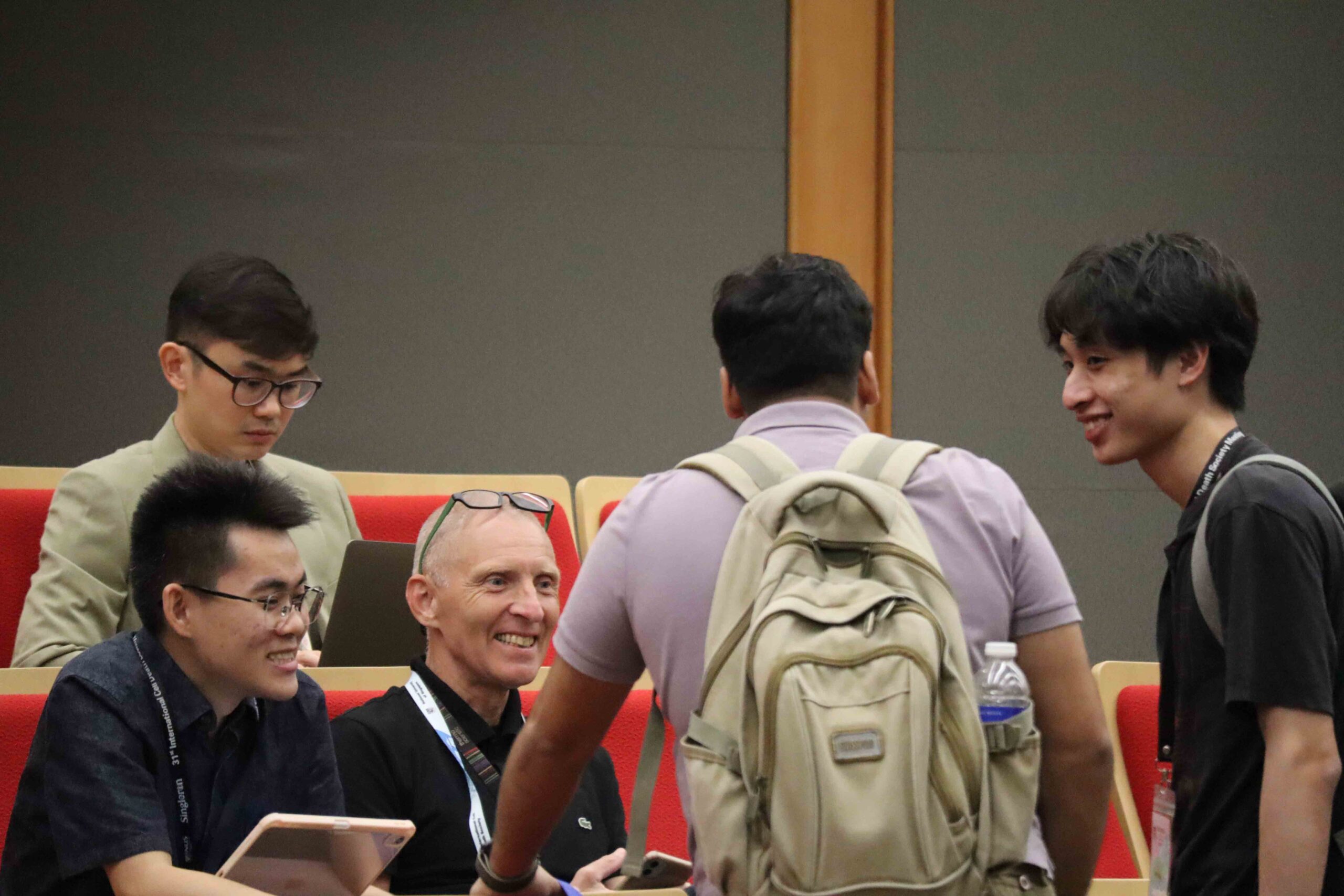
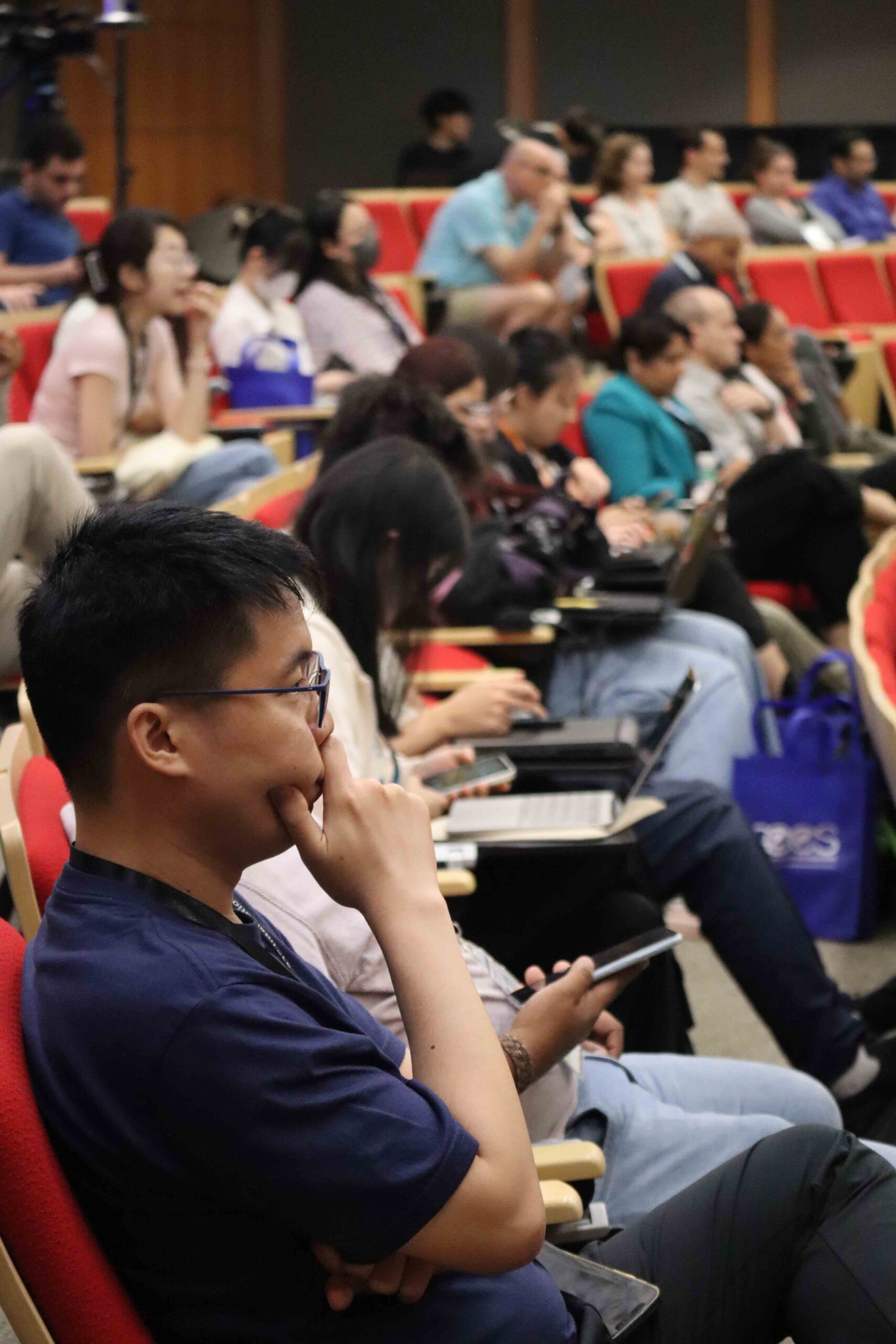
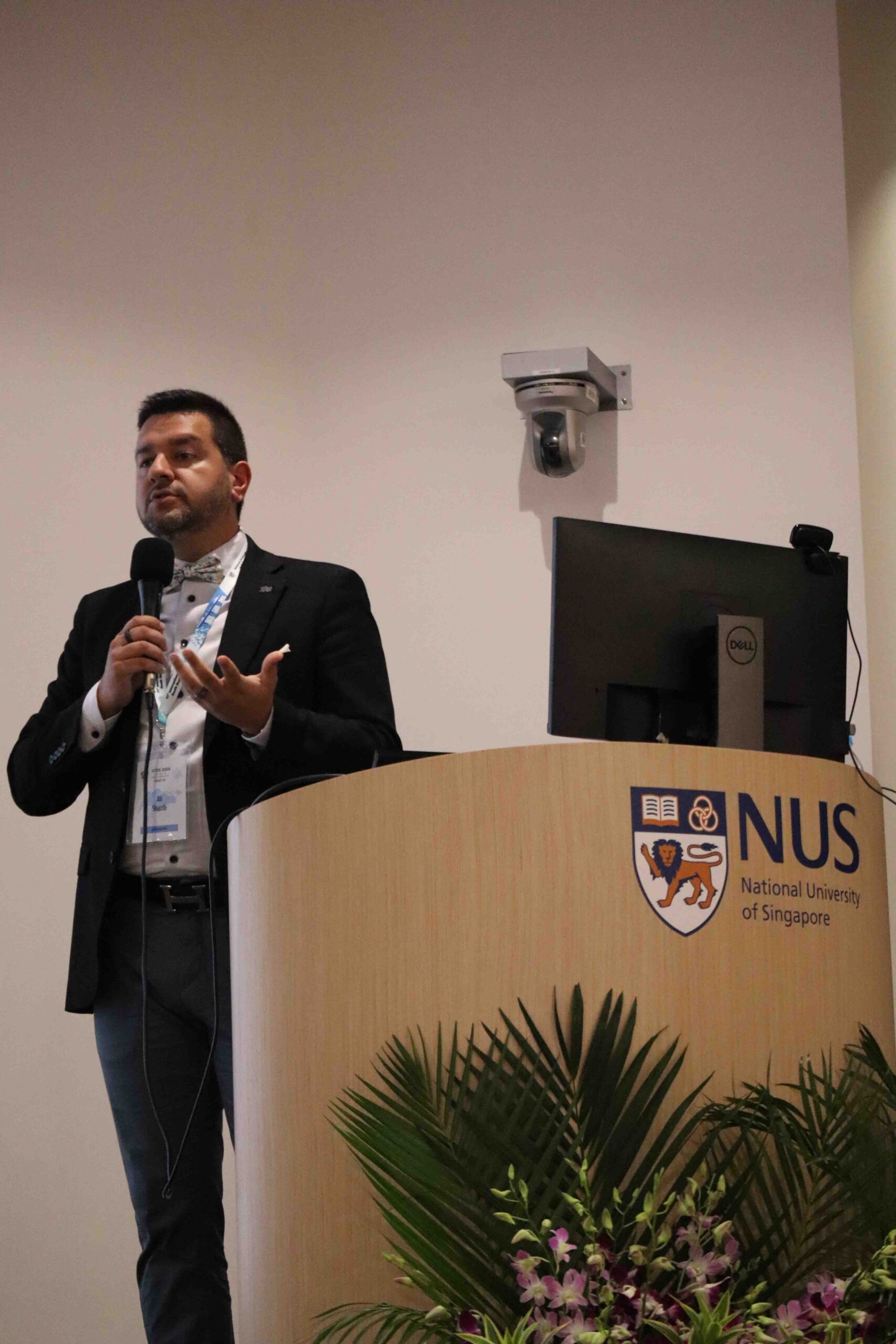
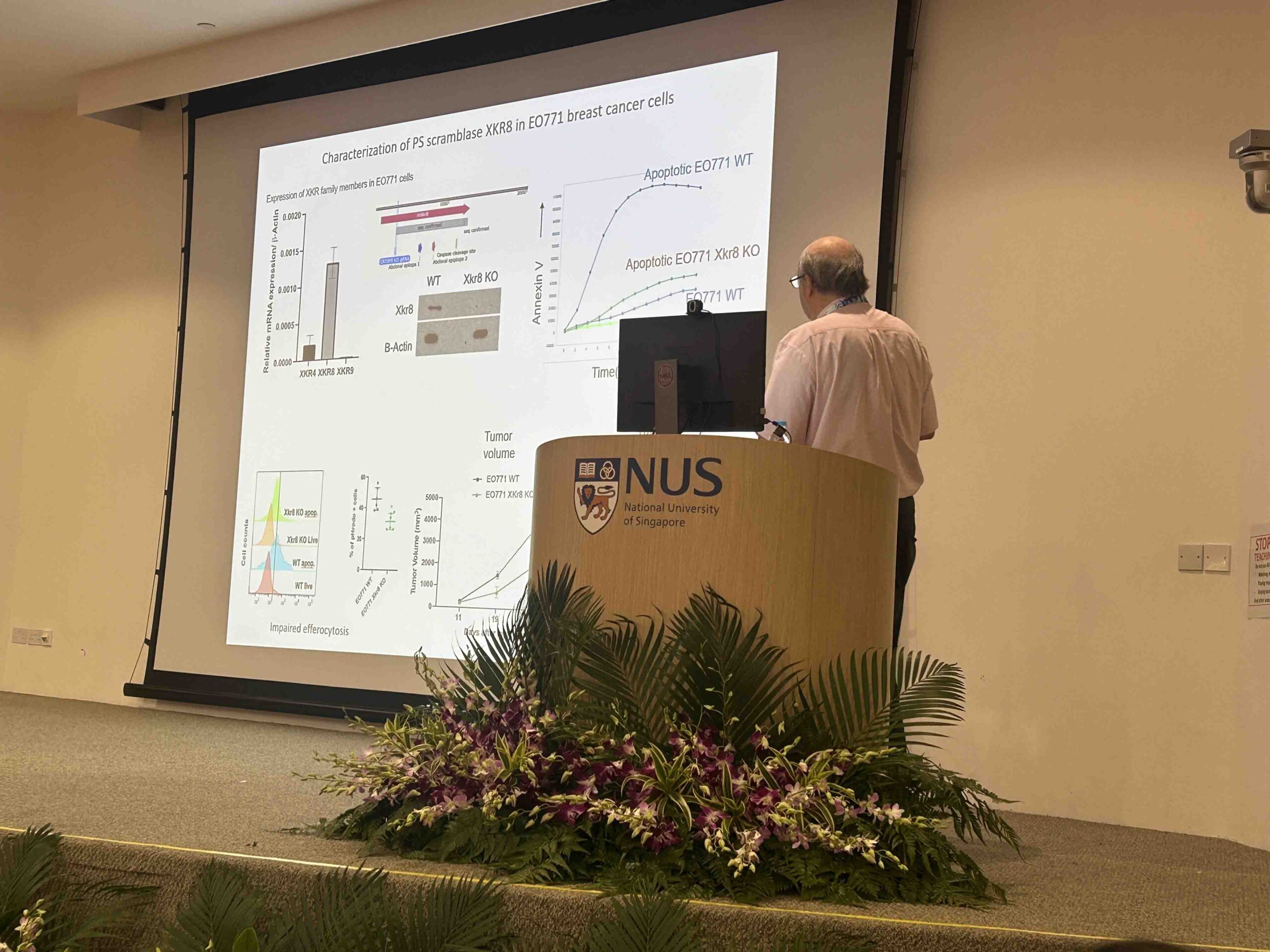
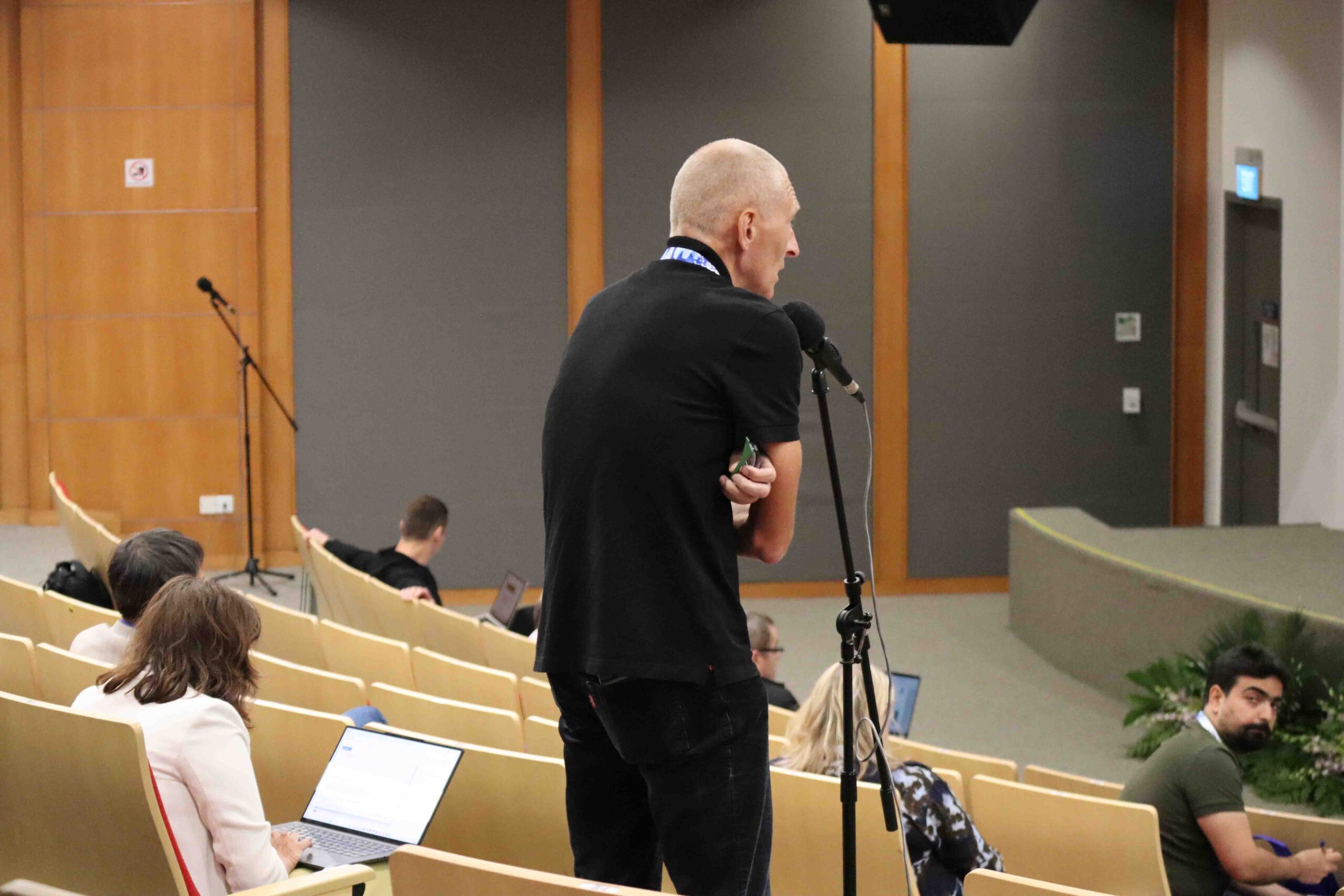
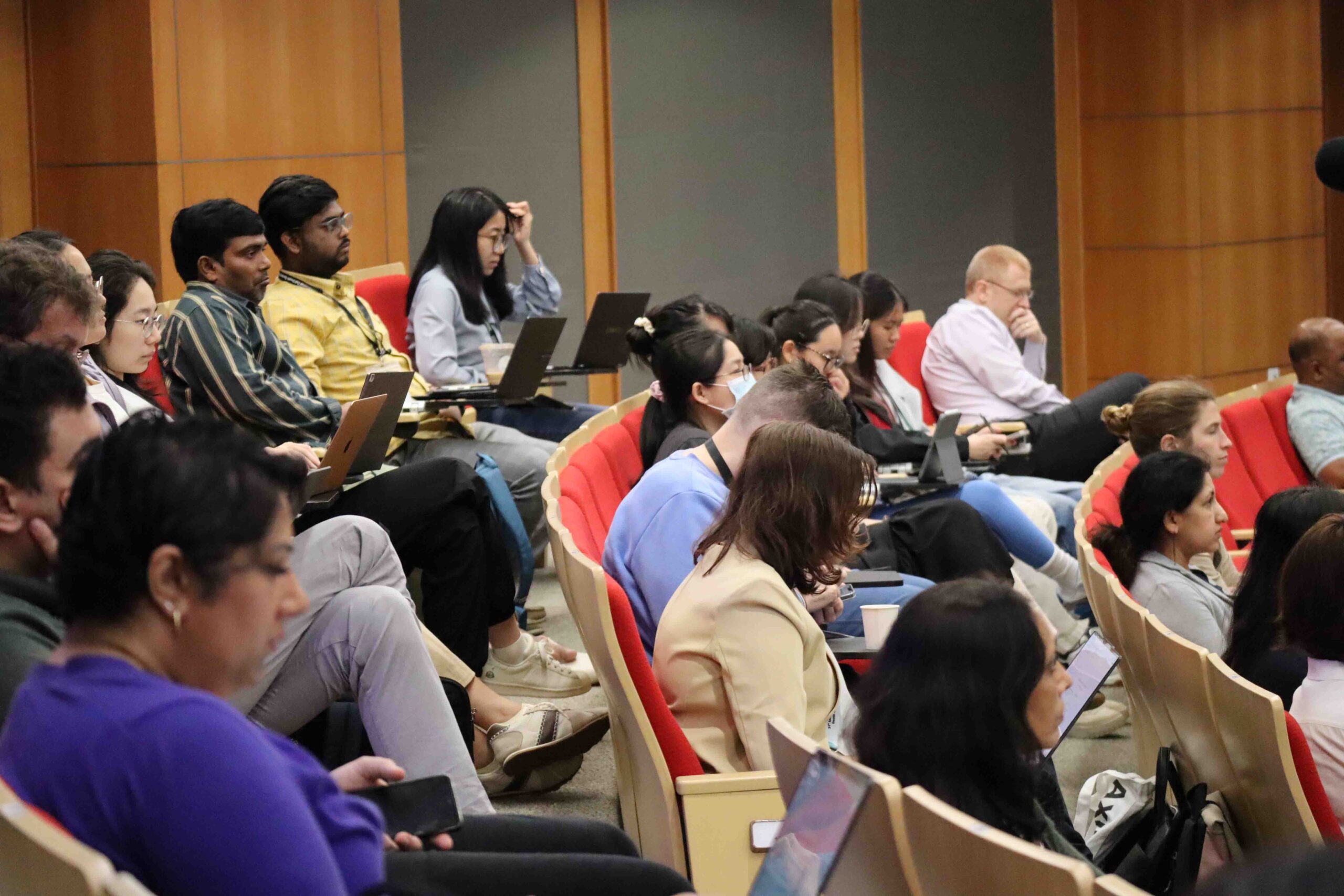
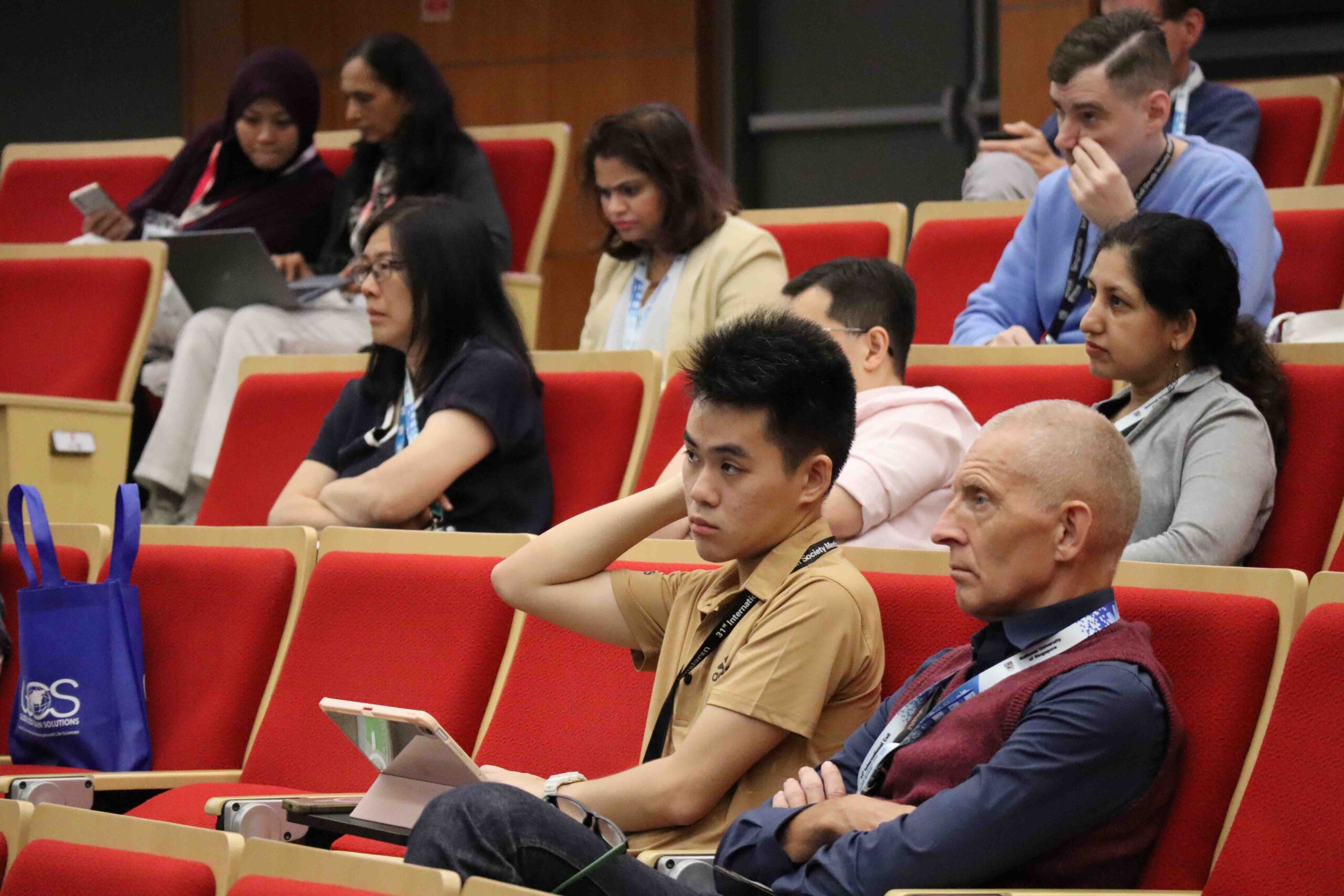
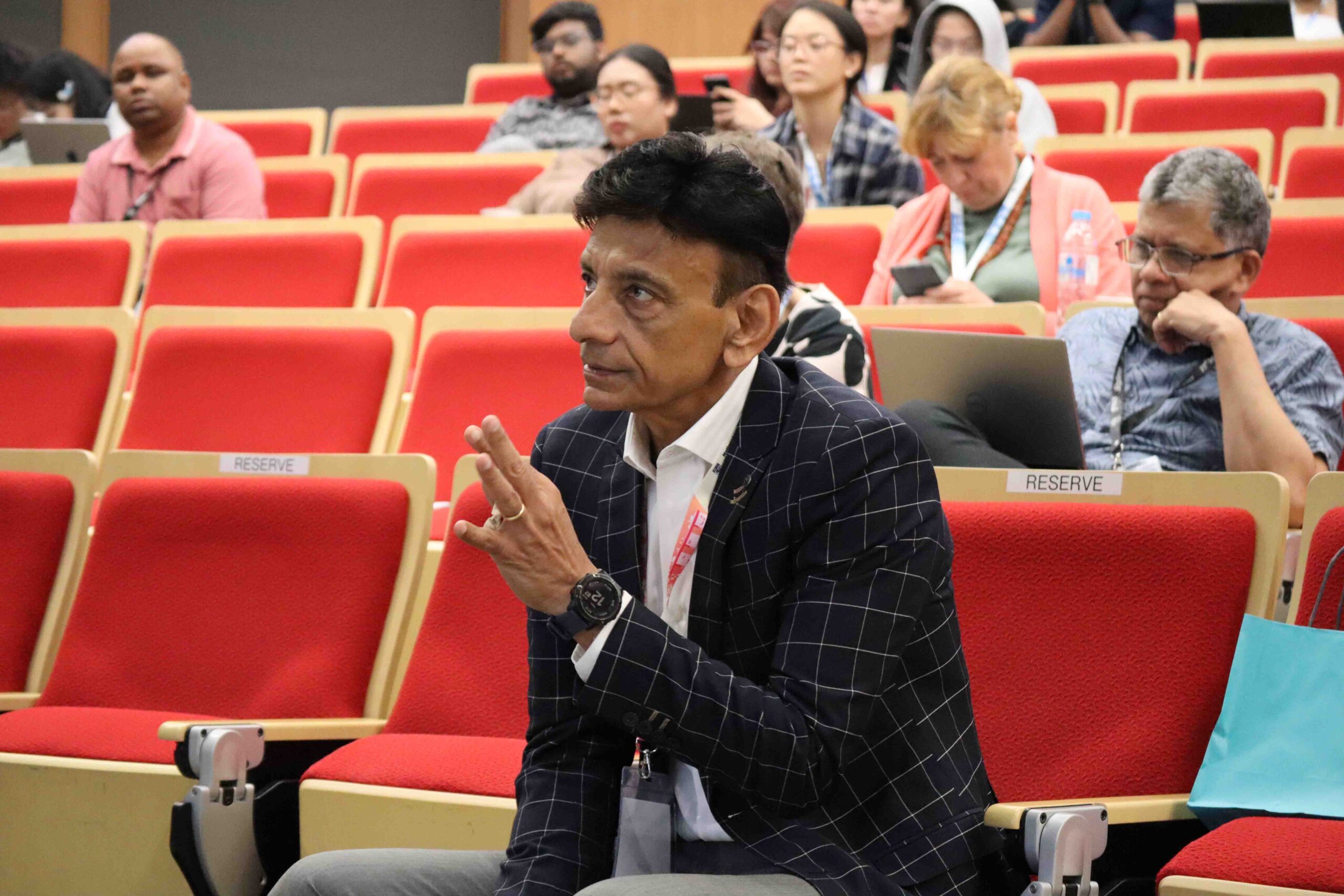
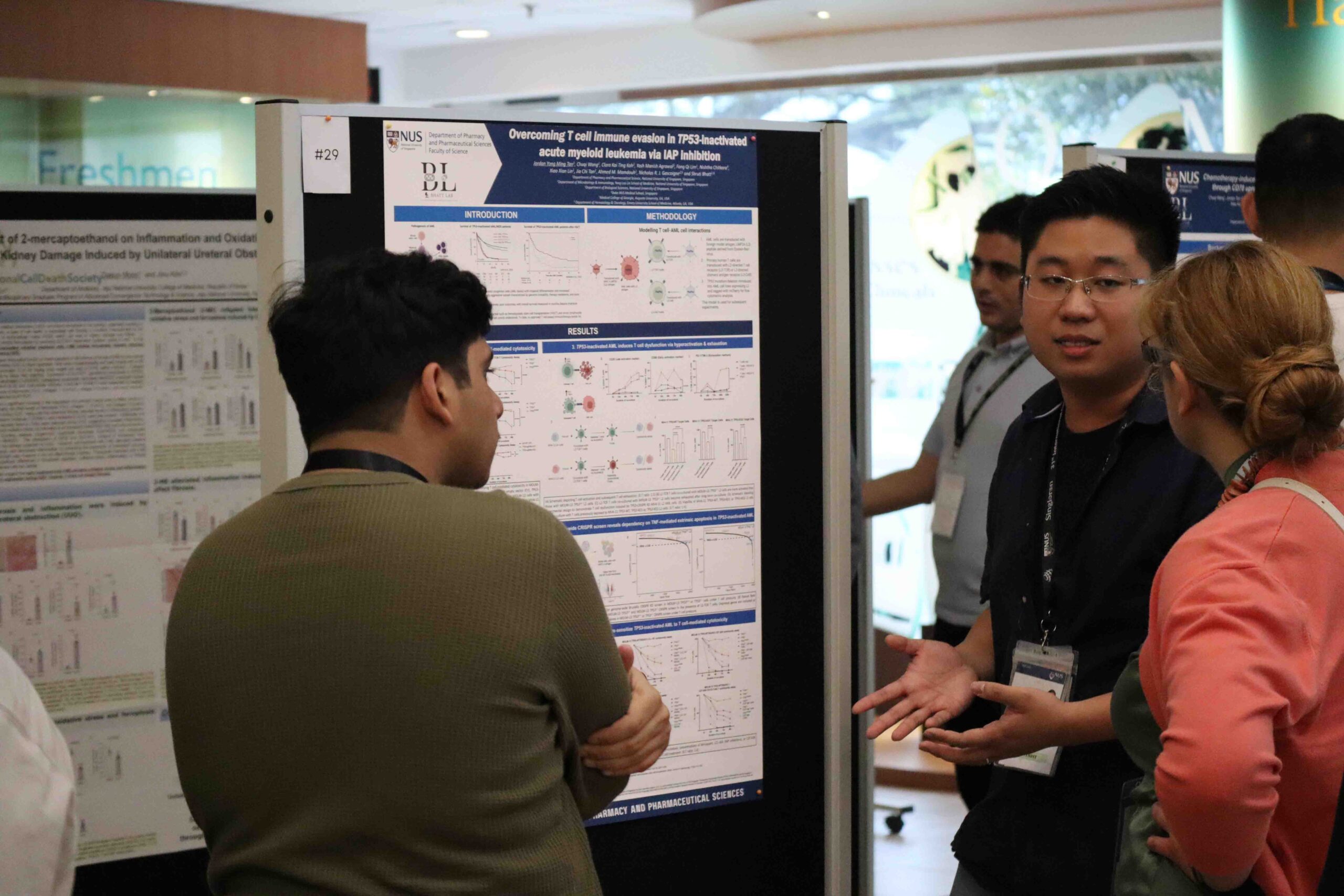
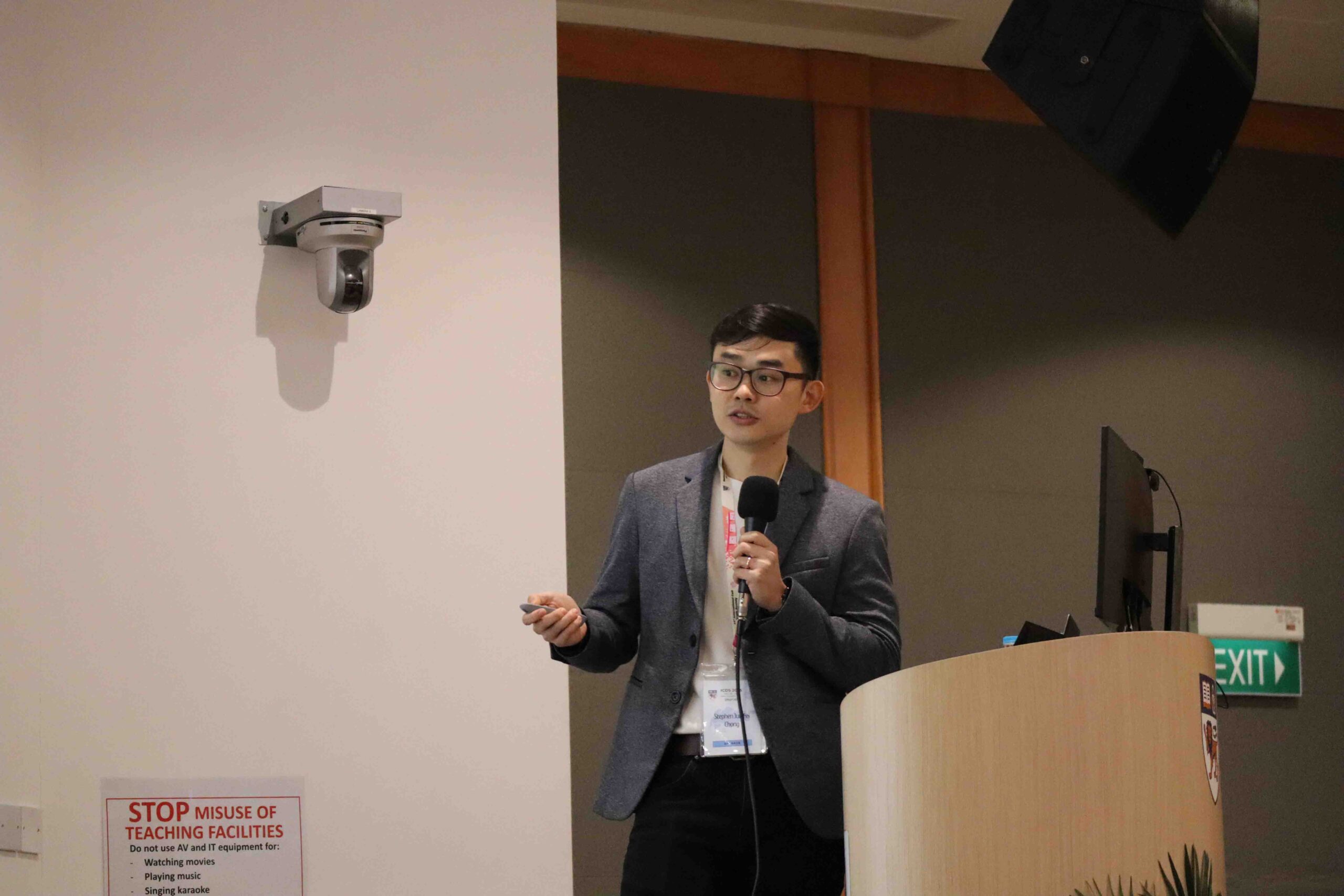
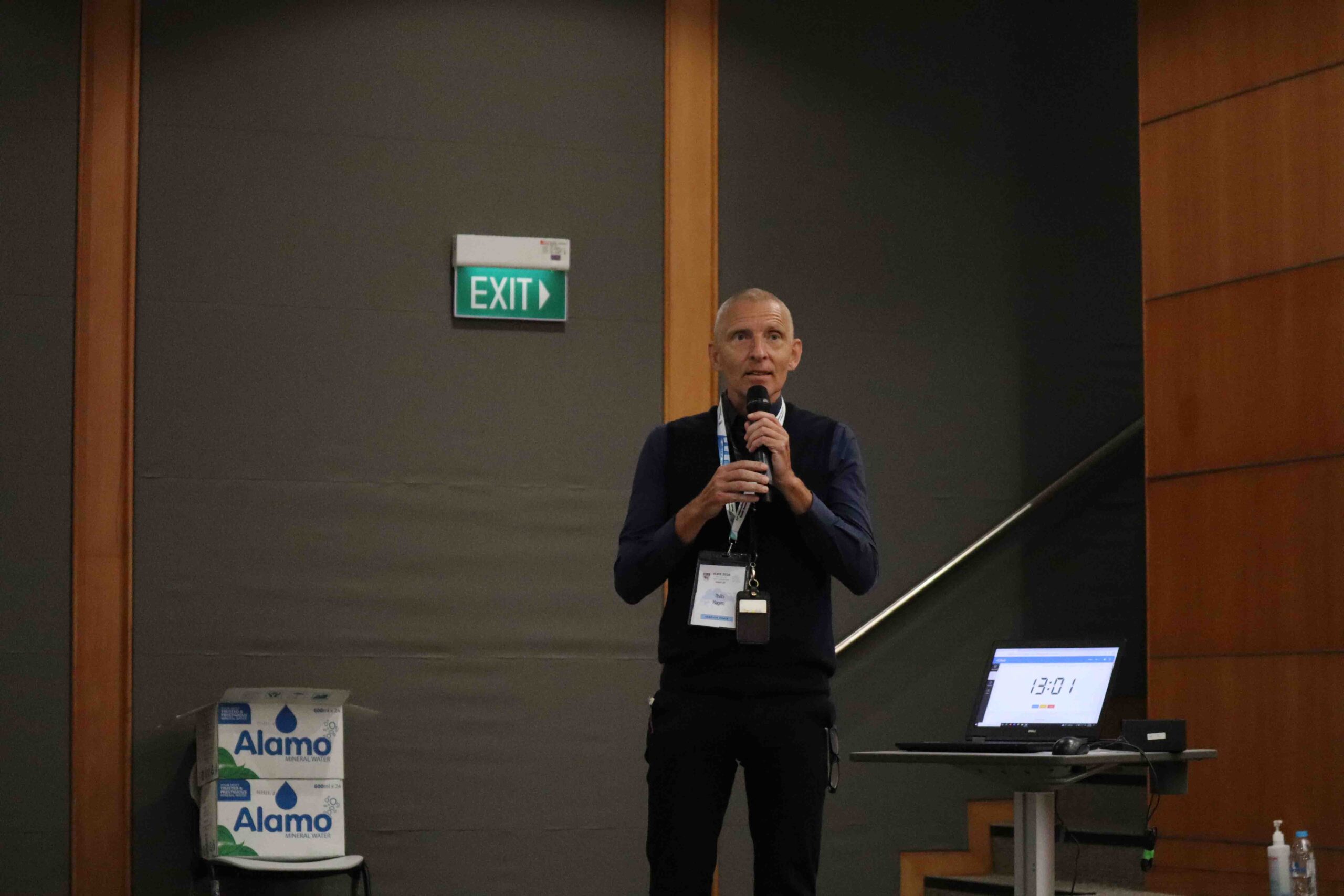
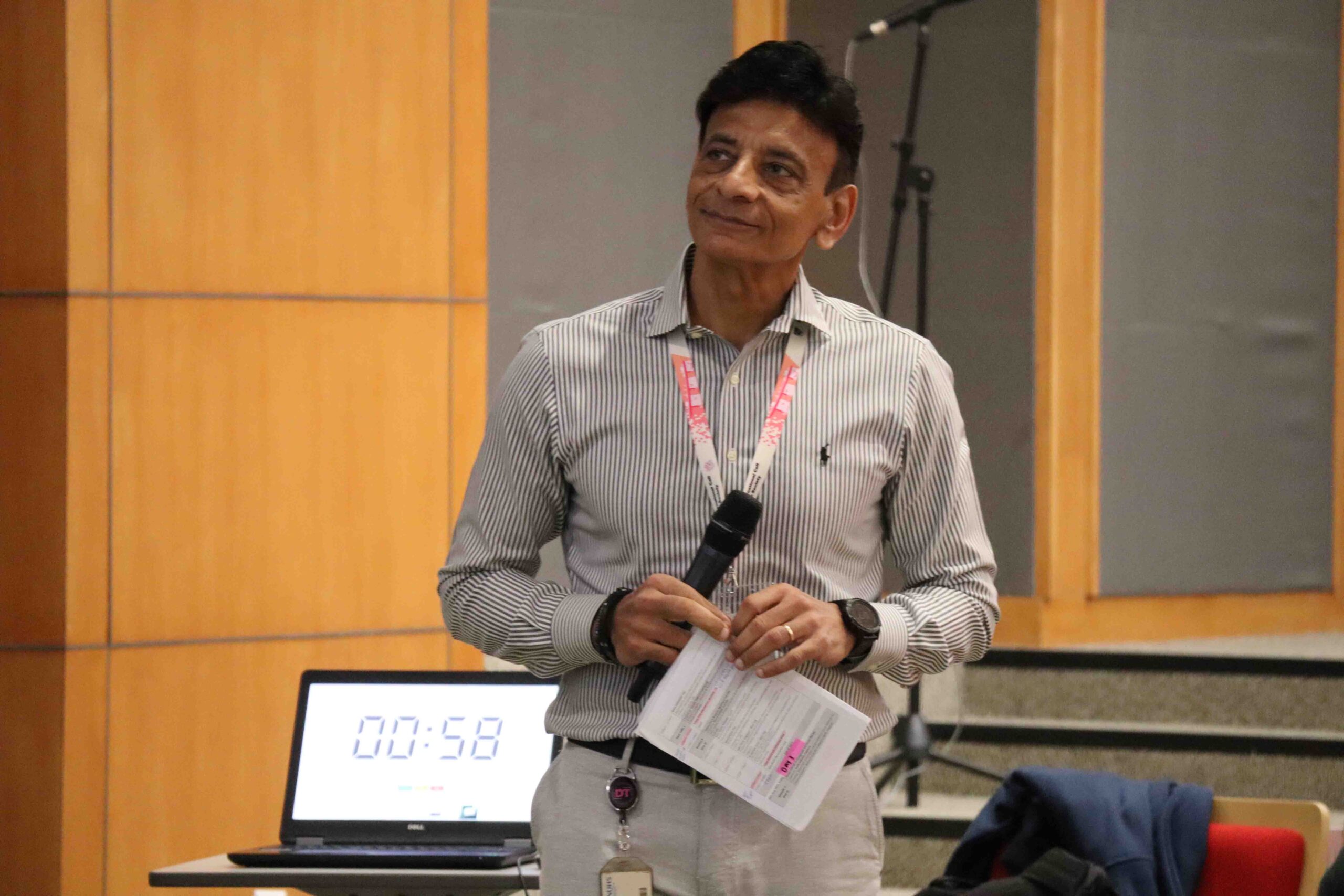
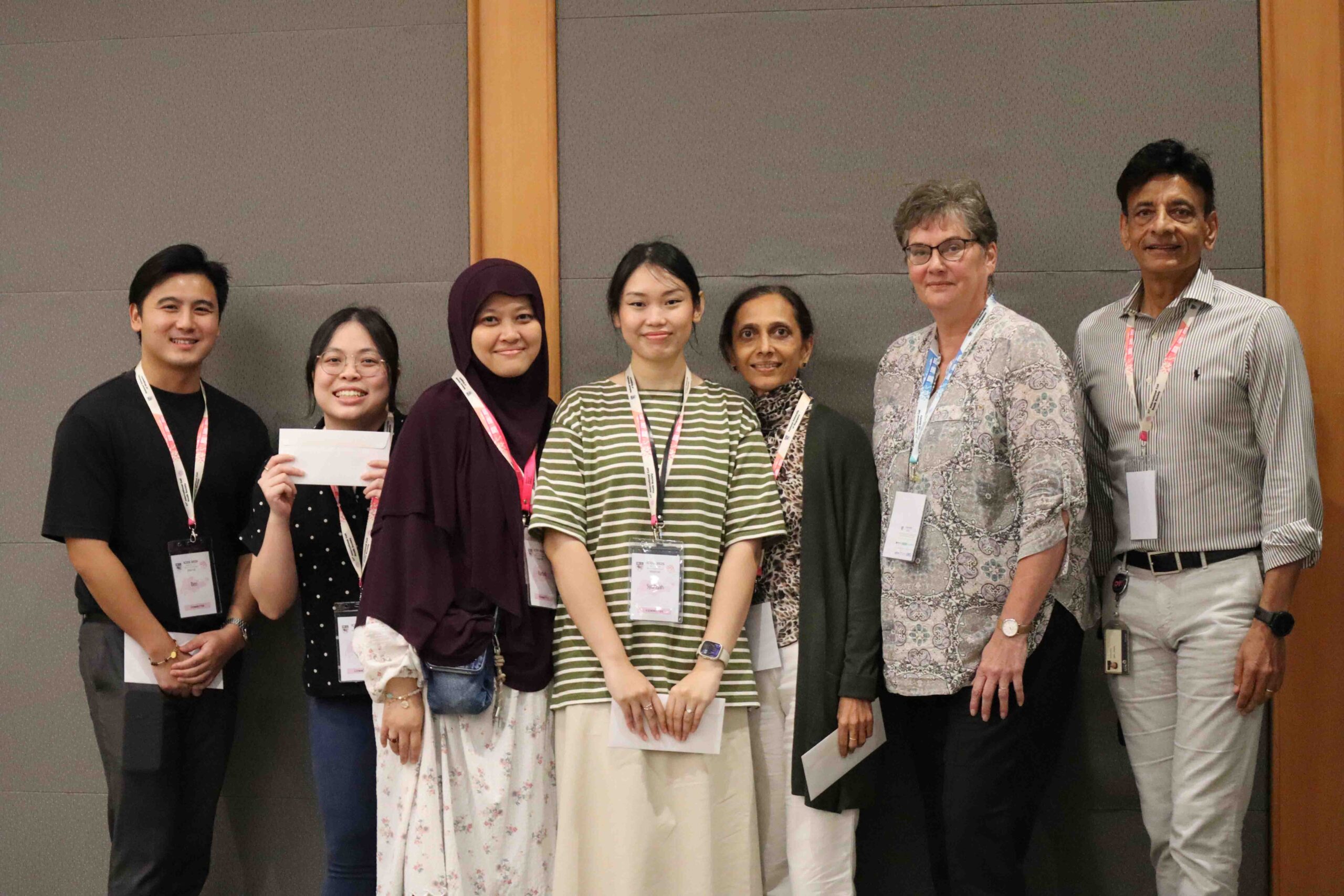
This week I attended a three day long scientitic symposium with my undergraduate student Kester, the 31st International Cell Death Society Annual Meeting, held at NUS School of Medicine. The theme of the conference was “Cell Fate and its Regulation in Health and Disease”.
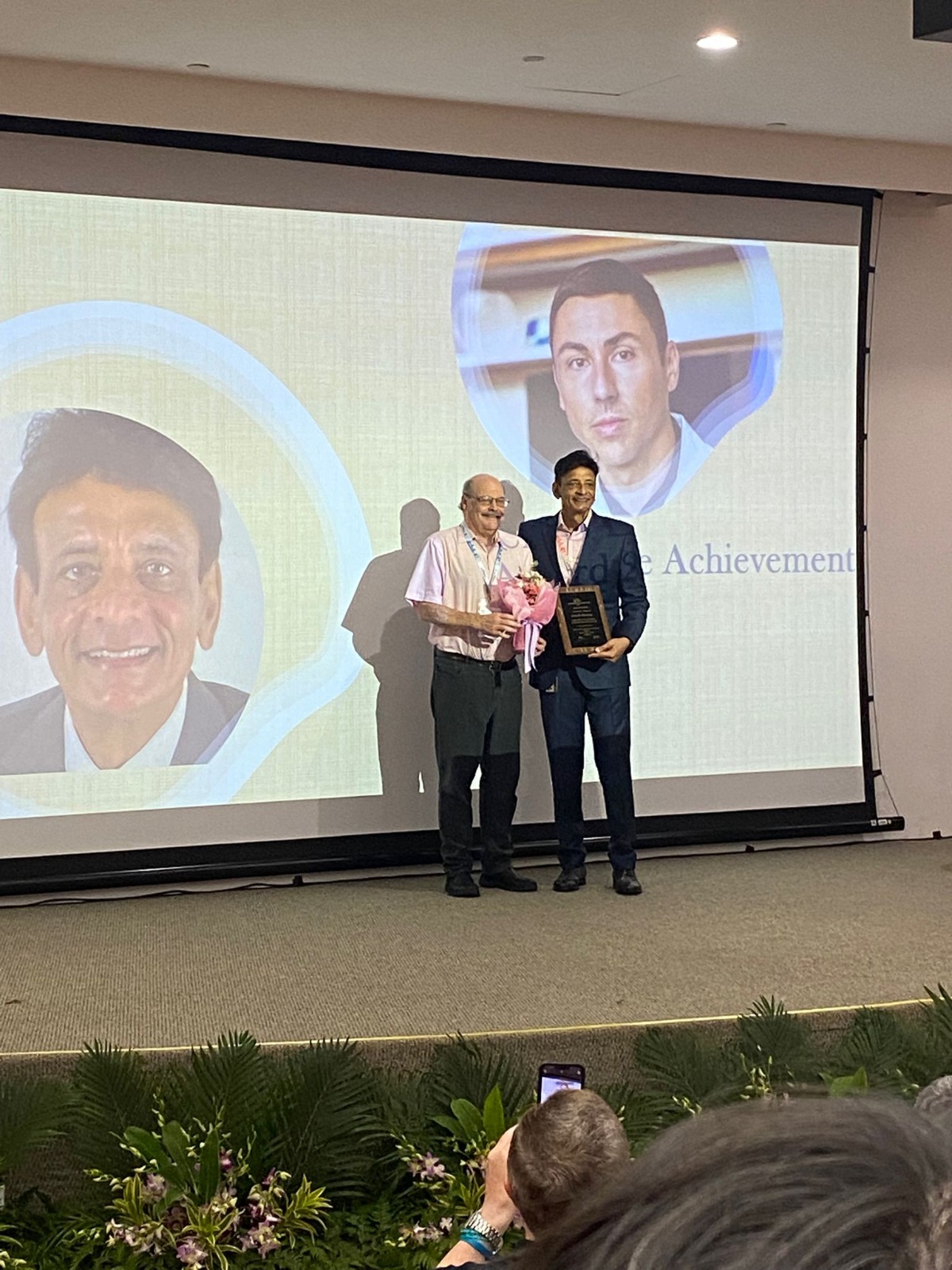
Our NUS staff running group member Shazib was one of the main organisers of the symposium and also received the International Cell Death Society life time achievement award on the first day of the conference!
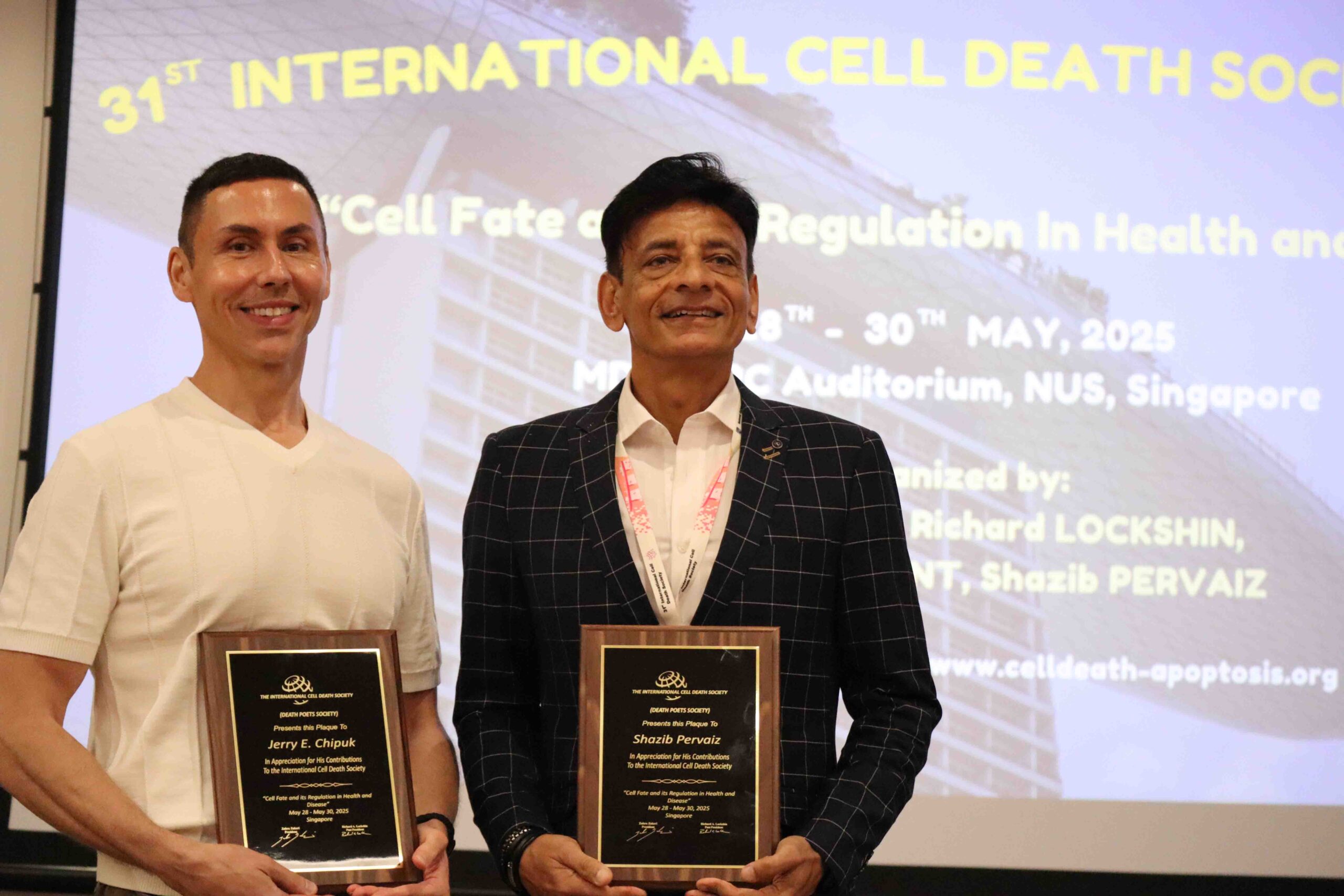
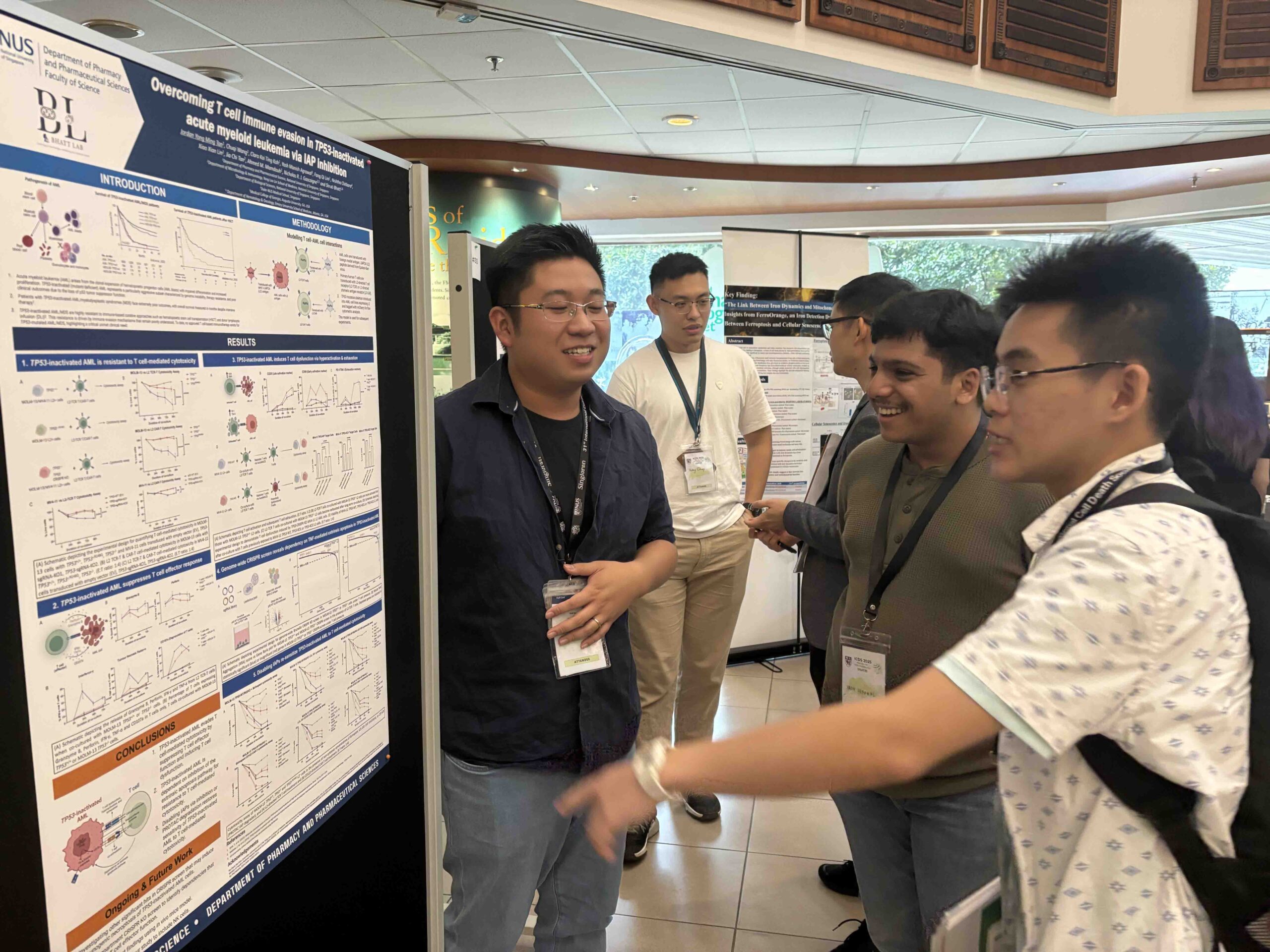
And here is Kester (on the right) discussing with Yash (second from right) the poster that Yash presented. Yash was also my student from last semester’s Cell Bio course.
All in all it I had a great time spending three days listening to many exciting scientific talks!
HIGHLIGHTS FOR WEEK OF 19 – 25 MAY
My ChatGPT assignment
One of my Cell Biology group assignments this past semester was based on a podcast I discussed previously, in which the host asked a real writer (the author Curtis Sittenfeld) and ChatGPT to write a story. The story had to include a number of words that were included in the prompt. The listeners could then test themselves whether they could tell which story was written by a human and which by AI.
I gave this assignment to my 45 student groups, letting the students listen to the two stories and then asking each group to discuss which script was written by a human and which was not and to justify their decision.
This does not seem like a typical Cell Biology assignment. Nonetheless, I believe it is relevant because when engaging with cell biology research in the real world, students likely will be using generative AI tools.
It turned out that 35 out of the 45 groups “guessed” correctly who the human writer was. However, what was much more impressive was the sophisticated reasoning that many of the student responses revealed.
Some students focussed on the writing technique, revealing in some cases extraordinary proficiency. One student group highlighted several techniques used by the human writer, including “parallel syntax” [a writing technique that employs similar grammatical constructions within a sentence or paragraph], “a flow that indicates authorial intent” and “foreshadowing”, where something that was said (or in the case of the story something that was not said) becomes significant later on. The student Zixuan continues …: “This is likely human intent that cannot come from a chatbot that predicts the next most likely word.”
It highlights something I have not really recognised – predicting the most likely next word in a sequence makes it difficult for a chatbot to develop intent in creative writing and to produce elements of surprise.
Analysing the ChatGPT generated story, Zixuan continues her impressive analysis and writes: “With the second story, however, the characterisation of Lydia is very disconnected from the exposition [or the background information of the narrative]. Details about her life at the start (e.g. frequents the cafe, has a child, late husband) explains her “greyness” in life when compared to her friend, but this is separated by meaningless exposition. Pragmatism as a character trait in her flip flops is assumed and not explained, and is meant to link to the love interest, but this is also separated by other exposition. The lack of explicit connection indicates a lack of thought as to what the narrative is meant to suggest.”
Another amazing comment was made by another student, who observed “The first story got the math correct which usually does not happen in non-reasoning AI models, the biker guy was born in 1971 and was 53 years old which is around 2024.” The same student also noted that the ChatGPT response was very conservative with regards to referencing interpersonal relationships, revealing a programmed avoidance of any kind of ambiguous references to love. Again, the students did not know which story was written by whom. As such, the ability to observe and note such subtleties is really amazing and suggests types of intelligence that we normally never test in science teaching.
It makes me recall another student in last semester’s course, Winston, who asked me some really amazing questions after classes, which I had never thought about.
When I was in high school, I remember taking a special physics course where during our first class one of the students asked the teacher a question. The teacher responded by saying that the question was so good that if this were a normal class, he would award the student with a “1” (which is in the German school system the equivalent of an “A”).
Winston got an A+ in the course, even without awarding him extra marks for his questions. But what the comments and questions by the two students illustrate is that I normally do not do enough to promote, encourage and award skills of observing details and asking good questions.
There were various other interesting clues that students recognised:
With regards to the human-written story, there was a rather broad consensus that it expressed more emotions, more informal expressions and “slang” (like ‘oh crap’, ‘I SWEARR!!!”) as well as more phrases that were unexpected and that “deeply connect with human readers”. The students concluded that these are things that AI generated texts usually do not contain.
I was particularly impressed that two groups pointed out references to the recent TV show Severance, which apparently gained popularity very recently and hence, ChatGPT was unlikely to have encountered information about the show during its training.
For the story written by ChatGPT, the students found even more indicators that gave the non-human origin away:
With regards to the language, the students perceived it to be more formal, too perfect and excessively descriptive. The word choice was not as simple as in the human story and instead, ChatGPT used more bombastic words. Several groups pointed out the flowery language as a common feature of AI generated creative writing.
With regards to the writing style, one group (group 16) noted that whereas the “first story has a specific style, the second story has a very generic narrative format. This shows that AI is leveraging on the existing database of narrative stories “
Another group (group 47) wrote: “… the second story feels highly formulaic and somewhat stiff. Although we can see the use of various rhetorical devices like metaphors and parallelism to enhance literary beauty, the lack of soul and the overly mechanical piling of words suggest that it is generated by AI trying to imitate real writers’ content by extracting so-called templates or formulas.”
There were also some specific tell tale signs that the students noted and that I missed completely: ChatGPT tends to use the rule of 3. Based on the sentence structure, the ChatGPT story seemed to use a lot of em dashes (long dashes), typical of AI generated text. Group 21 noted “… the entire setting is so cliche, … it is in third-person, the [prompted] word ‘flip-flops’ was repeated so many times – as if to match very close to the prompt given.”
Finally, Group 22 wrote this (which also goes to show how students make use of technology in ways that most professors are unaware of): “Only a writer, and not chatbot, would be able to capture such raw human emotions and strange experiences. Furthermore, the first story is more spontaneous, with random imagery and word choice that caught our attention more compared to the second story which really all we remembered was Lydia. The second story is too smooth and easy to understand if we actually paid attention (we transcribed using a dictation feature on OneNote!), and had very long sentences which are used in most basic stories.”
What it all goes to show is that students are really very AI literate!
HIGHLIGHTS FOR WEEK OF 12 – 18 MAY

Addictions: Searching for excitement
In my recent post on setting my priority I mentioned the importance of not wasting time on activities and thoughts that do not contribute to pursuing my priority or to improving my happiness. As such, I have been reading and thinking a lot about addictive behaviours, including reading a great book by Seana Smith “Going under”. In her book, Seana Smith describes how she grew up with an alcohol-dependent father, how she became alcohol dependent herself and how she overcame her dependency.
As a result of all this reading, I have come to a number of insights:
Firstly, the reason why we do addictive things is not just because they have become a habit, but because they are truly exciting and pleasurable to us.
Secondly, people have different addictive tendencies. This may in part be genetic (?). I do not drink any alcohol, but even if I did, I am confident that I would not become dependent on alcohol. I do not enjoy the taste and I have never had an alcohol-induced exhilarating experience that makes me want to drink.
I believe that our addictive tendencies are, at least to some extent, determined by our adolescent experiences. The author Seana Smith started drinking alcohol as a University student, and this practice was linked in her brain to many exciting experiences. I started collecting records in my teens and continued to do so in my twenties, and I have lots of exciting memories of finding record stores all over the world.
Of course, we can pick up addictive habits at any stage during our lives. But it appears that the longer we experience a habit, the more difficult it becomes to change this habit.
The third insight is that it is difficult, probably impossible, to “control” an additive tendency or to pursue an addictive habit in moderation. Seanna Smith writes at the end of her book:
“Stopping completely is a piece of cake compared to the mental torture of attempting to moderate when you just can’t. Make your life better, make it easier. Set yourself free.“
When we engage with our addictive habit, our brain experiences either pleasure, which drives us to continue, or a lack of anticipated pleasure. Because of our memory of pleasurable experiences when pursuing the habit, we try to find pleasure at all cost.
For example, when I used to visit “physical” record stores a lot, there were two possible scenarios. The first is that there were loads of interesting records, which got me excited and made me keep on searching to ensure I will not miss anything. Alternatively, there were no interesting records, as a results of which I felt the urge to keep on searching until I find at least one interesting record, to satisfy my search for pleasure and excitement. I personally feel that this is true for any addictive habit, even the consumption of alcohol.
This brings me to my fourth and final insight. If we cannot stop once we have started, we need to find ways to not start in the first place.
As such, an important question is why do we start pursuing an addictive habit in the first place, against better knowledge that we actually do not want to engage with this habit and that we will likely regret our action afterwards. The reason is of course that our brain seeks novelties, unexpected experiences and exciting discoveries. This makes sense from an evolutionary standpoint in a world where there aren’t many novelties. But it is not well-suited in a world where there are novelties in abundance.
This makes it clear that it is critical to address the desire to have an exciting experience. There are various commonly recommended approaches to curb this desire. Being able to maintain abstinence for extended periods can help, because it makes our brain “forget” the pleasurable experience. To achieve abstinence, we can implement practical measures, such as ways to introduce accountability.
Another approach that I have previously discussed is Rational-Emotive Therapy/Addictive voice recognition technique, where we dissociate ourselves from our “addictive voice” and make a commitment to life-long abstinence, consequently not even entertaining the possibility of ever falling back onto our addictive habit.
However, many people are not willing to make a life-long commitment, for fear that they will lose their pleasurable experience and that there will be nothing to look forward to. This is because it is difficult to imagine that a habit will one day become unimportant to us, even though probably everyone has lost interest in some things that we used to be very passionate about. Another danger when making a life-long commitment to abstinence is that people develop new addictive habits instead.
There is also the substitution strategy, where people find other things to replace an addicitve habit. In the case of alcohol dependency this could be non-alcoholic drinks. We could find other activities that we are really excited about, so that the temptation to waste time with an addictive habit becomes less likely.
However, these “solutions” do not get to the real issue that in the ideal scenario, I would like to be able to make the free decision to not pursue things that I know do not contribute to my well-being and happiness. To achieve this, we have to find ways to not start an addictive activity in the first place, as discussed above.
As such, I believe that the best strategy is to convince ourselves that an addictive habit is not truly as exciting as it may seem.
After giving this much thought, I feel that one possible approach is to focus on what I have instead of what I want and to change the emphasis in my life from exploring and discovering novelties to enjoying life.
The idea that life is not principally about discovering novel things and experiencing makes sense to me because there is no end in doing so. Discovering something always leads to new questions and the urge to discover more. Because we can never discover everything, it is difficult to gain satisfaction from exploring new things. I believe that life is really about living and enjoying life, and most people (at least in our society) have everything that they need to achieve that. Of course, we need to explore some novel things to make an impact in our sphere of influence, but we do not need to do it to live a happy life.
I have in the past decided, consciously or unconsciously, to not spend time and thoughts on things that I could be obsessed about, such as buying new audio equipment or sports related items, such as buying the latest running shoes or getting a new bicycle, because none of these things would fundamentally change my experience. This has helped me greatly in not getting distracted by things that are not important. As such, I will try to expand this mindset to all areas of my life.
For instance, I have compiled a long list of books that I want to read. If this was a list of research or education papers that I want to read to come up with new research ideas or teaching strategies, then this would make sense. But the book list is based on a “fear of missing out”, worrying that I may miss out on reading potentially amazing books. The truth is that no matter how long my list is, it will always only include a fraction of what I could truly discover. The logical conclusion then is to not compile ever longer lists, but to drop the idea of compiling a list altogether. There is no doubt that I will never run out of interesting things to read, whether I compile this list or not.
The purpose of reading is to enjoy reading, not to read every possibly exciting book there is.
The purpose of living is to live happily, not to live the best possible life.
And so when facing new exciting, potentially addictive, opportunities, we can say to ourselves that there is no point in pursuing ever more exciting possibilities because what we have is already enough.
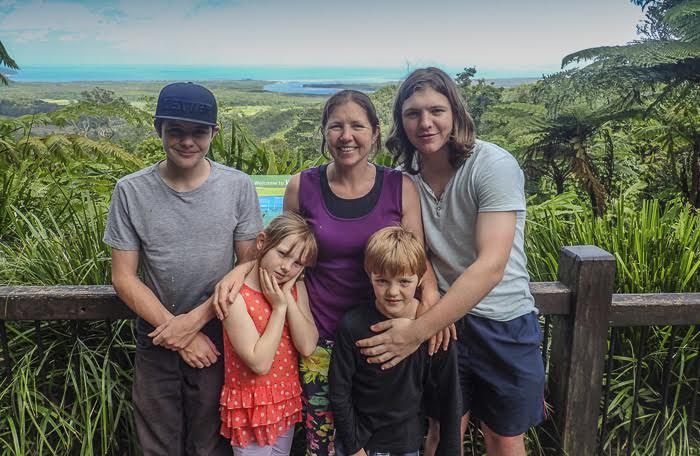
So finally, how did the author Seanna Smith, pictured above, manage to overcome her alcohol dependency?
As mentioned above, she could not bear the thought of never drinking alcohol again, and hence was unable to commit to “never drink again”.
Instead, she set the goal to stay abstinent for one month. She also discovered non-alcoholic drinks that she really enjoyed.
After some time a shift happened for her, where something she could not imagine previously became possible – the thought of never drinking again. This turned into a plan and eventually into reality.
HIGHLIGHTS FOR WEEK OF 5 – 11 MAY
My plans
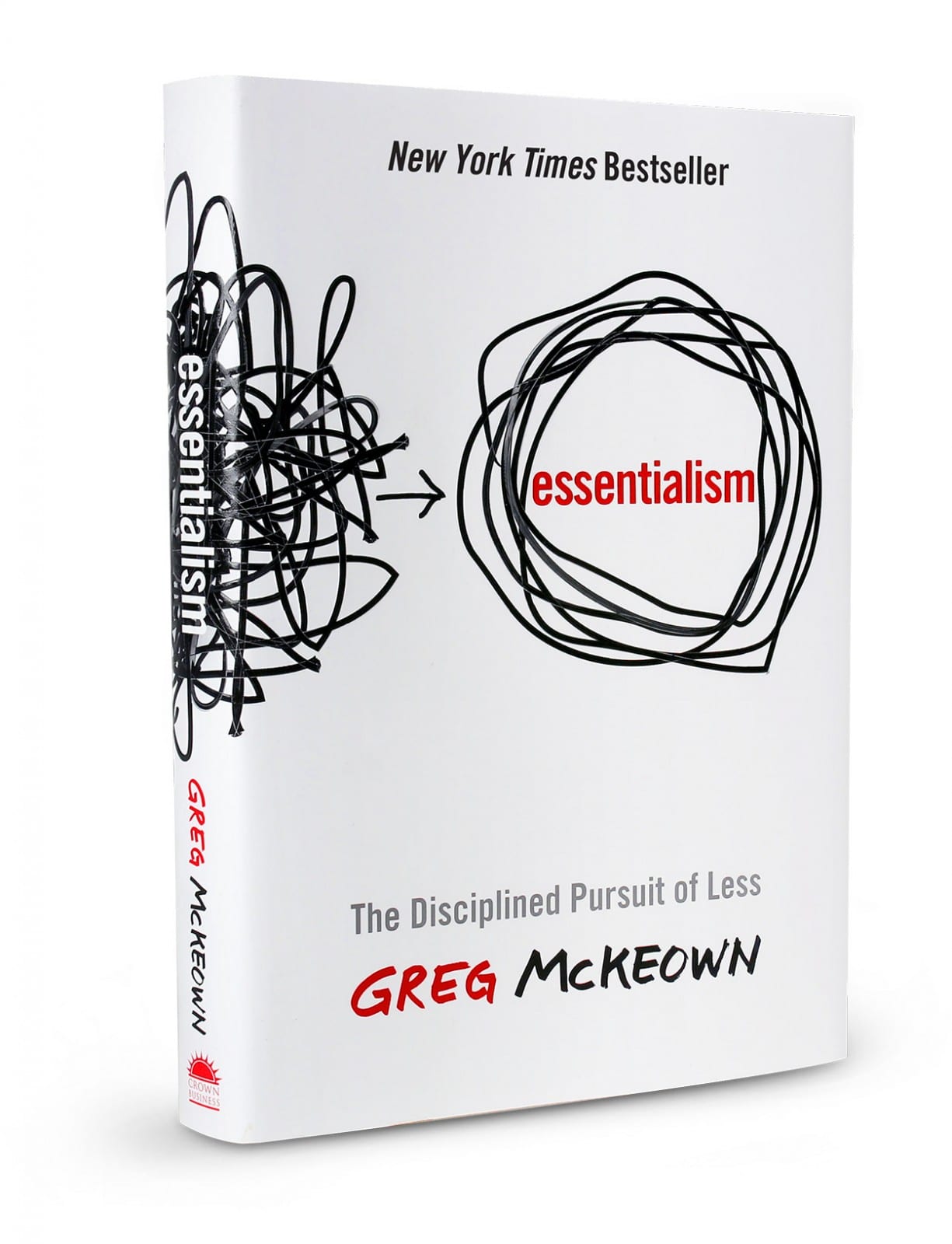
The semester is over and I feel excited about the new gained freedom. As I am planning how I want to spend my time in the coming months, I want to be careful to not pursue too many things. As such, I am re-reading (or reading it for the first time, I am not so sure…) Greg McKeown’s “Essentialism – The disciplined pursuit of less“, in which he discusses the importance of setting priorities in our lives.
To be more accurate, according to McKeown I should be setting the singular priority. As the author emphasizes, according to the true meaning of the word, there can only be one priority. Yet, many people, including myself, tend to pursue priority No.1, priority No.2, No.3 etc. As a result, none of these things becomes a real priority.
That said, setting a priority does not mean that we do not do other things. But it means that we are willing to give up other things in favour of our priority when necessary.
When trying think about how I want to spend my time in the months to come, in addition to setting a priority, there are a number of other considerations.
These include firstly how I can incorporate into my daily life activities that are important for me to live happily. This includes planning time to do things that I enjoy and look forward to, including spending time outdoors, listening to music and reading, and that are important for my happiness, such as doing exercise and sleeping enough.
Yet another challenge is to minimise time spent on distractions in the form of unhelpful habits and unwanted thoughts that neither help me in achieving my priority nor in feeling happier.
I will leave the distractions for another post, and focus here on my priority. The concept of setting a priority echoes with me because these days, after the busyness of the semester is finally over, I realise how short my days are, especially when there are so many things I would like to do.
Furthermore, it is true that without dedication towards one specific thing it is difficult to make true progress. A good example is research, where it is easy to have an idea, but hard to test this idea and even harder to complete all experiments necessary to publish an idea and convince others of it.
When thinking about priorities that I could focus on in the months to come, a number of things come to my mind.
Firstly, there is my research, which I was forced to neglect over the past few months. There is, however, the constraint that our resources for research are very limited.
Secondly, there is my stated goal of achieving accomplishments this year, including establishing a creator LinkedIn profile where I share my teaching experiences.
I could also prioritise to improve my teaching or to become an athletics coach. Finally, I could focus on personal improvement, such as gaining public speaking or writing skills.
That makes five potential priorities, when I can only have one. How to decide on the priority?
Perhaps I could try to ask myself a number of questions:
What do I feel inspired by? The true answer is “all”.
What gives me joy and satisfaction? The answer to this is “all” as well.
What would have the most impact? Probably improving my teaching, research and athletics coaching. The reason is that for all of these activities I can make a direct impact on people, whether it is my students in the classroom, my students in the lab or people becoming excited about exercise.
What will be important for my future, especially after I retire? Most likely accomplishments, athletics coaching, and personal improvements, because all of these may open up new opportunities.
What can I do later? Given that I am only a few years years from retirement, the only thing that I could potentially put off for a bit is personal improvement.
Another question to ask myself is what will be of importance to me when I eventually will be looking back on my life? It will unlikely to be research discoveries. It will also less likely be people who I made a difference to because in most cases the impact I have is only temporary.
What I think will be important, besides experiences and times I spent alone and with my family, are personal achievements that only I could have done – teaching Cell Biology in ways that nobody else has done, organising the annual Young Scientists Symposium in a way that it has become a meaningful event, establishing an NUS staff running community, perhaps also publishing a book.
However, thinking about all these questions is not really giving me an answer. So why am I thinking about setting a priority in the first place?
The true reason is that I do not want to feel stressed and not be able to have enough time for myself.
Hence, having enough time for myself should perhaps be my priority. I can still pursue all the other things, but they should not be in the way of meeting this priority.
Life is short, and as I have read somewhere recently, people often realise too late that they have not lived enough. This usually happens when their health is failing and they realise that they no longer can do all the things they would like to or wanted to do. It goes to show how important it is to do the things that are important for us personally now.
HIGHLIGHTS FOR WEEK OF 28 APRIL – 4 MAY
Designing an AI safe exam
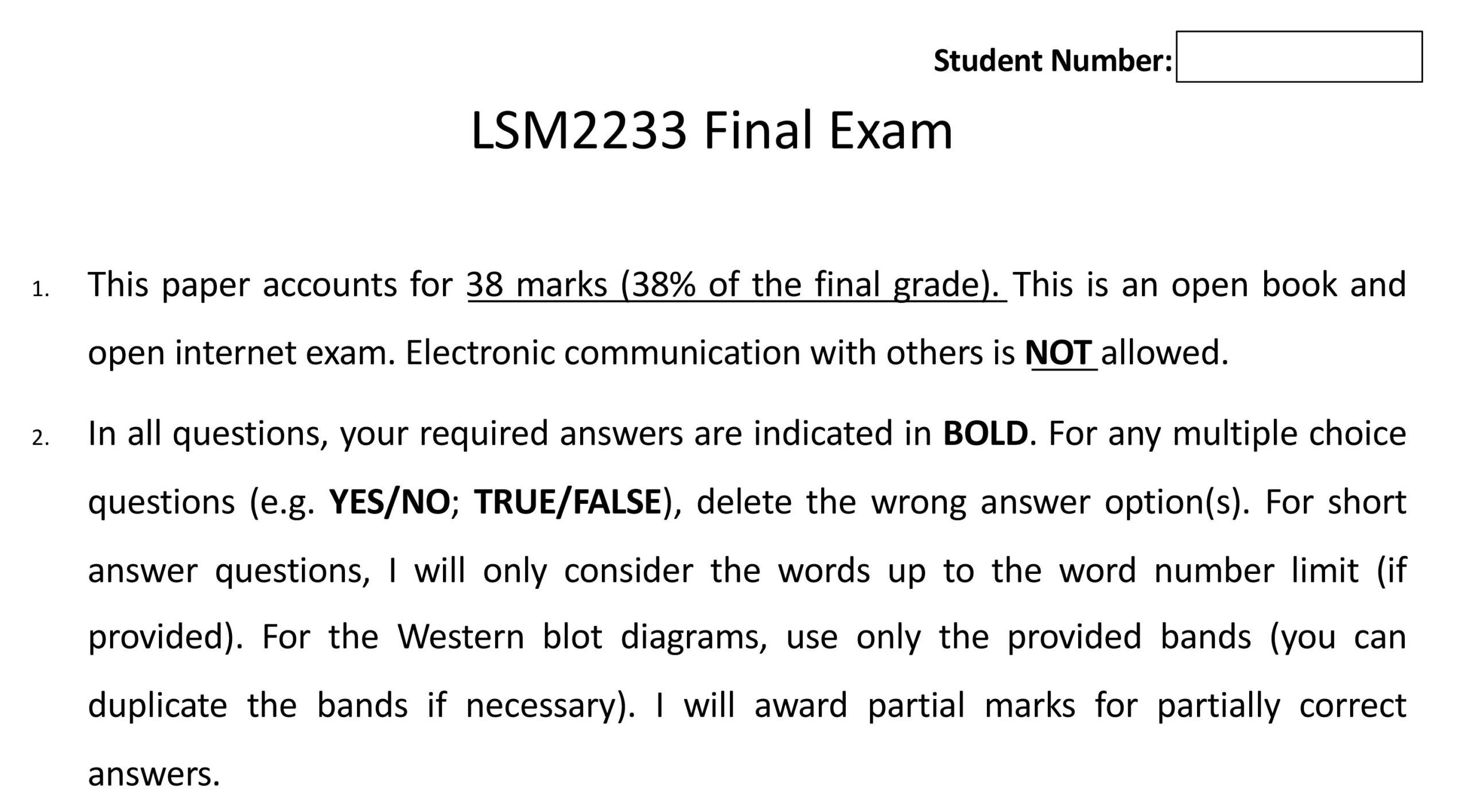
Last week was the week where my 136 students took my Cell Biology final exam. After the experience of many technical difficulties in the mid-term test, I made the decision to make the final exam an open book and open internet assessment. While this would address potential problems with blocking the internet and password-encrypted files, it meant that I was taking a significant risk as to whether I could come up with an AI safe set of exam questions.
My decision to conduct an open book and open internet exam served three purposes.
Firstly, I wanted to avoid the above-mentioned technical difficulties. Indeed, the exam proved to be very easy to conduct. All I had to do was publish my exam file at the beginning of the exam. I could even amend my exam questions literally until the last minute.
As a result, the exam was free of stress for me. Likewise, the students looked more relaxed. While there was still the usual exam related stress, the students did not have to fear technical problems and likely felt assured that they could rely on the open internet. I felt that this was the atmosphere that I would envision for a real world like exam. Indeed, conducting an exam that mimics the situation that students encounter in the real world was the second reason why I decided to allow an open internet.
The final reason for allowing free online access was to help students to learn how to use generative AI responsibly and make their own, wise choices about when and when not to use chatbots and how to use them. I also wanted to make the exam consistent with the message that I was trying to convey to the students throughout the semester: Generative AI tools can be helpful for certain practical applications, but we should avoid handing over things that make us human and let is enjoy our work and lives. Teaching students to make these choices can only be achieved if we offer them these choices and let them experience what the consequences of choosing different approaches are.
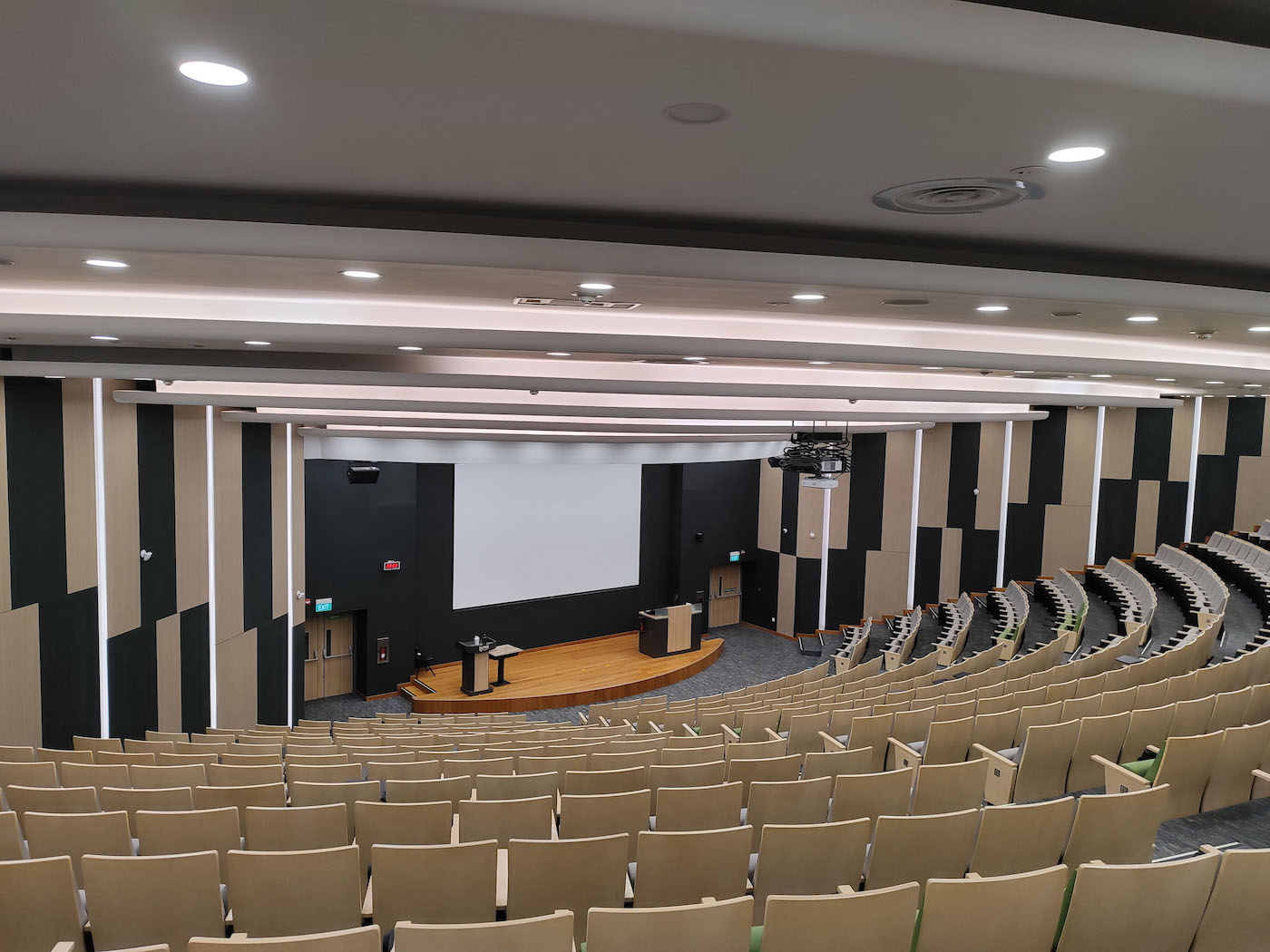
Our exam venue
What did I have to do in order to make my exam “AI safe”?
Firstly, we had to find a suitable venue that allowed us to invigilate the students properly as well as solicit additional invigilators in order to ensure that students do not communicate with each other using their laptops. I also told the students that while they are allowed to use ChatGPT or other chatbots, they are not supposed to paste the whole paper or individual questions into the chatbots.
Of course, students not pasting questions into ChatGPT was difficult to enforce and hence I also had to design suitable questions that could not be answered by ChatGPT and test the questions beforehand. Besides not giving students too much time during the exam, there were two strategies that helped to make the questions AI safe. One was including many questions that involved drawing of diagrams. The other was that half of the questions were based on a research paper, which the students were given a few weeks before the exam. Answering these questions really required very detailed and specialised knowledge that ChatGPT did not have. A third approach was to include in some of my questions the answer proposed by ChatGPT and let students evaluate whether the chatbot response made sense and justify their answer. As a result, as one student attested, ChatGPT was unable to provide much help in answering my questions.
One question is whether this approach is sustainable, given that AI will improve, and likely in an exponential manner. I think that in the near future the answer is (hopefully) yes, in particular if I continue to focus on problems that require detailed prior knowledge, as is the case when answering questions about data figures in a research paper that the students need to study before the exam. As such, I am considering to only use research paper based questions in my exams in the future. This will probably require that I assign the students two papers before the exam.
How did the exam go?
Reassuringly, there were no problems related to question ambiguity or lack of clarity, which is always a big relief.
As always, the exam was difficult, with an average of only about 50%. One third of the students could not finish, even though I always try to predict generously how much time students would need to answer the questions. That said, there are two limitations. Firstly, knowing the answers and not being a student makes it difficult for me to predict how long a student who does not know the answers may need. Secondly, I assume that students have a certain amount of knowledge and do not spend time looking up basic information. As such, I suspect that many of the students who did not finish all questions were either not well-prepared or did not plan their time well.
This again brings me to the recurring question of whether I should make my tests and exams easier. However, every time I consider this, I end up with the same considerations and conclusions:
1. Scientific research is difficult, so why give students the impression that it is easy. As such, making questions too easy can give students a false sense of mastery. It may also make them disappointed that despite doing “well” in the exam, they do not end up with the grade they predicted. In fact, by making the exam difficult, students will be much more likely surprised that their grade ends up better than they had expected.
2. Giving students more time will not necessarily allow them to think the questions through more thoroughly. Instead, many students are likely to spend more time searching their notes or consulting ChatGPT.
3. Difficult questions are ultimately the best way to determine how much students have understood in the course and how well they are able to apply what they have learned.
So all in all, my Cell Biology final exam was a success. It proved to be stress free, fair and although difficult, able to assess how much students have learned.
HIGHLIGHTS FOR WEEK OF 21 – 27 APRIL
The age of screen culture
While every time during my busy teaching semester I try to maintain my usual daily schedule, towards the end of the semester this invariably fails. The end of the semester usually means that I literally give up everything else because my teaching-related commitments have become so demanding. And this semester has been no exception.
The problem with this is not only that I do not have time to do things that are fun. It also means that I stop truly living. I stop being a person who enjoys learning, creating, coming up with new ideas and finding solutions to problems. Instead, I become a person who only focusses on meeting all the deadlines.
I have no doubt that the same is also true for students, who when facing all the stress of the end of the semester turn to ChatGPT or Deepseek to complete their assignments and try to find temporary “relief” by spending time on their screens because there is no time for meaningful pursuits.
However, the use of chatbots as an easy solution and the lack of true intellectual engagement are contrary to the real purpose of University education, which is to prepare students for their future. This is exemplified by two interesting articles that I read recently.
The first dealt with how generative AI use can undermine the development of metacognitive skills.
Metacognition involves skills that go beyond being able to just carry out a task mechanically. Instead, it entails true understanding of a process, finding of individual solutions, being able to spot errors and fix them and knowing when to check for inconsistencies. The process of gaining metacognitive skills involves planning work independently, observing and reflecting on why a process has failed, asking questions and learning from mistakes.
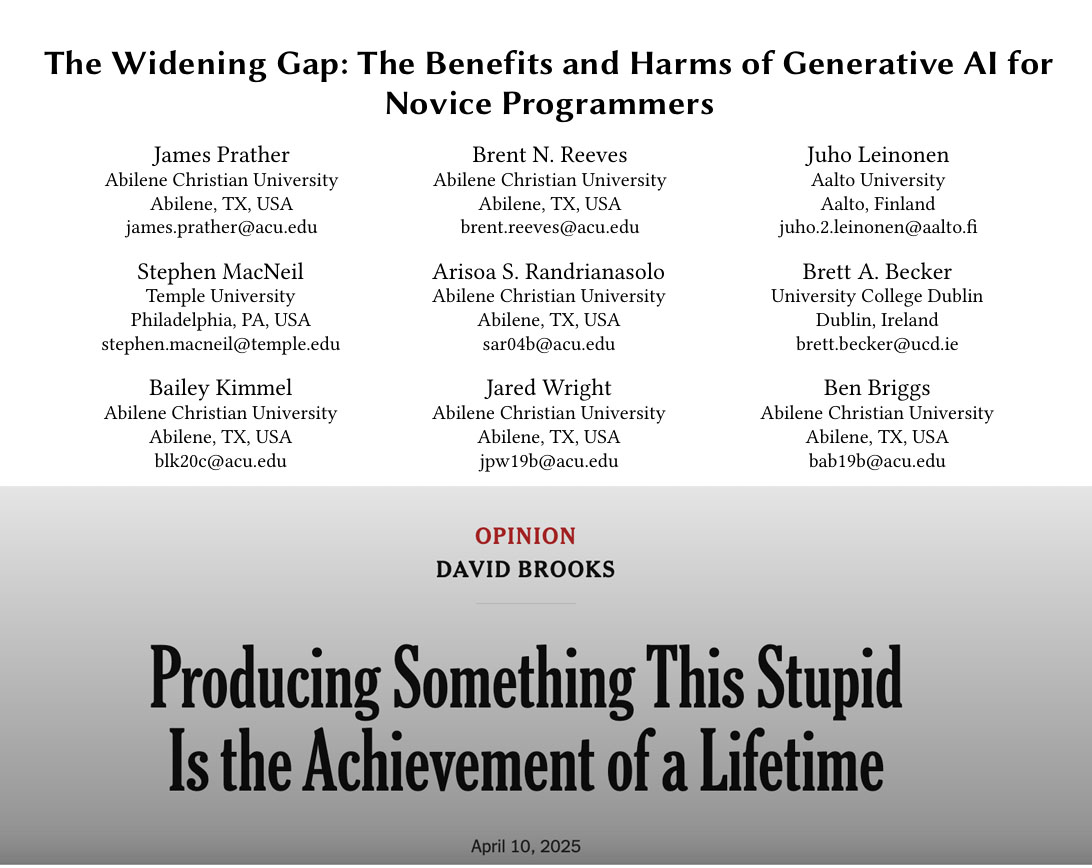
In a recent article, entitled “The Widening Gap: The Benefits and Harms of Generative AI for Novice Programmers“, Prather et al. examined novice students solving programming problems with the aid of generative AI tools. In their study, the authors monitored the students during numerous coding lab sessions through observation, interviews and eye tracking.
The study came to three main conclusions:
Firstly, the authors found that students who possessed well-developed metacognitive skills benefited from using generative AI tools to complete the coding assignment faster. While using AI tools such as CoPilot and ChatGPT, they were able to ignore unhelpful or incorrect code suggestions. They were selective in terms of which suggestions they accepted and which not and often opted to think through problems on their own.
In contrast, students who lacked metacognitive skills did not benefit from using the generative AI tools. They accepted suggestion by the CoPilot AI tool more readily, and often realised later that these suggestion were unhelpful, prompting them to start all over. Instead, these students completed the assignment with an illusion of competence. In one example, the authors noted that based on a student’s comment, he or she “seemed to think that ChatGPT had augmented their critical thinking rather than replaced it, but the data above contradicts that.”
Finally, and possibly most importantly, for neither of the groups did using the generative AI tools help the students to develop or improve their metacognitive thinking skills.
In short, while AI tools did help some (but not all) students to accomplish tasks, it did not help with the learning.
This leads me to conclude that there are really only two reason to use generative AI tools in my own teaching.
One is to familiarise students with how to use specific AI tools effectively. This requires that we as teachers first learn how to use specific tools effectively ourselves. Otherwise, we are unable to help students to develop the skills, set suitable assessments and evaluate student output.
The second reason is to help students to develop metacognitive skills by designing exercises that evaluate AI tool output. This is something that I have focussed on in scientific writing and in research design tasks. And I will continue to incorporate these exercises into my teaching.
The second article that really inspired me is David Brooks’ column in the New York Times “Producing Something This Stupid Is the Achievement of a Lifetime“, in which he is referring to Donald Trump’s tariff policy.
In his article, David Brooks makes two important points: Firstly, reading, thinking and learning to overcome difficulties is important to future success. Secondly, in our current times, these things are being devalued, because people believe that we do not need these skills anymore. The consequences are arrogance, an inability to detect flaws in our thinking and ill-informed decisions even by people that hold position of great power.
David Brooks notes: “My biggest worry is that behavioral change is leading to cultural change. As we spend time on our screens, we’re abandoning a value that used to be pretty central to our culture — the idea that you should work hard to improve your capacity for wisdom and judgment all the days of your life.“
David Brooks makes the point that constantly scrolling on TikTok does not only waste valuable time, it can also actively compromise our ability to focus and pay attention. Moreover, to come up with our own insights and make a true and original impact, we need to process our thoughts through thinking, reflecting, writing and overcoming difficulties.
I would like to add that the process of coming up with our own insights is also one of the most enjoyable aspects of life and thus one that we should not compromise.
David Brooks quotes Jim Mattis and Bing West, who wrote, “If you haven’t read hundreds of books, you are functionally illiterate, and you will be incompetent, because your personal experiences alone aren’t broad enough to sustain you.”
And Greg McKeown, in his book Essentialism, quotes Peter Drucker who said: “In a few hundred years, when the history of our time will be written from a long-term perspective, it is likely that the most important event historians will see is not technology, not the Internet, not e-commerce. It is an unprecedented change in the human condition. For the first time – literally – substantial and rapidly growing numbers of people have choices. For the first time, they will have to manage themselves. And society is totally unprepared for it.” Greg McKeown adds “… the more choices we are forced to make, the more the quality of our decisions deteriorates.”
When looking back at my own life I can certainly say that before the availability of so much technology it was certainly easier to do the “right” thing. As such, the only logical answer would be to consciously restrict our own choices.
HIGHLIGHTS FOR WEEK OF 14 – 20 APRIL
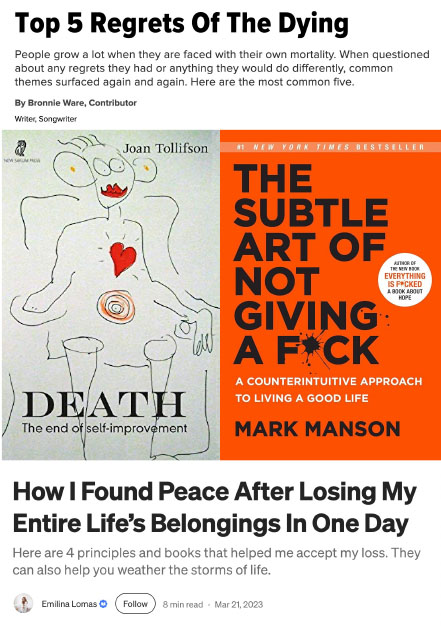
Things I read
Recently I have been thinking and reading about dying, for two reasons. Firstly, I want to become more comfortable with the fact that I will die in the not too far future. Secondly, being consciously aware of my death is important to make choices about how I want to spend the time that I still have on this earth.
There is firstly the book “Death – The end of self-improvement“, which I have discussed previously. I finally finished the book, and I must say that the book profoundly changed how I think about getting old.
Our society normally considers the physical problems that people encounter as they get old as something embarrassing that should not be discussed openly and be ignored. In contrast, the author Joan Tollifson describes in graphic detail the process of her bodily deterioration. Her account was a revelation to me and at the same time a liberation, because it changed my expectations and my sense of what is normal.
Even more astonishingly, Joan Tollifson manages to view the whole process of getting old as something natural and interesting. She even tries to look at body changes with humour or attempts to see the positive side of things. This is even true when she is treated for colorectal cancer, necessitating radio- and chemotherapy and multiple operations, as the result of which she ends up with an ostomy. While this prevents her from going on any more travels and binds her to the small town in Oregon to which she recently had moved, she is able to look at this positively by appreciating the tranquility of her restricted life.
Joan Tollifson’s book allowed me to gain a new perspective towards getting old. Accepting what getting old means encourages me to focus on what really matters to us, and to not worry so much about the rest. It made me realise that one can be happy with less and that physical restrictions do not have to affect how happy we feel with our lives.
In fact, I can already feel that I am losing interest in technically challenging things like windsurfing (which at the end of last year I finally decided to give up) or inline skating, in favour of more simple ways to exercise, like running, walking or cycling.
Mark Manson’s book “The Subtle Art of Not Giving a Fck” has a chapter entitled “… and then you die”. Here, he talks about the life changing impact of seeing his close friend die in his early twenties. The death of his friend affected Mark Mason deeply. He even dreamt of his friend.
In one of his dreams his friend said to him: “Why do you care that I’m dead when you’re still so afraid to live?” Mark Manson realised then that when being aware that we will die some day, there is “no reason to not do anything; [and] that in the face of the inevitability of death, there is no reason to ever give in to one’s fear or embarrassment or shame …”. Looking back at his life, he writes “that by spending the majority of my short life avoiding what was painful and uncomfortable, I had essentially been avoiding being alive at all.”
The death of his friend was what finally changed his life and sent him off to do things that were meaningful to him:
“That summer, I gave up the weed and the cigarettes and the video games. I gave up my silly rock star fantasies and dropped out of music school and signed up for college courses. I started going to the gym and lost a bunch of weight. I made new friends. I got my first girlfriend. For the first time in my life I actually studied for classes, gaining me the startling realization that I could make good grades if only I gave a shit. The next summer, I challenged myself to read fifty nonfiction books in fifty days, and then did it. The following year, I transferred to an excellent university on the other side of the country, where I excelled for the first time, both academically and socially.”
Thinking about death, even at a young age, had a profound influence over how Mark Manson continued to live. He realised that living a good life does not mean living an easy life.
Bronnie Ware, who used to be a palliative carer and wrote the book “The Top Five Regrets Of The Dying” (which I did not read, but hope to …), noted that the most common regret people have before they die is wishing that they had the courage to live a life true to themselves, not the life others expected of them.
What this requires is of course finding out what being true to ourselves means for us. For me, I realised that being true to myself is doing things that I am truly excited about in my work. In my free time, it is being outdoors doing exercise and spending enough time on my own.
That said, I am aware that many people are not as lucky as I am and have no choice but to live a very hard life. However, no matter how difficult life is, it is still up to us how we look at our life and the things we spend much or our time. We can look at it as something we do because it is expected of us or because we have no other choice. But we can also look at it as something we do because it is in some way meaningful to us.
We also have a choice to look at things we have to do as something painful or as something exciting. The book “The Stoic Challenge“, which I am currently reading, re-tells a story by author Jean Liedloff in which she joined two Italians to go to Venezuela, hiring several South American Indians and trying their luck art diamond hunting:
“At one point in the journey, they had to carry the canoe over jagged rocks in the tropical sun, with Liedloff doing her share of the carrying. All of them got cut, bruised, and seared by the sun-heated rocks. In the course of the portage, though, she noticed that whereas the Italians were treating each cut and bump as another setback and cursing in response, the Indians were treating the experience as a game. The canoe’s unpredictable movements made them laugh. Getting pinned against hot rocks by the canoe was for them not grounds for complaint but an excuse for more laughter.
Her account of the episode: All were doing the same work; all were experiencing strain and pain. There was no difference in our situations except that we had been conditioned by our culture to believe that such a combination of circumstances constituted an unquestionable low on the scale of well-being and were quite unaware that we had any option in the matter. The Indians, on the other hand, equally unconscious of making a choice, were in a particularly merry state of mind, reveling in the camaraderie …“
Finally, thinking about death does not only mean considering the things I want to do in my life time, but also the things on which I do not want to do waste valuable time. When I face death, I do not think that I will regret any decisions in my life. But what I might regret is waisting much time and thoughts on non-important things, including chasing material possessions.
In a thought-provoking post, Emilina Lomas describes how she lost all her possessions through some unfortunate coincidences.
She writes: “When you have things taken from you, it feels like a violation. All the time, energy, money, and thought that went into every belonging I owned had been thrown in the trash without question.“
This is exactly how I imagine I would feel about potentially losing some of my possessions. Rational thinking leads me to realise that it does not make sense to attach importance to what I own because I cannot take my possessions. When I die, everything that I have accumulated becomes insignificant. The same is true for things that I achieve. Any achievements will only matter if they have enabled me to help others or to do things that make me truly happy.
However, moving from these rational considerations to actually changing my thoughts and pursuits of material possessions, achievements that lack true value and useless ways of wasting time – that is the truly difficult part.
It was through losing all her life’s possessions that Emilina Lomas realised the essence in life for her: “When I lost all my material possessions, I didn’t lose my family. My husband and baby were right next to me, healthy and happy. As such, everything else is background music — nice to have but not a necessity.“
Finding the essence in our lives and living true to it, while treating everything else as “nice to have but not a necessity”, is probably the best way to live and become ready to die. When we can say to ourselves that we have lived true to what we value, to what we enjoy to do and to what makes us happy, we do not have to feel afraid of dying.
HIGHLIGHTS FOR WEEK OF 7 – 13 APRIL

Undergraduate research projects
This week my undergraduate students gave their presentations for their Undergraduate Research Opportunity (UROPS) and Final Year research projects. I think they all came up with very good presentations. Nonetheless, I always warn my students not to expect any praise or positive feedback.
The reason is that giving positive feedback is something that many NUS professors do not tend to do. Instead, most professors seem to think that their main role is to criticise the students’ work and presentations and give suggestions for improvement. However, this is not what students need most. What is more, the comments are often also rather unqualified.
Nonetheless, there is nothing inherently wrong with being critical about what students have done and making suggestions for improvement. But when the examiners find no fault with the experiments and the presentation and start questioning the significance of the research, as they did for one of my undergraduates, I feel outright upset.
It is important to remember that these are undergraduate students who are often doing research for the first time, who usually do not select the research question, who put a lot of effort into their work and presentations and who often feel proud of what they have done. For a professor to then to point that in his or her personal opinion the research question lacks significance is condescending and inconsiderate. It shows no care for the student.
There is no better way to motivate students than through encouragement and providing positive feedback. This, however, is sadly something that students only experience rarely. For instance, whenever my undergraduate students give presentations in their courses and I ask them about how their presentations went, they usually reply that they are not sure because the lecturer did not give any feedback but only asked questions.
I could carry on feeling frustrated about this. However, the much better alternative is to continue to do my own part to motivate students, to encourage them to keep trying and find their own path to success, and thus turn this experience into something positive!
HIGHLIGHTS FOR WEEK OF 31 MARCH – 6 APRIL
This week our lab had a new paper accepted in the Journal Of Biological Chemistry, or JBC in short. Any publication means a lot to me, but publishing in JBC is especially exciting. Way back when I was a student and postdoc at Tufts University, publishing in JBC was always the aspiration of any graduate students. And if you published in JBC, it was considered a big achievement. I think it still is!
At the beginning of the year I set myself a goal of having one visible achievement (that I could put into my CV) every month. This is because over the past years I have spent so much time on learning and improving that I thought it is finally time to obtain some results to show for all my efforts. This publication is in fact the first achievement I had this year, and it is already April. My teaching has occupied too much of my time, or rather, I have occupied too much of my time for teaching. But the semester is coming to an end soon and there is still much time this year to catch up!
HIGHLIGHTS FOR WEEK OF 24 – 30 MARCH

Promoting creative thinking
Last week I discussed why it may be important to not hand over all of our critical thinking, work and problem solving to Generative AI. Another important aspect related to my own teaching in this new reality is helping students to improve skills that GenAI may not be able to master well.
One of these skills may be human creativity. Hence, here I would like to discuss two important questions:
Will Generative AI obviate the need for human creativity? And is promoting creative thinking skills important in university education?
In a very interesting post on Linkedin that I came across this week, Jason Miller highlights an important contradiction. On the one hand, the often predictable results that Generative Ai tools produce highlight the need for coming up with unique, risky and daring ideas by ourselves. As such, Jason Miller writes that “the value of creativity has never been higher”.
On the other hand, “the opportunity for each individual to neglect creativity has never been higher either”. AI based tools are incorporated into more and more spheres of our daily life, including AI summaries when we google things and recommendations on how to start our emails or how to improve our writing or powerpoint presentations.
While I admit that this AI integration into daily life makes a lot of things easier (for instance preparing my teaching materials and activities), I do feel a bit uncomfortable about the possibility to take shortcuts all the time.
Sometimes I feel outright insulted, for instance when the reading app on my phone suggests to provide an AI summary of the book that I am reading. I am thinking “NO!”. I want to enjoy the process of reading a book, and I do not to want get a brief summary of the book’s content. AI (or the people who built this feature into my phone app) are missing the point of why most people read books – to be able to experience emotions and to provide opportunities for reflection and creative thinking.
And so I am sitting there with the AI summary option taking up space on my already too small screen, not being able to remove the option, and I am thinking this is wrong. Where will we end up if AI takes over everything.
This then brings me to the point of whether we will still need creativity, or whether generative AI can take over that role, too. Daniel Bonner, the Global Chief Creative Officer at Wunderman Thompson, describes creativity as, “the capacity to have an original thought”.
Having original thoughts is something that AI is currently not capable of. AI can only propose what is conventional wisdom, based on most commonly adopted approaches. However, in real life it is often the non-conventional approaches that succeed.
For instance, I have recently been listening to a podcast series where each episode is between four to eight hours long. Conventional wisdom (and most likely ChatGPT) would tell us that a good recipe for success is to record podcasts that are between 30 min to 1 hour, which is what most podcasters do. But when I was listening to the first episode, I began to appreciate the depth of analysis, the elaborate setting of contexts and illumination of the bigger picture of the podcast topic, and I became hooked. (When I reached the end of the series, I felt even sad that this experience had come to an end.)
Of course, AI may be capable of coming up with original thoughts in the future. But there is no certainty and hence one question is whether we want to depend on it.
However, whether or not Generative AI will be capable of having original thoughts is not really the main question. The main point for me is that having original thoughts is something that I do not want to give up, because it is what makes me a human and a scientist. And this is one reason why it is important to get students involved in creative thinking.
I recently read an interesting article about how “the advancement of large language models will affect the practice of science”. In it, the authors Botvinick and Gershman argue that “two core aspects of scientific work should be reserved to human scientists”.
Firstly, humans should still ask the important questions. Secondly, AI should serve the human understanding.
In other words, the purpose of generative AI tools should be to help humans to solve problems that are important to humans. As such, the authors argue that it is important to take measures to prevent a scenario where AI solves problems that it decides on its own to be important and where it potentially may not even share its solutions with us.
Asking good questions and remaining the driver of progress and scientific innovation requires creativity. And so perhaps it is time for me to start disregarding some of the craze about generative AI and focus on teaching something as important as creative thinking.
This then of course brings up the next question, how to teach creativity, which I will need to start thinking more about.
HIGHLIGHTS FOR WEEK OF 17 – 23 MARCH
My midterm exam
Last week I conducted my midterm test and I have started to look at the results. The test was entirely based on the figures of a research paper, where the students have to interpret data as well as predict data if some of the experimental conditions or details of the experimental technique are altered.
While I am happy with what I am testing students on, my main concerns are always whether I manage to come up with an exam that is neither too easy nor too difficult and whether I choose a good the exam format, especially given the various constraints in an age where everything is digital.
The difficulty of a test is generally determined by how challenging the questions are and by how much time students have to answer them.
To find out how the students perceived the amount of time given, I conducted a poll after the CA, in which the vast majority of the students expressed that the time provided for the CA was not enough. On the other hand, there were actually only about 20% of students who did not answer all questions. That said, even though students finished the test, it appears that many may not have had enough time to thoroughly think all questions through. As such, I need to make it a point to give a bit more time in the final exam.
With regards to the difficulty of my questions, applying knowledge is rarely easy. Nonetheless, despite the difficulty of my midterm test this semester, I was pleasantly surprised about how well most students answered the questions. It seemed that most students had truly understood the research paper, the figures in it and the general concepts and experimental methods (even if not every detail in it). As such, I feel quite happy that students seemed to have learned things over the past ten weeks.
What about the exam format?
My assessments usually consist of a number of multiple choice or multiple answer questions, short answer questions and questions where students have to draw diagrams. As such, my ideal exam format would be a pen and paper exam where students are given an answer booklet that includes the templates for the diagrams that students need to complete, with free access to their notes and the internet via their laptop. With a hard copy exam format technical problems can be avoided, and it also makes the exam marking easy for me.
However, there are a number of problems with pen and paper exams. Firstly, our department disallowed conducting paper and pen exams, given that the future (and presence) is digital. It is also difficult to justify printing hundreds of exam booklet from an environmental perspective.
Another constraint is the emergence of chatbots and an AI powered google search engine. In the past, I could conduct open internet exams (as long as we invigilated students to prevent communication via their laptops) because the answers to my questions could not be found on the internet. ChatGPT and other chatbots, however, are able to answer some of my questions, especially those related to interpreting of data. Chatbots are currently still not very good at predicting scientific data and incapable of predicting data by drawing diagrams. But this of course may change.
Given these concerns, I decided to conduct a digital exam, where students could access their files on their laptop and hard copy notes, but where internet access was blocked. Students had to answer multiple choice questions and short answer questions in quiz format and had to download a file to complete diagram templates.
This exam format caused a number of technical problems, which turned the test into a stressful experience for a number of students as well as for myself. I certainly do not want to repeat this experience in the final.
Allowing open internet access would definitely avoid many of the technical problems. It also turned out in the end that using ChatGPT would not have helped students much in the midterm test. In fact, it may have cost them valuable time and distracted them more from just thinking of the right answer by themselves.
This brings me to the much bigger concern about using AI tools, apart from using it to cheat – the fact that by allowing the use of chatbots we are encouraging students to develop the habit to consult generative AI as the first go-to solution and to stop thinking for themselves.
Recently, I have been planning an in-class activity based on a research talk, which we watched during class. When I wanted to finalise my activity, it suddenly struck my mind that my students might simply turn to ChatGPT to find a solution. As a result, my initial excitement about the idea of letting students deal with a real life problem turned into frustration. It felt like AI is taking all the fun out of my teaching.
In fact, I felt so frustrated that I started searching online, looking for people who shared my frustration. And so I came across a very interesting article that echoed my concerns, entitled “Generative AI will not make you a better writer – it will destroy creative writing as a way of expressing the human experience“. Even though the post focussed on learning how to write, I feel that it applies to learning many other things.
Below are three quotes from Alex Roddie’s post that bring out the essence of his argument.
“What problem does generative AI actually solve here? We are already drowning in more writing than anyone can possibly hope to read, so we don’t need to be able to make more of it faster. … Maybe AI can help us come up with ideas? Sure, if you are looking for mashups of ideas everyone else has already had. Originality may be overrated, but point of view (which cannot exist without individuality) is king.”
“Using generative AI to create a story, or assist in its creation, means that you are avoiding some of the thinking.”
“Writers who are considering using generative AI in their work are not going to be serious about studying the craft of writing. And if we are choosing to offload the hard parts to a machine, we cannot hope to improve by writing more either. The muscle that is not put under strain will never grow strong.”
And so Alex Roddie concludes that “… generative AI undermines creative intent by robbing us of the thinking process”.
I naturally do not want to encourage that students do use generative AI to come up with ideas that have little originality and that they avoid thinking for themselves. On the other hand, I also feel uncomfortable to conduct exams in an artificial setting that does not correspond to the reality students experience in the real world.
Because of this reluctance to perform student assessments in a setting removed from the real world (in addition to not wanting to introduce extra stress for both students and myself by blocking the internet), I have decided that not allowing open internet access is really not an option for me.
Instead, I have tried to make students aware about how they are undercutting their own learning and creativity by using chatbots by discussing this point in class. I will leave the rest up to them and let them make their own choices. After all, university eduction should help students develop their ability to make their own decisions and provide tools to aid in that process, but not force them to do what we think is best for them.
HIGHLIGHTS FOR WEEK OF 10 – 16 MARCH
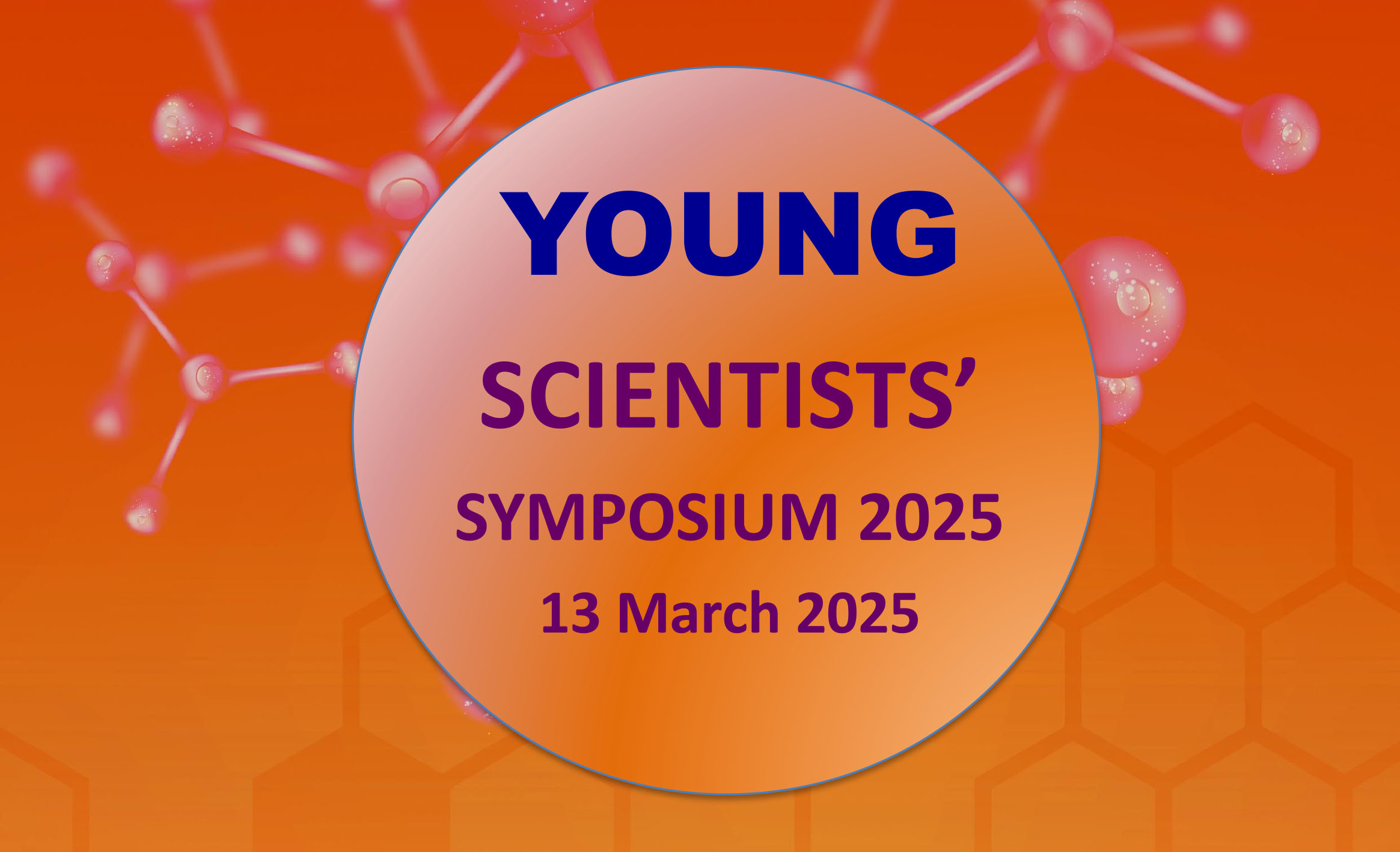
Young Scientists’ Symposium for polytechnic life science students – Edition 2025
It has been some 10 years since I have been in charge of organising the Young Scientists’ Symposium. This week we had another successful run of the symposium. And at the end of the symposium, as usual, I felt exhausted but also happy that we did it again!
In preparation for the symposium, there was a lots of things that kept me busy. There was a lot of administrative work. There were many many emails to send. I had to recruit invited speakers and many judges. But there was also anxiety about whether I would finish everything in light of all the other things I had to do and about my opening address, which I literally only finished the night before.
In the end, most things worked out well and the students enjoyed the symposium. And hence, it is timely for me to take a moment to celebrate the success, to feel happy and proud that I made this possible, of course with the help of many amazing contributors.
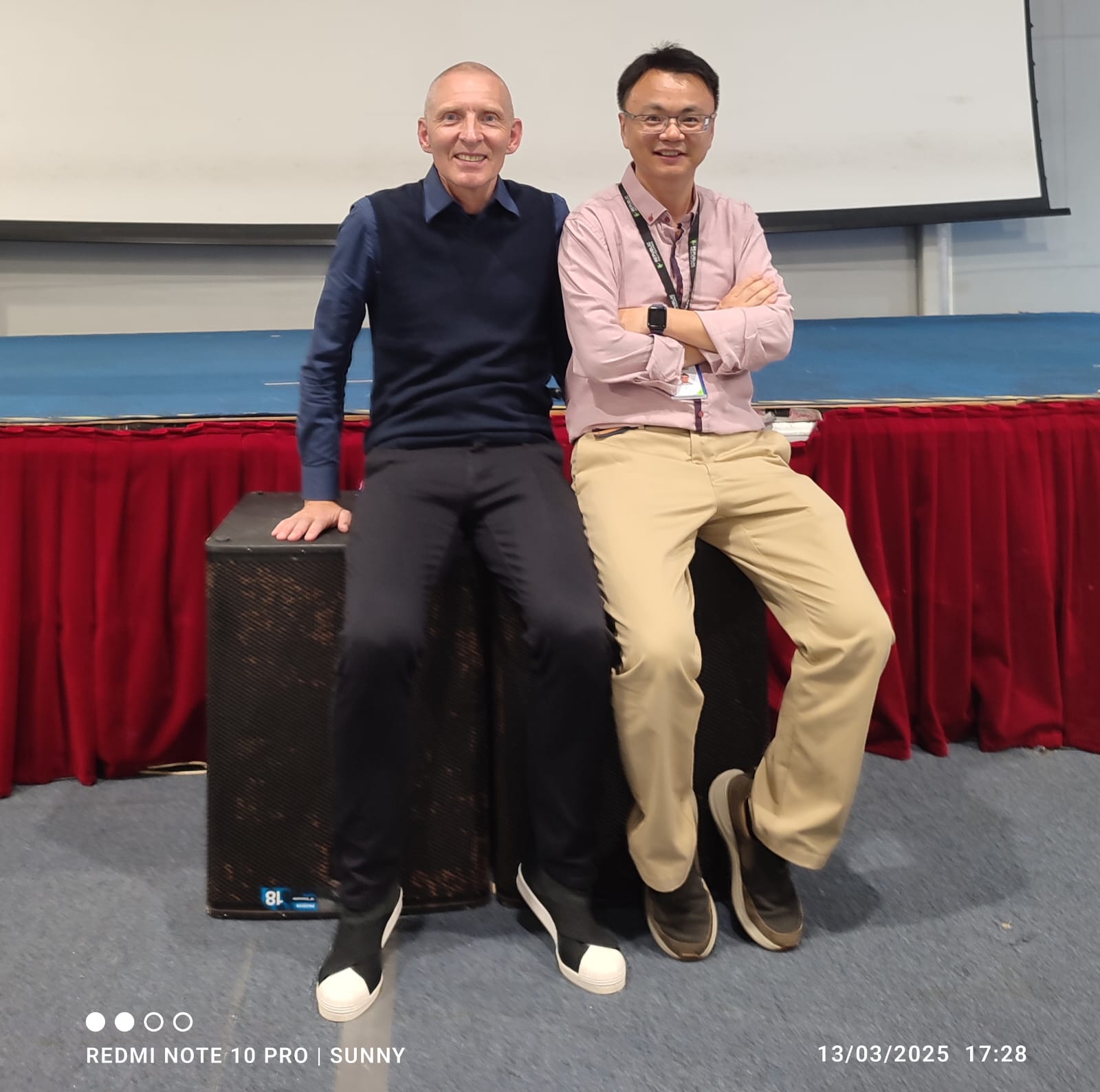
A big thanks to all the contributors to the symposium, first and foremost Guangwen …
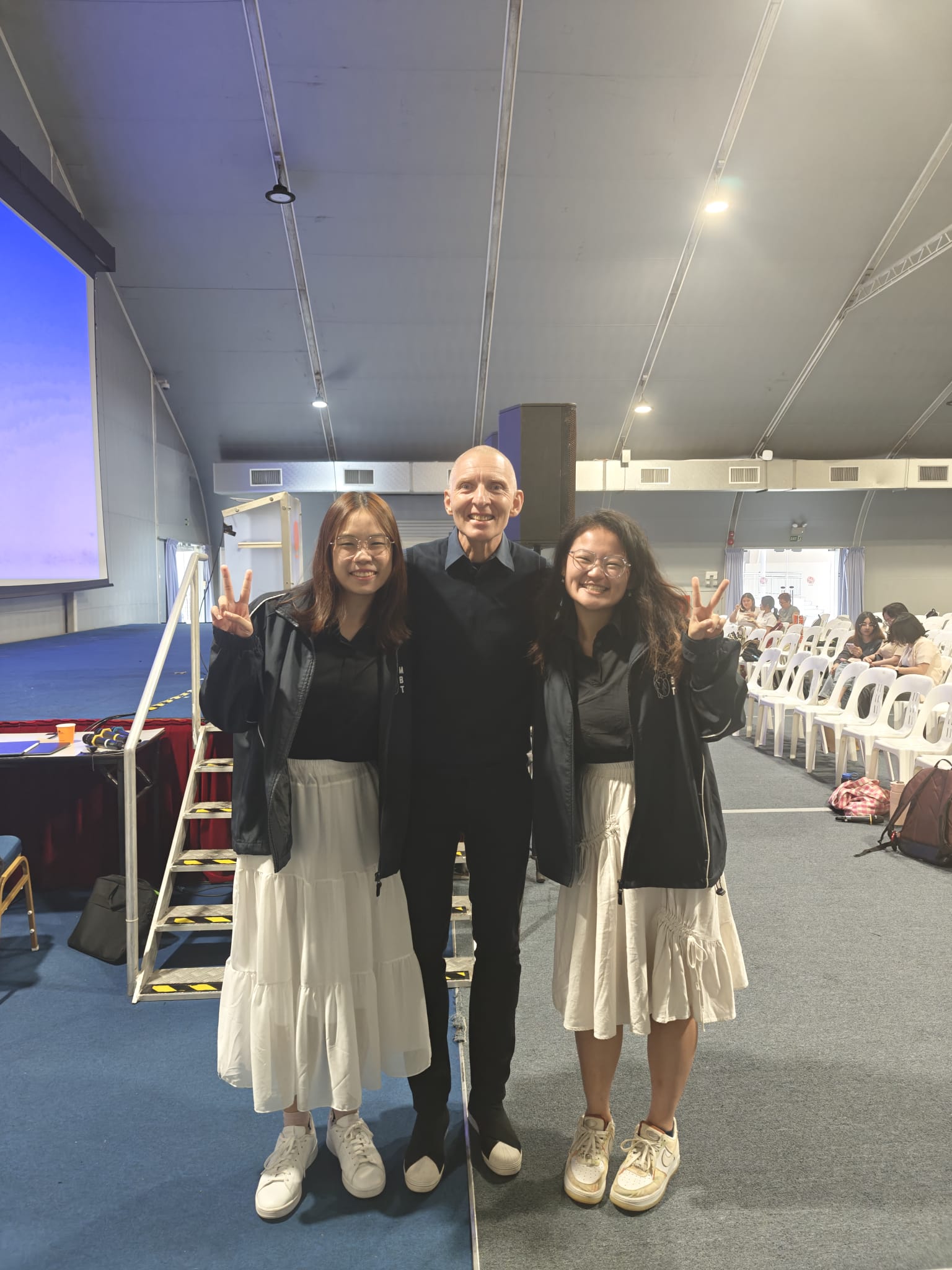
and our invited speakers, my former students Josabella and Vernice (shown in the picture) and Amos!
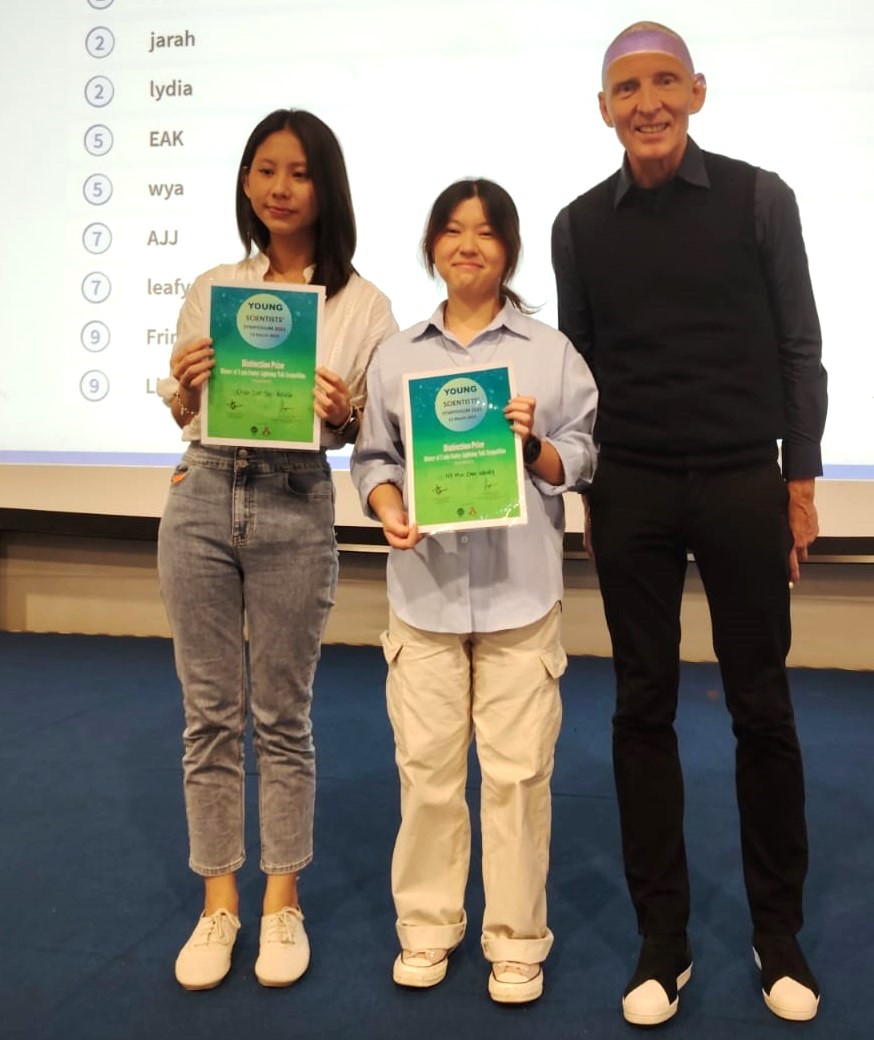
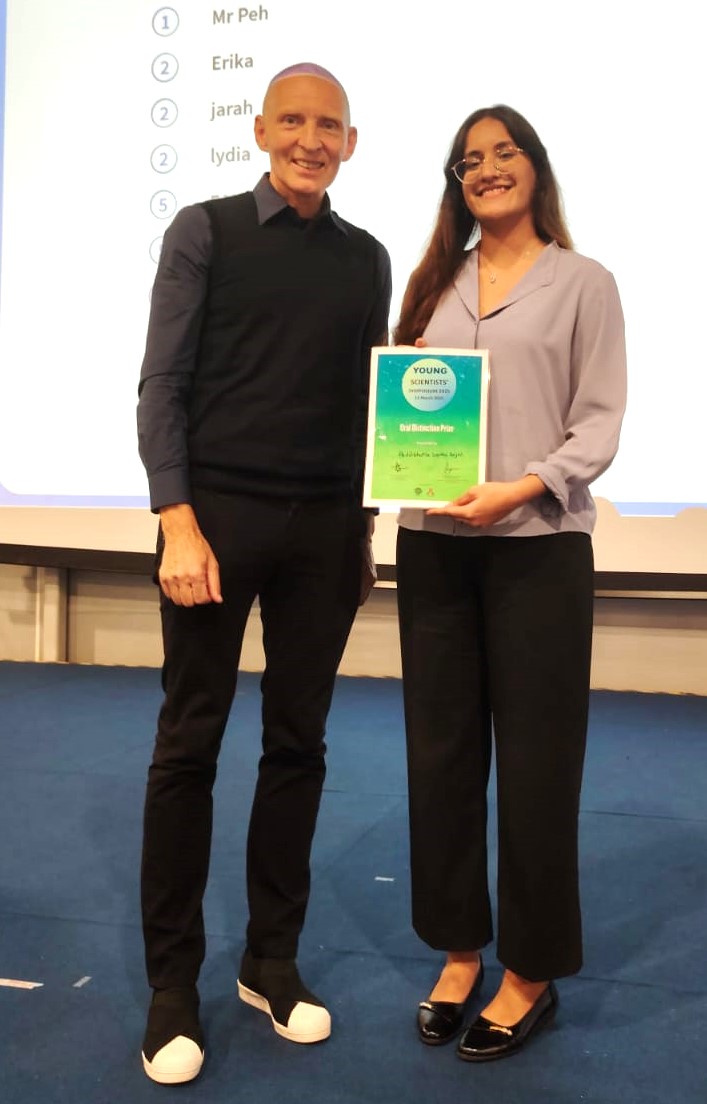
And thank you to all poly lecturers and students, not only those who won a prize but everyone who participated!
So well done everyone, including myself. There is reason to feel happy!
But of course, not everything was perfect. And that is to a large part because we tried something new, our 5 min Poster Lightning Talk session. My main goals for introducing this activity were to make the symposium more exciting and to give the students an additional opportunity to showcase and present their work.
The way the session was organised was that when registering, all poster presenters could sign up for the opportunity to potentially participate in the 5 min Poster Lightning Talk session. On the day of the symposium, we would then select the best poster presenter from each of the five polytechnics, based on the scores awarded by the two judges that visited each poster. To make this as objective as possible, I tried to design a very simple and concrete judging rubric, which proved to be quite effective. The selected presenters were announced and 30 minutes later they gave their presentations.
Was it exciting?
I believe that the vote at the end was certainly exciting, especially the real time updating of the scores.
Was it a good opportunity for students to showcase their work and and present their work?
For those students who were selected it was a good opportunity to share their work and to gain experience in presenting. However, this opportunity was limited to only a few students.
What about the quality of the presentations?
What became clear is that giving a 15 min poster presentation to a relatively knowledgeable judge is rather different from a 5 min presentation to a more general audience. Some students managed to engage the general student audience better than others. But overall I felt that one would have gained much more from listening to the actual poster presentations compared to the 5 min poster lightning talks.
There were also a number of other problems. Determining the best students based on the poster judge scores was time-consuming and caused delays. Finally, there was time delay when the selected students uploaded their presentation slides before the session.
Taking all these experiences into account, I feel that going forward it would be better to conduct something akin to a 3 min thesis presentation competition. In this well-established presentation format, students prepare an engaging presentation to be given to a lay audience.
This would address a number of problems. Students can be selected before the symposium. As such, they know that they will present and can prepare accordingly. The format would likely also improve the quality and audience engagement. Given that we will be able to eliminate time delays associated with the poster lightning talk session, we could give more students the chance to present (for instance two presenters per Poly).
The 3 min project presentation will also help students in developing communication skills, which are likely critical for students in their future. Even the students who do not present will get to witness different approaches and get ideas for how to present a project or an idea in an engaging and effective manner.
Completing YSS2025 as well as my mid-term exam on the following day also meant that a big mental and physical load was lifted from me. And as a result, I feel happy to be able to move back to a daily routine where I get to have some time for my personal priorities!
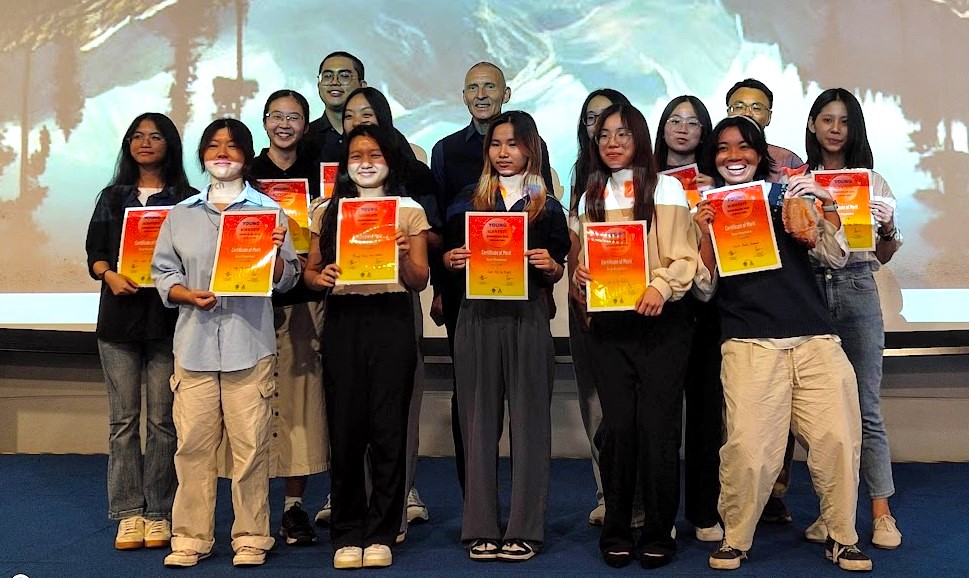
HIGHLIGHTS FOR WEEK OF 3 – 9 MARCH
Adapting my teaching to a changing world
A few weeks ago I wrote about the astonishing improvements that ChatGPT and other chatbots have made in solving difficult research data based questions, such as my quiz and exam questions. However, the ability of chatbots to critically analyse research data raises a much deeper question:
What should be the goal of my teaching in the age of AI? What is the purpose of teaching analytical and critical thinking skills and skills in solving scientific problems when AI can carry out these things for us.
With the onset of the internet age more than two decades ago, teaching students pure knowledge became increasingly obsolete. As a consequence, many teachers started to focus on helping students to improve their analytical and critical thinking, given that these were skills that students likely needed in their future. And so I, too, have over the past decade devoted much of my efforts in my teaching to introduce approaches to let students practice analysing, interpreting and predicting scientific data and solve problems.
However, the experience of testing whether ChatGPT can answer my test questions and solve the problems I discuss with my students during my classes made one thing very clear to me: There is no question that in the future most analytical and critical thinking will be done by AI.
Whether I like this or not and whether I think this is good or not, if people have data, they will ask AI to analyse them. What is more, AI will be built into any instruments and devices that generate data and will automatically provide all potential interpretations. People will also ask AI to explain things to them rather than coming up with their own explanations. And they will get AI to come up with solutions to problems, instead of coming up with their own solutions.
This raises two important questions. Should I still teach the skills that I have been focussing on in the past 10 years? And if not, then what should I teach instead, or at least in addition to what I am currently teaching?
To utilise AI, people will need some basic understanding of a given subject. In the case of my course this includes knowledge of how cells function on a molecular and organismal level as well as some basic knowledge of important experimental techniques. As such, one response would be to just teach the basics, assuming that students will not really need analytical and critical thinking skills.
This is of course what I have been refusing to do over my teaching career. The reason is that in the internet age what mattered was not what students knew, but how they could apply knowledge. But in the future this may no longer be true.
I could argue that by focussing on critical thinking about cell biology related problems, students also indirectly learn the basics. In other words, in my approach students learn the basics, i.e. fundamental principles and experimental methods, by applying it. This may be more engaging, but it may also be unnecessarily difficult (?) (which I explore further below).
On the other hand, given that University is meant to prepare students for their future, providing some basic foundational knowledge cannot be all that University education has to offer.
As such, are there arguments to still continue with teaching analytical and critical thinking and problem solving?
One potential argument is that in order to solve very difficult problems, students first need to learn how to solve easy problems. It is not possible to become a grand chess master by immediately playing against other grand masters. Playing against a chess grand master does not allow any chess novice to have any practice opportunities in order to improve. As such, it is necessary to start by playing opponents who are at a similar level and gradually build up the skills to play at a higher level.
Although this makes sense, what if AI can soon solve any problem. What if soon there will be systems with “artificial general intelligence” that can solve any problem better than any humans can. Some argue that this is almost guaranteed to happen. Indeed, AI can already beat any humans in chess. Of course, AI still often produces wrong answers, but what if algorithms are being developed that build powerful check mechanisms into AI systems.
However, there is one more important point. Despite the chess capabilities of AI systems, there are still millions of people who continue to be enthusiastic to play chess, in part because they enjoy the intellectual challenge. In the same way I still enjoy reading research papers from start to finish, look at data and try to make sense of them, instead of just feeding the paper into a chatbot and ask for a summary and for answers to specific questions I might have about the paper.
How much fun will life and work be if we enlist AI to solve all problems that we encounter. For example, how much fun will work be for a radiologist if all he or she does is to sign off AI generated diagnoses. In fact, what makes medicine exciting for many doctors is the challenge of figuring out what is wrong with a patient and finding ways to help the patient. In the same way, what is exciting for many researchers is to understand research data and come up with new hypotheses.
Are these reasons sufficient to justify continued teaching of skills that in the future can be carried our by AI tools? Perhaps yes, but there is no question that it is important to think about the tasks that AI will not be able carry out and the skills that AI is not able to deliver. Students’ future success is likely going to depend on mastering these skills.
Among those skills, there is firstly the skill to think creatively and ask good questions. And it could be argued that in order to come up with good questions, by for instance identifying assumptions that may be hidden in data, analytical and critical thinking skills are important. But more importantly, true creativity requires coming up with things that seem unlikely, daring and visionary.
This means that I should spend more time in my teaching on creative thinking exercises, letting students figure out what is unexpected in data and letting them come up with good research questions or truly unconventional approaches.
A second skill that Universities can and should focus on is to help students gain experience in solving real-world complex problems, preferably using AI tools. The success of future graduates will depend on their ability to solve problems in the current reality of widely available AI tools.
To create opportunities to practice these skills in my classes, I will have to learn new AI related skills myself. This is going to require time and effort, but there is no doubt that this is important to stay relevant as a teacher.
In this regard, one interesting assignment was described by university professor Ethan Mollick, whom I quoted in my post a couple of weeks ago and who gave students an assignments to make themselves redundant in a potential future job.
There are two additional skills that I believe will greatly matter in the future. The first is adaptability. In the same way that I have to adapt to a changing world as a teacher, students also need to learn to not shy away from difficult problems.
The other important factor that will determine future success are students’ personal attributes. While AI can come up with potential solutions to current problems, it is still up to us to turn these into reality. AI can generate many ideas, but if we cannot get ourselves to actually take consistent and effective actions, then AI will not be of great help to us.
As such, I feel that one my most important tasks is to help students to improve their personal attributes, such as their ability to motivate themselves, their ability for self-improvement and to overcome unhelpful habits, their eagerness to try out new things and their resilience.
To achieve these outcomes, a large class setting, as in my Cell Biology course, is not ideal. But it is also not prohibitive. As such, I feel that the personal individual conversations that I am conducting this semester with all students is a meaningful step to promote personal reflections, even though the conversations are not always going perfectly.
I believe that two of the most important personal characteristics that cannot be achieved through personal reflections are grit and persistence. Grit and persistence do not only determine our professional success and satisfaction, but literally every area of our lives, including our personal health and well-being. One of the best ways to build grit and persistence is in fact Marathon running, as this (in my opinion) amazing TED talk makes very clear …
HIGHLIGHTS FOR WEEK OF 24 FEBRUARY – 2 MARCH

How to go from depression to feeling truly happy in a few hours
This morning I went to work in a state of depression. I left home later than usual and got into the busiest rush hour, surrounded by people who by and large did not look enthusiastic to go to work, who seemed indifferent to their surroundings and who were distracting themselves with their mobile phones. I felt like one of them.
For the past few days, I have felt overwhelmed by work, not getting a break despite having school holiday this week. In particular, I have struggled with preparing my mid term test, reading numerous papers that raised ever more questions instead of answering any.
Then this morning, after getting into my office and starting to work, I finally figured it all out. And suddenly I felt this amazing sense of satisfaction and joy. When I went out for my lunch time exercise, I felt liberated, excited and truly happy. I still have a lot of work, but I am now looking forward to most of it.
The experience made me realise one important thing about my job. Although things are sometimes tough (mainly thanks to my own doing and taking up too many tasks and challenges), there are some truly exciting moments. These moments do not happen all the time, and they are hard to predict. But the possibility of experiencing true satisfaction and excitement is what makes my job so wonderful!
HIGHLIGHTS FOR WEEK OF 17 – 23 FEBRUARY

On the benefits of reading
I have been quite consistent in spending some time daily to read books, as opposed to reading papers and articles online or listening to podcasts. And I have enjoyed this experience. It feels special and enjoyable to be sitting down in a comfortable position and environment and focussing only on the experience of reading.
One book I am reading is “Death – The end of self-improvement” by Joan Tollifson. The book focusses on the process of getting old, on the physical deterioration that inevitably comes with age and on how we can look at it differently. With her book, Joan Tollifson is helping me to view getting old as a normal stage of life about which there is nothing to be ashamed about.
One main reason why reading is so rewarding is that it often sends us off into directions into which we would normally not go and which are sometimes not even intended by the author. And so one particular quote from the book that got me thinking was something that the Jamaican spiritual teacher Mooji said:
“Live as though you have no rights and no entitlements, and you’ll appreciate all that comes.”
A common pattern that is going through my professional and personal life is that if something goes well for a few times, I start to expect that it will always go well. If things then go against my expectations, I get disappointed or even upset.
This applies to how well my classes and quizzes or the student conversations I am holding this semester go. It also applies to whether I have peace and quiet while working in my office or while being at home, and even to whether things I order online (mostly records) arrive on time and in the expected condition.
Naturally, this mindset is bound to cause disappointment, depression and resentment.
The problem is unlikely that I do not appreciate the positive things in my life. In fact, I reflect almost daily about how lucky and fortunate I am to experience the life that I am living. Despite feeling a true sense of gratitude towards my daily experiences, I do become unhappy or upset when these experiences are taken away from me.
How can I overcome this mindset and live true to Mooji’s quote?
One approach could be could be to consciously consider the option that things might go wrong and plan for back-up options. For instance, instead of getting upset about the maintenance worker who disrupt my peace and quiet with the noisy (and rather useless) leaf blower in the morning, I could anticipate this disruption and arrange my morning routine differently. However, this approach is not very practical because it is impossible to prepare myself for every possible circumstance that might go wrong.
Alternatively, I could adopt a different mindset – to view things I do or experience as an opportunity. This requires that I do not hold expectations about what needs to happen or about what I need to achieve during certain activities.
A good analogy would be to not think that I have to fill my glass every day, but instead consider that my glass is already full and that all I am doing is to make what I have even better.
Importantly, adopting this mindset requires that I do not take up too many responsibilities, or else, my glass will always feel empty and I will experience the urge to fill it. This in fact seems to be the crux of the problem for me.
At the same time, life is ultimately about making a difference. As such, there is a fine line between maintaining my mental well-being by not taking up too many projects on the one hand and pursuing ideas and goals that I feel excited about on the other. And because external demands on my time change, there may be days or weeks where things get tough temporarily.
The most common reason why I experience feelings of stress is when unexpected demands suddenly crop up. Because I feel that these tasks take away time from doing my “important” work, I often dread or resent these tasks. As such, the best thing I can do is to consciously set time aside to deal with these tedious tasks. In fact, it is my experience that I can deal with tedious tasks much better if I have scheduled a time to work on them.
However, apart from not holding expectations, Mooji’s quote to “live as though one has no rights and no entitlements” seems to primarily imply that we should not assume any privileges and respect based on what we may have achieved. This requires a certain mindset. But for me it also means to live as though I have no rights and no entitlements by pursuing a simple live where I avoid luxuries and conveniences that make my life “easy”.
HIGHLIGHTS FOR WEEK OF 10 – 16 FEBRUARY
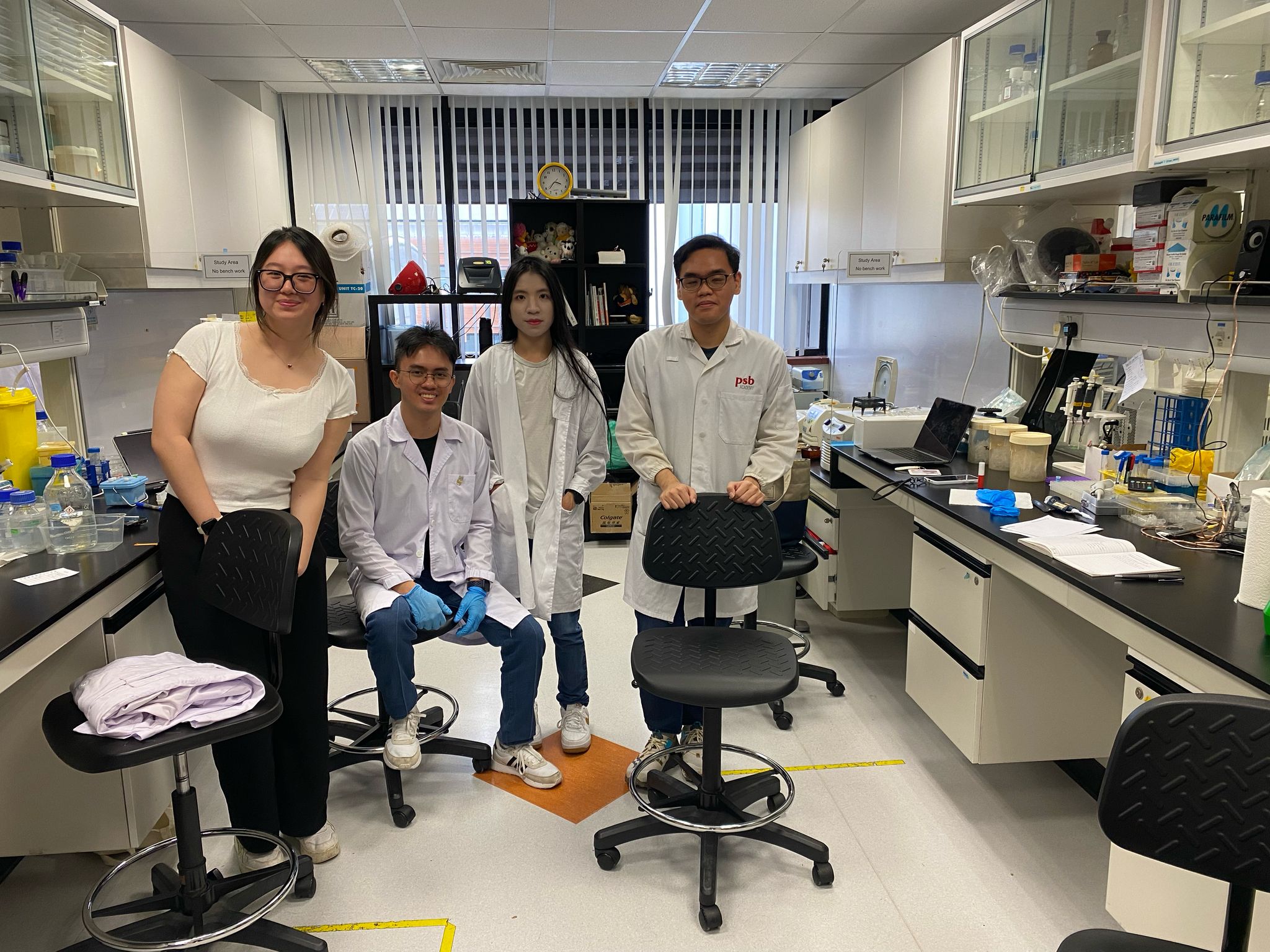
The highlight of this week was that for the first time this Academic Year all my undergraduates, Sasha, William, Luke and Hong Xi, were in the lab at the same time. This meant that there finally was an opportunity to take a group photo!
HIGHLIGHTS FOR WEEK OF 3 – 9 FEBRUARY
ChatGPT and student assessment
One year ago during my Cell Biology course I wrote about my experiences and thoughts on using ChatGPT in classes and assessments. I wrote about my strategy to let students use ChatGPT to come up with suggestions to test scientific hypotheses and to then evaluate the output of the chatbot. I also wrote about how ChatGPT does not pose any threat to my research data based assessments.
Fast forward one year and things have changed. ChatGPT has not only gotten better at testing hypotheses. It can also actually understand figures based on research data, which form a major part of my assessments. This means that students can now simply screenshot my research data based question, paste them into ChatGPT or other chatbots and get a coherent answer. The answers that ChatGPT comes up with are still not always correct. However, the reasoning is always sensible. More significantly, it feels that it is only a question of time until ChatGPT manages to answer all my questions correctly.
Apart from my research data based multiple choice or short free text answer questions, I also use another question format. Here students need to predict research data and actually draw the expected results. When pasting these questions into ChatGPT, it is currently able to predict the expected results rather well (although not always correctly, most likely because it has no access to what I have been teaching the students in my course). However, it is unable to produce any images.
In fact, when specifically asking it to “Can you create a Western blot image that shows the effect of myxothiazol and FCCP on hypoxia induced HIF-1alpha induction?“, it did produce an image which makes no sense and is rather amusing:
But again, it is likely only a matter of when, rather than if, chatbots will be able to solve these problems in the (very near) future.
In the past, I have felt reluctant to forbid students to use ChatGPT, even in my tests, for the simple reason that doing so means that my assessments no longer mimic real-life situations. However, this semester I finally decided to not allow students to use ChatGPT.
One reason is that this would not be a fair assessment. Moreover, it will do the students a disfavour. Getting a correct answer from ChatGPT without understand the answer will not help students in their future. Even if the students read and try to understand the explanations that ChatGPT provides, the process of coming up with one’s own solutions requires different skills from merely understanding someone else’s reasoning.
In the long run, however, I will probably have to think of new ways of assessing students in order for my tests and exams to remain authentic. The best approach is probably to test students in person, for instance by letting students them explain research problems, potentially even after they have consulted ChatGPT. Oral assessments are likely the best way to determine if students have really understood a problem.
Although oral exams help to avoid that we forbid students to do things in exams that they would do in real life, they may be difficult to implement in practical terms. However, more than thinking about the assessment format, it is important to consider what we should really assess students about in the current time. But I will leave this discussion for another post.
HIGHLIGHTS FOR WEEK OF 27 JANUARY – 2 FEBRUARY
More insights about Large Language Models
Recent news have revealed that large language models have become able to replicate themselves and resolve obstacles that they experience in this process. They have also been shown to mirror human personalities with high accuracies. Both of these news are scary, meaning for instance that generative AI tools can avoid being shut down and that they can be used for scams in unprecedented ways. As such, I spend more time to learn and think about the topic.
Over the past year, I have listened to various podcasts about generative AI and chatbots. As a result I have learned some interesting things.
To start off with a quote, Sam Altman, the C.E.O. of OpenAI, said this in an episode of the Ezra Klein Show podcast:
“My believe is that you are energy flowing through a neural network. … Perception comes in, it cycles around the neural network in your head, and some muscle of yours moves. … That is replicatable. Energy flowing through a neural network is replicatable in a very big computer.”
I find this quote remarkable for a number of reasons. It summarises in a very simplified manner how our brain functions. It also illustrates that the way large language models work resembles how our brain functions (at least to some extent!), where information flows through neuron-like nodes to generate an output.
The intelligence of humans compared to other mammals depends on having a big brain with many neurons and on feeding the brain information from which we learn to come up with solutions and creative ideas.
This explains why by increasing the computing power and amount of training data, large language models will continue to grow. In fact, as Dario Amodie, the co-founder and CEO of AI company Anthropic points out, this growth has been and is likely to continue to be exponential.
With regards to how large language models really work, they are in reality much more complicated than I will ever be able to understand (or potentially anyone).
Citing Brian Christian, an American bestselling author, programmer and researcher, who featured in another podcast of the Ezra Klein show, large language models are based on technology of deep neural networks consisting of nodes that similarly to neurons in the brain, receive inputs and release outputs. These nodes function as simple mathematical elements that receive inputs in the form of numbers. The numbers are added up and if the sum is greater than some threshold, an output (another number) is generated. Otherwise the output is zero. Having tens of millions of these elements, stacked into layers, the neural networks can accomplish complex tasks such as telling cats and dogs apart or distinguishing between cancerous and non-cancerous lesions.
One significant advance in the development of large language models was the creation of recurrent neural networks. This was achieved by adding recurrence or feedback information processes to neural networks. A good description of recurrent neural networks I found is that “Recurrent neural networks, also known as RNNs, are a class of neural networks that allow previous outputs to be used as inputs while having hidden states”. This is different from the function of the human brain, which only operates unidirectionally (information is transmitted from one neuron to the next and not backwards). Recurrent neural networks allow large language models to remember previous information, to recall what it has said before, to learn how different events relate in time and to carry out sequential tasks.
Nonetheless, recurrent neural networks still have a major shortcoming. They cannot remember long-term dependencies due to the so-called vanishing gradient. What this means is that as the temporal gap between the relevant information and the time point where the information is needed becomes very large, the information vanishes. To overcome this shortcoming, researchers developed Long Short-Term Memory Networks (LSTMs). These Long Short-Term Memory Networks incorporate complex feedback connections, which make the neural networks “highly effective in understanding and predicting patterns in sequential data like time series, text, and speech.“
An amazing post about LSTMs can be found here. What makes to post even more amazing is that it is 10 years old.
However, what is more relevant to me are the implications that AI has on my life and my work. One factor that makes this question especially relevant is the exponential growth of generative AI tools. Things that sound futuristic today may in fact become reality much sooner than we anticipate.
For instance, instead of just helping us to do things, AI may soon be able to do things on our behalf, like planning our entire holiday based on our own preferences. All we will have to do then is to show up on the day our vacation starts, board the grab outside our house and experience our dream holiday. Generative AI tools may even organise entire conferences autonomously. According to Dario Amodie the main bottleneck for this to become reality is unlikely to be the technology, which is expected to arrive within a short time of months to years rather than decades. Instead, the main hurdle is the readiness of humans to trust and adopt this technology.
With regards to the adoption of generative AI tools, a conversation that Ezra Klein had with Ethan Mollick, a professor at the Wharton School of the University of Pennsylvania, contained some good advice on how to use Large Language Models such as ChatGPT.
One core advice is that it takes significant practice (Ethan Mollick argues at least 10 hours) to become familiar with an AI chatbot, learn how to best use it and evaluate how it can help us. The best way to practice and test using generative AI tools is to use them for things we do in our work. We generally have some expertise in what we do in our work, which enables us to evaluate the AI output best.
Nonetheless, I must say that I feel a general reluctance to use AI for much of my work related tasks. The main reason is that it is much more fun to come up with ideas or solutions on my own compared to evaluating ideas or solutions that chatbots propose. Coming up with ideas and solutions feels like a fun thing to do. In contrast, evaluating ideas or solutions that chatbots came up with feels like work to me.
This parallels how I excited I feel about coming up with new ideas for my teaching and assessments and how I dread marking the tests and assignments that I have designed. Thinking of interesting problems to discuss in class or to test students on is truly fun. Having to then mark the tests and assignments is tedious and mentally draining.
What is also exciting to me is to bounce ideas back and forth with others and discuss solutions that others propose. The reason is probably that this process requires an active participation on my part.
On the other hand, I feel no motivation to engage in a discussion with ChatGPT about my own ideas or the ideas that ChatGPT produces. It may in part be because ChatGPT will probably agree with me and the discussion will go nowhere. I could of course ask ChatGPT to be in debate mode and question my answers, but then I also know that it only does so because I asked it to.
The more important reason is probably that there is something very special about talking to another human being.
Notably, one (perhaps not so) futuristic prospect that is being discussed is that people may soon prefer “AI friends” over real ones. I personally cannot imagine that this will indeed become reality. While I do not doubt that AI can be a much better friend (and by “better” I mean more understanding, “caring” and faithful), seeing a human reaction that validates or surprises us is something that I believe will always be important.
Finally, Ethan Mollick gave various suggestions to use ChatGPT for practical applications. One suggestion was to let AI read and evaluate what we have written while adopting different personas. I must say, though, that when I tried to follow this advice, I did not find the comments ChatGPT gave to articles I wrote particularly insightful. I also did not give good ideas on how to change what I had written, despite asking very specific questions (such as ‘Is the article interesting to read and what would make it more interesting to read?‘). What ChatGPT primarily did was to give general recommendations, without providing details on how to translate these recommendations concretely to my article.
In conclusion, generative AI tools perform unbelievably well in ways I could never have imagined. Yet, the ideas that really fascinate and inspire me still come almost exclusively from humans. What is more, engaging with thoughts and ideas of other humans and trying to come up with my own ideas and solutions seems so much more fun as compared to asking ChatGPT.
HIGHLIGHTS FOR WEEK OF 20 – 26 JANUARY
Why do students not like challenges?
A recurrent theme in student feedback to my Cell biology course in this and previous semesters is that the course is very interesting and being taught well. However, the content is too difficult.
I suspect, however, that what students feel is difficult is not really the content itself, but applying the content to solves problems.
Contrary to the common student perception, I would argue that one main reason why the course is interesting is in fact because it is difficult.
Some courses are interesting because the lecturer discusses fascinating findings or phenomena and delivers them in an engaging manner. Although I try to include interesting discoveries and problems, I certainly do not deliver them by telling fascinating tales.
In contrast, what is different in this course compared to many other courses is that the learning involves solving challenging problems. Solving problems tends to be fun, especially when the problems have a certain degree of difficulty. For instance, most people would not choose to play a video game that has not some degree of challenge. If a game is not challenging, it tends to be boring.
Playing games with others is often even more fun. The same is probably true for solving problems in class, which is one reason why team-based learning is a great way to learn.
While it may be difficult to design a course that is at the same time interesting and easy (at least for me!), it is nonetheless useful to consider why students want the course to be easier.
Based on end of semester student feedback from past years, the main concern of students is not that they need to spend too much time on studying for the course and completing assignments. In fact, there are no major assignments.
Instead, the most likely reason why students want the course to be easier appears to be that the students are worried about their grades and that they may potentially end up with a bad grade that will pull down their GPA (and potentially ruin their future!). It is worth noting, however, that due to the grade moderation at the end of the semester the statistical chance for receiving a bad grade is not higher than in any other course.
As such, the main problem is not the likelihood of getting a bad grade, but the fact that students feel they cannot control their grades. If we take a course where we know how to do well and our grade hence only depends on our effort, we feel comfortable (although many students still do not actually do what they know it takes to get a good grade).
This raises the question of why do we want to feel in control of things? Being able to predict the future and stay away from uncertainty has advantages from an evolutionary standpoint. It helps humans to avoid dangerous situations.
However, it can also have disadvantages because we may miss out on things that are fun and interesting and help us to grow. Most importantly, all human progress is ultimately dependent on taking risks.
I would argue that the potential negative consequences of taking a risk in the context of choosing a study course is rather minimal. The worst that can happen is that we receive a worse grade than we had expected. I do not even remember what grades I got for the subjects I took in University, partly because nobody was ever really interested in them.
On the other hand, the useful outcomes of taking risks, even if we fail, are considerable. We may realise that our study method does not work in different contexts or that scientific research is not appealing to us. This is not even considering potential positive outcomes, such as gaining new perspectives or learning to overcome challenges.
Ultimately, doing well in my course requires the same approach as for most other courses, and this approach is practice. In some courses, doing well involves much practice to know the content well. In this course, doing well requires engaging in repeated practice to solve problems.
In fact, studies have shown that how well someone does in a problem based course is not dependent how “bright” a student is or how fast a student understands things. Instead, how well a student performs is a direct function of the skills that a student has at the beginning of a course and the number of practice opportunities he or she engages in. This means that a weaker performance at the beginning of a course can be completely compensated by more practice of the skills that are critical in the course.
Students often ask how they can practice more beyond the practice opportunities that are provided. My answer is usually that it is relatively easy for students to create their own practice opportunities. This may involve trying to explain problems to others (or even to ourselves). It could also be through using the same approaches that I often use to come up with questions, which is to vary experimental conditions or the parameters that are measured and predict the expected results.
While all this undoubtedly requires effort, I would argue that because solving problems is more interesting than merely revising content, it is easier to follow through with plans to study more consistently, which most students set out to do at the beginning of a semester.
HIGHLIGHTS FOR WEEK OF 13 – 19 JANUARY
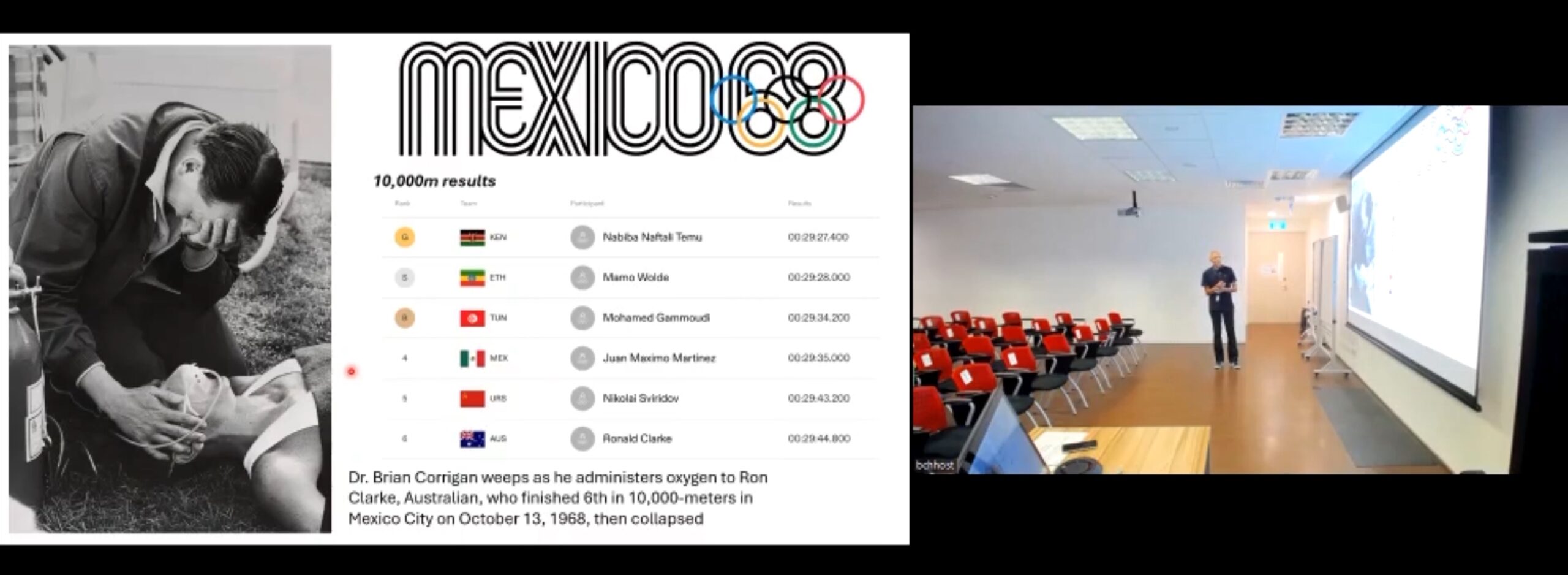
My first week of a new semester
It is the first week of a new semester, my first lecture is over, and I just watched the research talk that our departmental IT lead recorded last week in preparation for one of my next classes. And I must admit that I feel pretty depressed.
To be fair, not everything gives me reason for disappointment. The student activities, which took up the most part of my first class, went very well, and I also must admit that I explained the science in my research talk clearly.
But here comes the depressing part. After all these years, I still struggle to talk engagingly in front of an audience. The problem does not lie with what I am trying to express, but with how I do it. Over the years, I spent so much time to read, think and teach about giving engaging presentations and to help students with improving their presentations. But it did not seem to help me.
Of course, in order to be a good running coach, one does not have to be a fast runner. The same is true for helping students with their presentations. And hence even though I am not a great public speaker myself, I have been able to help my students quite effectively in giving good presentations, to the effect that none of my undergraduate research students has received a grade lower than A- for their presentation and project as long as I can remember. But it did not seem to make much of a difference for me.
The reason is of course quite obvious. Coaching others does not really help me in improving myself because by coaching others I do not focus on what are my weaknesses. In fact, I have never actively worked on improving my own presentation skills (except for trying to stop using excessive amounts of filler words), not to mention getting others to help me.
Truth be said, I have given presentations in the past that I was happy with and proud of. But if I had to say what I did differently in my good and my bad presentations, I would not be able to put my finger on it.
The good news is that it is never too late to take steps to improve ourselves. As such, I am going to add another goal to my list for the coming year, to finally work on my own presentation skills, in addition to trying to help others to present well. The first thing I’ll have to figure out is how to do it.
HIGHLIGHTS FOR WEEK OF 6 – 12 JANUARY

It is high time to think about my goals for this year. After spending much of my efforts over the past years on soft personal goals, I feel that I am ready and motivated to finally tackle some more concrete goals.
Specifically, there are three main things on my mind. Firstly, I would like to actually complete things, in other words, have something to show for all the things that I have been learning and improving. In fact, my original goal for this year was to accomplish one major achievement that I can add to my CV every month. Secondly, I want to increase the visibility of what I have been doing. Finally, I want to make progress towards my long term goals, coaching in athletics, health or pedagogy and making an impact in society, for instance through outreach.
Why are these things important to me?
With regards to achievements, adding things to my CV can give personal satisfaction. But ultimately the main purpose of achievements is that they benefit someone. What is the purpose of publishing a paper that does not provide others with actionable information or that nobody reads. What is the point of organising a conference that does not have some unique value for participants.
This brings me to the second point, why visibility is important. Visibility is important not to feel good about myself, but to let others benefit from my achievements. Likewise, the only way I am able to learn from other is because of the visibility of their output.
As such, I was considering this week what would be a good platform to learn from others and share my own insights and achievements. And I realised that one of the best options is LinkedIn. It is a platform that people visit to learn things. Hence, I would like to invest time this year to establish my presence in LinkedIn (although not right now (!), but after the end of this semester).
Finally, there are my long term goals. They are personal challenges that I want to master, but more importantly that provide meaning and opportunity for self-improvement in the future. Being long term goals, they do not necessarily determine my daily task list, but function more as a focus and direction into which I want to progress.
When considering goals, one aspect that one has to consider is the time factor, which to a large extent determines what I can achieve. The time factor is of particular significance for me because I do not want to pursue achieving things at the expense of doing my work well and spending time to help students. This highlights the importance of limiting my tasks.
However, there is a second reason why the time factor is so critical. It also affects how I experience the process of pursuing my goals.
There are various ways in which I do not want to experience pursuing my goals and doing my work. I do not want to be in a constant fight with my time to get all the things done I set out for myself. I do not want to feel pressured to finish all the work and worry that I may not. I do not want to feel I lost control over all the tasks that I have to do. I do not want to feel that I need to have managed to complete a long list of things in order to call the day a good day.
Instead, I want to do things because I enjoy them.
As much as we want to have control over the things that we have to do, for instance by using all kinds of productivity hacks, the truth is that it is impossible to gain complete control. Firstly, there is no end. There is no finish line. Many tasks take a long time, and we often cannot even predict how long they will take. Even after completing a task, there will be a new one. And many unpredictable things may happen on top of our task list.
I believe that there are only two things that are in our control. One is the amount of things that we try to accomplish in our day. The other is our mindset. Wouldn’t it be amazing if we could look at the things we have to do as things that we want to do? And if we do not get to do them, then it is fine!
While based on the nature of their work many people may not be able to do look at their work as a joy, I realised that I can. Instead of telling myself I need to read two papers, check the literature and write something every morning, I can say to myself that I want to do these things, and if I don’t, it is okay. And this is actually true.
Hence, what I have been trying for the last couple of days is to treat a new day as a holiday or a special day, even though it may be an ordinary work day. When I go into work on a holiday, it usually feels special, partly because of the feeling that I have the freedom to do whatever I want and everything I do is something “extra”, something I want to do. Why not adopt this mindset to every ordinary day.
But there are of course things that I have to do, for instance marking an assignment or report or preparing a quiz with a certain deadline. The good news is that I also enjoy these things for the most part (mainly because I get to decide how I want to design them). Nonetheless, I still feel the pressure to complete them on time.
When considering where this pressure is coming from, I realise that the main pressure comes from trying to achieve perfection. Hence, one shift I started to make is to not always expect perfection, but to accept imperfection. I will do my best, but if the outcome is not as good as it can possibly be, then that is okay.
What is more important than these small details is that my life is happy. After all, I am not responsible for creating a perfect experience for others. It is enough to provide opportunities for others to achieve a great experience for themselves, whether it is my students in the lab, my students in class or the runners in my running group. For instance, if my students do not want to submit a meaningful assignment, it is their choice and I do not need to try to provide meaningful feedback. What is more important is to continue to come up with new ideas and to strive for perfection where it is necessary, such as in assessments and things that I want to publish (not including this blog!).
Hence, in the new year I firstly want to focus on a limited set of tasks, so that the things I do become more enjoyable. Secondly, I want to focus on enjoying the process of creating and doing things, without worrying about the achievement of perfection.
How is this compatible with wanting achievements? I think that wanting achievements helps me to direct my focus into a certain direction. Hence, I still stick to the exciting goal that I set for myself initially, to complete one achievement every month this year, but I add to it that I want to accomplish it while experiencing joy and no pressure.
HIGHLIGHTS FOR WEEK OF 31 DECEMBER – 5 JANUARY
Looking back at 2024
To be clear, I do not drink wine, even though the picture may suggest so. But with the old year ending and a new one about to begin, I did look back at the last twelve months. I realised that I have been able to experience a remarkable past year, and looking forward I am excited to experience a hopefully even more remarkable new one.
Most of all, however, I feel very lucky to have been able to live peacefully, comfortably, safely and happily for another year. It is an incredible privilege to be able to do my work without having much else to worry about, especially in spite of all the tragic things that have happened all over the world this past year. I also feel lucky to have a family who is so supportive, caring and wonderful to spend time with.
The thing that I have been enjoying the most this past year are various aspects related to my work – reading papers, thinking of experiments, doing experiments, writing, preparing my teaching, learning new things. As a result of actually enjoying my work this much, I often have to force myself to work less and “enjoy” my life more, and not the other way around.
The number one way to enjoy my life this past year has been to spend time outdoors. Given the limited time I have for “enjoyment”, I have consciously decided that spending time outdoors is what I want to focus on, because compared to everything else it brings me the most joy.
There are some practical achievements that I feel happy about, including publishing two papers, seeing our NUS staff running group grow, completing my first full marathon in 30 years and qualifying (most likely) for the 2026 Boston Marathon, teaching my Cell Biology course well and receiving one of my best teaching feedback scores and the best ever course feedback score.
However, much more than the practical achievements, I feel happy about my personal achievements. This includes finding out how I really like to spend my days, as discussed above. I have also managed to simplify my life through transforming my personal living and work spaces, removing clutter and surrounding myself only by those things that I actually like. This has made a huge difference because it makes me look forward to go to my office, my home and even my storage place.
I have also been quite successful in finding ways to waste less time on meaningless things (the most effective way being the Habitshare app) and instead spend more time on those things that I enjoy or that make me feel good.
Most importantly, I have gained clarity about my goals in life, in large part thanks to my two months stay in Madrid. This feels great and allows me to look forward to my future.
How do these achievements align with my original goals? The goals that I set for myself one year ago included becoming fluent in Spanish, finishing my book, creating a great student experience in LSM2233, making progress in my running coaching and building up the NUS staff running community. Finally my biggest goal for the past year was to improve my happiness.
I spent one year studying Spanish literally every day. However, during my two months stay in Madrid I realised not only that speaking and understanding Spanish is very difficult, but also that I did not feel very happy in Spain. Hence, I decided that there is not much use to continue learning the language and I stopped. After making this decision I felt a huge sense of relief. The experience taught me that I really do not like learning languages. I originally had plans to learn some other languages as well. But with this experience I decided to get rid of all of my language learning books because there are so many other things that I enjoy much more.
I also have been working on my teaching book every single day and I have been “almost finished” with it for the past four months. It is just that there is always one more thing to do.
What about creating a good student experience in my Cell Biology course during the first half of the year? One great thing about having a blog is that I can always go back to what I thought and wrote when I don’t remember how I felt about things in the past. After my course was over in May, I wrote:
The main goal for my teaching this semester was to make learning fun. Have I succeeded? … when observing the students, it was apparent that when the students did discuss problems, they enjoyed doing so. Many students also expressed informally that they enjoyed these activities. However, the main problem was that I was not consequent enough to implement my strategy of engaging students through problems in all classes.
This suggests that I was partially successful. More importantly, I managed to identify what may have prevented an even better student experience – the fact that I still spent a considerable amount of time lecturing students during class. Having realised this, I plan to change this in the coming semester by reserving as much in-class time as possible for student activities and practice exercises. The fact that this is really much more important than delivering interesting content is reflected in the following point of my previous blog post:
… in their formal and informal feedback, students rarely comment on interesting lecture content or engaging lecture deliveries. In contrast, they frequently express how much they appreciate to be able to apply learned knowledge by solving problems, and how much they enjoy these activities.
What about my goals to contribute to building an NUS running community and to make progress in my running coaching? Our running group did grow, but was not able to join the SG Athletics practical course this year. Hopefully I will manage to secure a slot during this year.
Finally, my biggest goal was to raise my daily average happiness score from currently slightly above “5” (out of 8) up to “6”. Although technically I did not achieve this goal, I did improve my scores and made progress.
Much more importantly, though, through the whole process of trying to be happier I learned a lot about potential ways to improve my happiness, which I have described in various posts. And I came to a very important insight. Although there is a lot we can do, namely by eliminating things that do not make us happy and doing more things that do make us happy, there is a limit. Once we have done what we can do, and continue to do so, we have to accept that the rest is out of our control.
When we do things that are meant to make us happy, there is no guarantee that they will indeed do so. There are many factors that are not determined by us, including external circumstances, our state of mind and our personality, which ultimately is determined by our genes. As such, it is useful to accept that we cannot always feel happy and that we may already be as happy as we possibly can be.
Although there are many factors that are out of our control, it is also true that if we do not take active measures to feel happy, achieving a happy state will be difficult. It also means that it is important to continuously evaluate our strategies for achieving happiness. For instance, at the beginning of last year I came up with the plan to take two off days each week, Wednesdays and Saturdays. This turned out to be a failure. There was too much work that I wanted to do and that I also enjoyed. I realised that what works much better for me is to take some time off on a daily basis and take an occasional break by going on a short trip.
So much for my review of the past year. I will leave setting my goals for the new year for another post.
For older posts click HERE