WEEKLY HIGHLIGHTS 2026 FIRST HALF
HIGHLIGHTS FOR WEEK OF 20 – 26 APRIL 2026

Boston Marathon
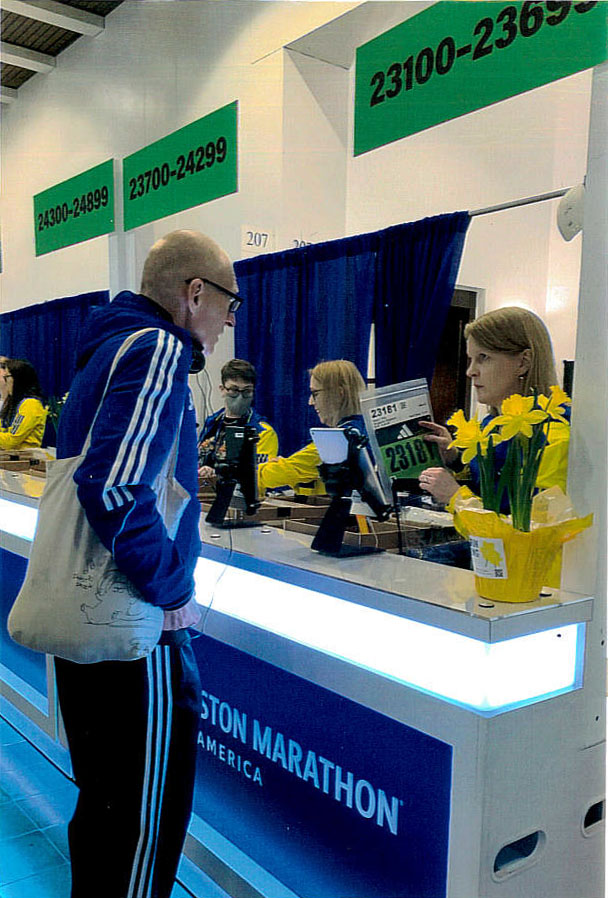
Last week was a stressful week, having to finish my exam questions and prepare my final two classes before flying off immediately after my final lecture on Friday afternoon, to participate in the 130th Boston Marathon.
My preparations for the race went rather well. I did not fall sick and paradoxically, being very busy this semester helped me to stick to my training plan. Due to all my commitments, there was usually only one slot into which I could fit my running training. This turned out to be very effective in preventing me from procrastinating.
Nonetheless, I felt very anxious whether I would be able to finish the race, in part because the race conditions in the Boston Marathon are very different from my training conditions. Thus, I felt very uncertain of whether my long runs in Singapore, which for the most part left me completely exhausted, prepared me well enough to finish the race.
And so my prevailing feeling during the last couple of days leading up to the race was worry. What made things worse was that on the day before the race the weather was cold, rainy and windy, and I was asking myself how am I going to endure running under those conditions.
But then race day came and the weather suddenly turned sunny (although still quite cold). There was very little time to worry about the race itself because the bus loading in downtown Boston was chaotic, with huge crowds trying to get onto the buses and runners being worried whether they would make it to the start on time. Eventually, I got on a bus to take me to the starting point in Hopkinton (42 km from downtown Boston), and I literally arrived at the start line two minutes before the flag-off of my wave. And then the race to run the 42.2 km back to Boston began.
Already after 1 hour of running my legs became very heavy. I am not sure if this was because I did not feel my best or because my legs were already tired from the, at this point mostly downhill, slopes. The race continued with slopes all the way, more downhill than uphill, but certainly some challenging uphill ones.
So already at 1 hour, I started to wonder how I would be able to finish the race, knowing that when I feel that my legs are heavy during training, I tend to not last until my target distance.
But, there were things that made it easier to keep going. Firstly, there was the crowd of participants. For the entire race I was surrounded by runners everywhere. And as far as I could look ahead, I saw an endless stream of runners.
And then there were the spectators. In every town along the course there were hundreds of unbelievably enthusiastic people lining the road, with kids offering fruits, people displaying creative banners and blasting energetic music, and bands performing music. All this was spontaneous and voluntary, and it left me truly amazed and impressed.
And so somehow I just went on and kept running mile after mile. At three hours, my quads became very sore from all the slopes and there was no way to speed up anymore. I just tried to keep running.
When shortly after three hours of running I saw the Prudential Tower near the finish line in the distance and the end was in sight, my motivation picked up. And during the last few miles, the crowds lining the street in downtown Boston were absolutely amazing.
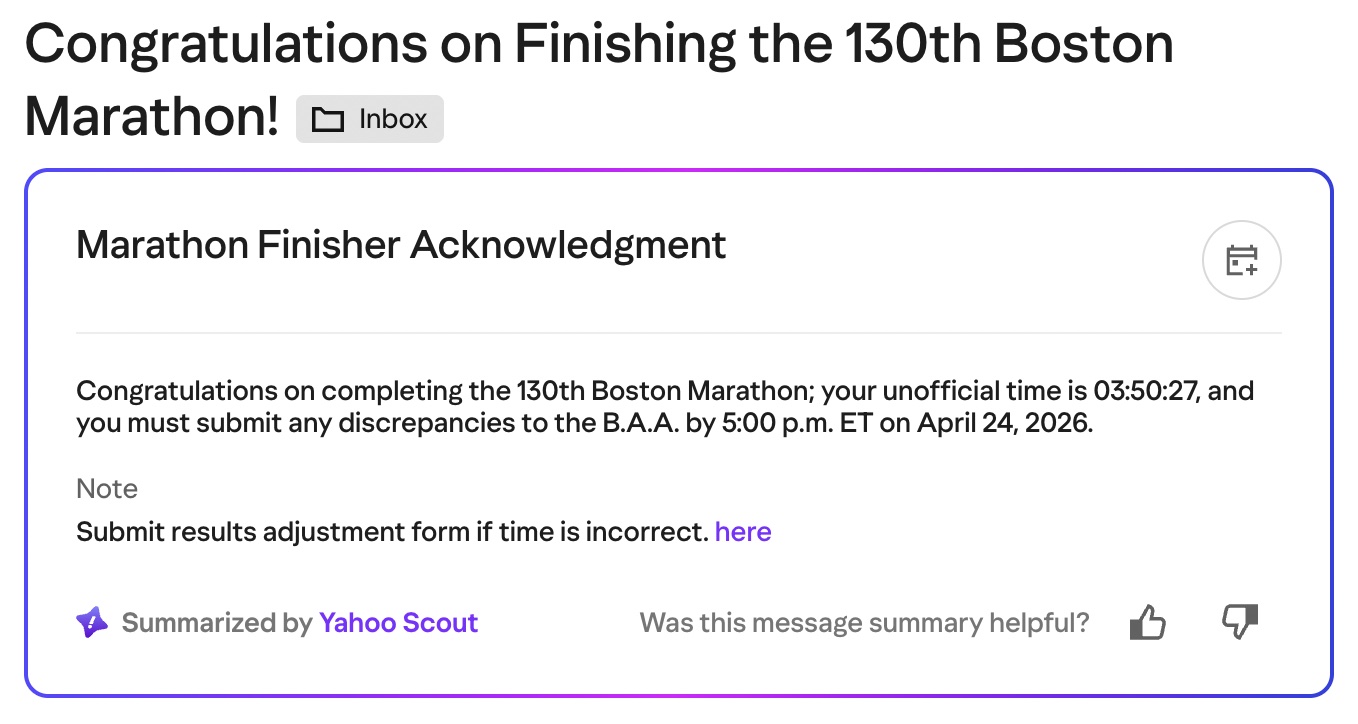
Eventually, I made it to the final two turns before running into the homestretch on Boylston Street, which I watched so many times in online videos. The final 800 metres on Boylston seemed really long, but eventually I achieved my main goal, which was to finish the race running the whole distance (I only stopped once when I dropped my towel), and to not crash at the end of the race. In the end, I ran exactly 10 minutes slower than my qualifying time and finished in 3:50:27. But much more importantly, I did not slow down that much towards the end and my second half was only eight minutes slower than the first.
Looking back, I feel amazed that I managed to do it and very happy to have been part of something that I will always remember.
HIGHLIGHTS FOR WEEK OF 13 – 19 APRIL 2026

Cell Biology Midterm Exam
Last week I finished marking the midterm exam in my Cell Biology course, which I conducted allowing students free online access, including free access to chatbots.
Despite this, the average marks were rather low (57%), suggesting that the test was not that easy and that free online access was not hugely helpful.
Notably, the low average was not due to everyone getting low marks. In fact, a relatively large number of students scored very well, with 10% of the students achieving A+ grades. Instead, the reason for the low average (and even lower median) was the large variation in the marks.
This raises the question of why some students performed so well while others didn’t?
There are generally two main factors that determine success in university courses: prior knowledge or skills, and the number of practice opportunities. While how much knowledge students have before a course is out of their control, the number of practice opportunities students seize is in their own hands.
This is of course true for many areas in life. For instance, people who practice asking questions become good at asking questions. And once specific skills are gained, they are often transferrable.
What matters most is not the total amount of time students spend studying, but whether the practice is aligned with the desired outcome (i.e., becoming good at what is being tested in the case of a university course), and how frequently students practice.
As such, what it takes for students to succeed is to identify how they can do well in their course. In my course this means practicing to interpret (explain) and predict experimental data. And then it is crucial to find ways to stay motivated, build routines that allow for practice to happen, and eliminate distractions that prevent consistent practice.
Finally, with regards to allowing free online and chatbot access in my midterm exam, the reason why these tools were not of great help lay in the type of questions as well as in the question format.
With regards to the question type, my midterm test (as well as the final exam) is based on a research paper related to the course content, which the students read and study in detail before the test. Most of the questions are related to interpreting the data presented in the research paper figures and to predicting results if experimental conditions are varied. Because the context of these questions that are based on the figures of the research paper is highly specific, it is relatively difficult for chatbots to answer the questions correctly.
With regards to the question format, students frequently had to draw diagrams, e.g. add bands in a Western blot template, which makes it more difficult for chatbots to provide meaningful help.
This semester I also included another element into my exam, in which I provided protein structures predicted by AlphaFold and the students then had to use ChimeraX (a freely accessible software for the visualization and analysis of AlphaFold structures) to answer scientific questions related to the course content. Although students can find some of the answers to these questions online, they only receive marks if they include a screenshot that shows that their answer is actually based on their structural analysis using ChimeraX, and not based on googling or guessing the answer.
However, for the final exam, which is also based on two research papers, I am planning to change my approach in order to not have to make the questions too difficult. Students are still able to consult google and chatbots for help, but they are not allowed to upload images or screenshots of the data figures on which the questions are based into the chatbot.
Why do I bother so much about allowing online access, instead of just making the exam a closed book or closed internet test?
There are some practical reasons related to logistics and deadlines to finalise my questions. However, the main reason is that I personally solve very few problems without using online sources. And the same is true when students will have to solve problems in the future in the real world. In order to use AI tools more effectively and learn to decide whether to apply and trust them, students need to have the opportunity to use them, especially during high-stakes assessments
HIGHLIGHTS FOR WEEK OF 6 – 12 APRIL 2026

Research questions: Part 3
Knowing what types of research questions there are and what are good research questions is useful. However, it is also important to discuss how we can come up with good research questions or objectives.
Firstly, do we need detailed scientific knowledge in order to come up with a good research question or objective?
In order to ask obvious questions, the answer is clearly ‘Yes’. This is because the questions are only obvious to the researchers who knows the specific research field very well.
To ask fundamental, technology-driven or “What if?” questions, we need to be able to take a step back and look at hidden assumptions, unmet needs or visionary outcomes. This requires some specific knowledge. But more importantly, it requires a good overall conceptual understanding of the processes we are investigating and the available technological solutions and their limitations. For all these types of research questions, learning specific knowledge happens during the course of trying to address these questions.
When trying to identify an obvious research question, researchers look at what is known and consider what information is missing. There are generally two types of gaps: Firstly, what mechanistic explanations are lacking? Secondly, what is the relevance of the phenomenon we are studying, for instance, what is its physiological significance?
To broaden the complexity of obvious research questions, we can try to draw connections to other areas or consider the bigger picture.
For instance, the Zika virus epidemic in 2015/16 prompted Neurosurgeon Harry Bolstrade to propose a novel approach to treating glioblastoma, which is the most aggressive primary tumor of the brain with very low survival rates. Zika virus disease normally causes mild or no symptoms, but can lead to severe complications during pregnancy. In pregnant women, the virus can spread from the mother to the baby and infect and destroy developing brain cells, or neural progenitor cells, causing a small head size (microcephaly) and severe brain malformations. Knowing that glioblastoma cancer cells resemble neural progenitor cells triggered a flash of insight for Harry Bolstrade. Perhaps Zika virus could kill cancer cells, too, while at the same time sparing normal cells?
This example demonstrates that ideas do not come from nowhere, but are usually derived from other ideas.
In another example, the first over-the-counter Continuous Glucose Monitoring device approved by the US Food and Drug Administration prompted Guy Lutsker and colleagues to consider the wider context of diabetic care. The device is normally used to help diabetic or pre-diabetic patients monitor how well their blood sugar is controlled. However, Lutsker and colleagues asked whether continuous glucose monitoring data could also be used to predict individuals that are at elevated risk to develop diabetes and cardiovascular mortality. In a recently published paper in Nature, the authors presented GluFormer, a generative foundation model trained on more than 10 million glucose measurements from more than 10,000 adults without diabetes. The researchers found that the GluFormer model identified individuals at elevated risk of diabetes and cardiovascular mortality more effectively than the commonly used clinical marker HbA1c.
Finally, at the most advanced level, a research question is based on uncovering hidden assumptions, for instance about things that are widely accepted but not proven, or about things that are commonly considered impossible or very hard to achieve.
For instance, Noubar Afeyan, in a talk he gave at the National University of Singapore in 2023, discussed that in order to deliver genes into cells, most companies employ a strategy based on the two known viruses that are widely used to transduce genes into human cells, lentivirus and adeno-associated virus (in short AAV). However, both vectors come with a number of disadvantages, such as insertional mutagenesis risk, potentially leading to cancer, and immune responses, respectively.
A hidden assumption here is that there are no other viruses that can be used effectively for human gene therapy. This prompted Afeyan’s company to ask the question whether there are endemic viruses present in our cells that cause no harm and would thus be a perfect vehicle for gene therapy.
Uncovering hidden assumptions often requires a process called rule bending, which is not commonly taught to young scientists. Rule bending requires that we discount specific assumptions or constraints when trying to develop a new strategy to solve a problem or come up with a new theory. As Francis Crick famously said, “A theory should not attempt to explain all the facts, because some of the facts are wrong.” This also has important implications for the actual process of identifying new research questions or objectives, as discussed below.
While researchers often come up with new ideas by exposing themselves to other people’s ideas, e.g., through reading research papers, they also frequently try to intentionally come up with ideas, such as ideas for a project or a grant application. Here, I personally sit down and think about the topic. If I have a spark of an idea, I often start to search online or in my own “database” to obtain more information, and then continue thinking. Creativity expert Scott Berkun described this process fittingly as “Creativity is a kind of work.”
A critical factor is to revisit the project multiple times because spacing out the creativity process helps to process the idea over time and approach the problem with a fresh perspective upon re-visiting the problem. At different times during this process, it is also useful to talk to others about our idea to test it out and refine it. In short, the main elements of this idea generation process are thinking individually, researching to get more information, and discussing with others.
Indeed, these elements are consistent with theoretical foundations of the creative thinking process, which emphasise the importance of individual elaboration, cognitive stimulation through the ideas of others and discussions, usually in the form of group brainstorming. Group brainstorming in particular is effective for a number of reasons, for instance, because the participants bring different viewpoints. Another reason is the social comparison effect, in which exposure to ideas of others increases the motivation of students to contribute their own ideas. However, the most important reason why group brainstorming is effective is cognitive stimulation, where exposure to other people’s ideas increases the likelihood of coming up with new ideas by ourselves. There is indeed abundant research evidence in the literature in support of an improvement in creative performance as a result of idea sharing.
What matters also is how individuals engage with the ideas of others. Above all, it is critical that participants in group brainstorming are willing and motivated to attend to the ideas of others. According to the rules of the Osborn Brainstorming technique, as popularized by Alex Osborn, there should be an emphasis on withholding criticisms and welcoming unusual ideas. Other rules include initially focusing on idea quantity as opposed to quality and subsequently combining or modifying ideas to come up with new solutions.
While there are various examples in my career where I came to an important insight after talking to someone about it, in the majority of cases I came up with the initial idea by elaborating on a topic on my own. I personally believe that some individually generated starting points are necessary. Group brainstorming can then improve or sometimes transform the initial idea into a much better one.
This brings me to the final point: How can we improve an idea, such as a research question or a research objective that we have come up with. Michael Fischbach, in his 2024 article published in the journal Cell, entitled “Problem choice and decision trees in science and engineering”, highlights that this involves two separate aspects, firstly to increase likelihood of success and secondly to improve are the impact of a research question or objective.
When it comes to increasing the likelihood of success, the goal is not to avoid risks altogether, but to reduce them as much as possible. Michael Fischbach advocates four potential approaches.
One useful way to avoid a high risk of failure is “to design a project that can succeed no matter how the data turn out.” Fischbach suggests that “One common way of doing this is to characterise multiple candidates rather than a single one. Don’t perform a genetic screen with one kinase or phosphatase, test a panel of them in parallel.”
Secondly, he recommends to perform the critical “go/no-go experiment at the earliest feasible moment. This is true even if it requires some compromise; build a clunky prototype and see if it works, even a little.”
The third approach is to “fix one parameter and let the others float”. Many research objectives define both the goal and the method to get there. Fischbach suggests that a better approach is to fix only one of the two. If our emphasis is achieving the goal, then any method that will achieve it should be acceptable. On the other hand, if we want to leverage the potentials of a new technology, then any application that we develop will be a success.
Finally, he recommends to consider turning a problem on its head. He gives the example of a study from 2018 by Huang and colleagues, entitled “Approach to Query the Degradable Kinome Using a Multi-kinase Degrader“. In the study, the researchers initially wanted to develop small molecule degrader drugs that bind to two specific protein kinase target proteins and rapidly induce the degradation of the kinases, resulting in swift functional inhibition. Small-molecule degrader drugs are bifunctional molecules that act by binding a kinase target on one end and an E3 ubiquitin ligase on the other, thereby recruiting the substrate protein to the E3 ubiquitin ligase. The E3 ligase can then mediate the ubiquitination of the substrate protein, thus targeting the substrate for rapid proteasome-dependent degradation.
However, the degrader drugs designed by Huang and colleagues were unable to induce the degradation of their selected two kinase targets. The researchers then “turned the problem on its head” and developed a promiscuous small-molecule kinase degrader that binds to many kinases. They achieved this by relying on the fact that all kinases use ATP. Thus, they created a degrader compound that can occupy the ATP-binding pocket of many kinases. By using this drug, Huang et al. identified 28 kinases that were degradable (and many more that turned out to be not degradable).
Although their initial efforts were unsuccessful, by turning the problem on its head the researchers not only increased their likelihood of success, they also increased the usefulness of their findings for other researchers.
This brings me to the second aspect of improving a research question of objective, the potential impact. Fischbach suggests to conduct an impact analysis. This involves asking two questions:
1. How much would we learn if we were to answer our research question? Or if we address a research objective, what difference would achieving the objective make to those who would benefit from it?
2. How many people are interested in what we may uncover when answering our research question or would be applying our research findings?
The best research questions or objectives score high on both questions. For instance, the development of CRISPR/Cas9 mediated gene editing is of huge significance because it is a major breakthrough that allows researchers to do things that were impossible previously, and because the possibilities for applying the technology are vast.
Scoring high on only one of the questions, for instance by producing a breakthrough in a rare genetic disease, or alternatively by making an incremental advance in a technology that is widely used, can still make for a worthwhile research question or objective. On the other hand, scoring low on both questions ought to prompt us to seriously consider how we can improve our research question (or in some cases abandon it altogether).
According to Michael Fischbach, the process of improving a research question, or as he calls it idea optimisation, should always follow the initial idea generation. This process involves taking an initial idea and trying to improve both the likelihood of success and the potential impact, using the various techniques described.
At the end, one may ask why do we not simply outsource the whole process of generating research questions to generative AI, which is becoming ever more capable. Indeed, recently developed tools such as the “AI scientist“, which can automate the whole research process starting with the idea generation, are being developed.
However, the answer to this question is rather straight forward. The purpose of AI tools should be to help us address the questions that we consider important. As argued by Botvinick and Gershman, “two core aspects of scientific work should be reserved to human scientists,” namely deciding on “what problems to work on and that human understanding remains the goal of science” (Binz et al. 2025).
But there is another reason, as highlighted by Jonathan Singer in his 1992 article entitled “Ideas are becoming an endangered species“, in which he writes “Finally, and perhaps the most important thing I can say about ideas is this: nothing has ever given me as much gratification and sheer pleasure in science as having a first-rate idea. Such ideas may have been few and far between, but they have left the deepest impression on me. I have no fonder wish than that the same kind of satisfaction is achieved by coming generations.”
HIGHLIGHTS FOR WEEK OF 30 MARCH – 5 APRIL 2026

Research questions: Part 2
After discussing what makes for a good research question in my post from three weeks ago, I would like to address in this post what different kinds of research questions there are and how they fit the different criteria of a good research question.
Before that, it is worth pointing out that scientists do not always pursue research questions. Often, instead of asking a question, they define an objective to create a solution to a specific problem. Examples include developing a new experimental approach, a novel diagnostic tool or an invention that improves patient care.
However, whether we define a research question or a research objective does not affect how we might categorise efforts of researchers to advance science.
The first category I define as obvious questions or objectives. These questions or objectives might address widely acknowledged gaps in our field of research, or they may constitute a logical extension from our or other groups’ prior research, given that answering one question often raises new questions. They may also be derived from unexpected findings we or other groups have come across.
These types of research questions are often very exciting to the researchers who embark to solve them. They also tend to be of interest in our field of research. However, because the questions tend to be specialised, there may be limited interest by the wider scientific community and the general public. Moreover, the best case scenario outcome of pursuing obvious questions is predictable, and it is unlikely that the research will yield outcomes that go way beyond the expectations. Most critically, answering these questions tends to be competitive, because the questions we are asking are obvious, based on information that is readily accessible to researchers in our field or that other researchers are likely to also stumble upon. As such, the research questions or objectives bear the risk that we may be beaten or “scooped” by competing labs.
For this reason, we should ask ourselves a number of important questions:
How likely is it that other researchers arrive at an answer before us or that our project fails? Do we have a back-up plan? Why do we not pursue the back-up plan right away? Are we taking an approach that other people have not taken or are unlikely to take? Do we have expertise or knowledge that others do not have?
Another useful question is to ask ourselves is whether our answer is likely going to be unique. For some research questions, there is only a single answer, and once the answer has been found by one research group, the other research groups working on the same question are clearly the losers.
A good example is the identification of the so-called “circulating factor” that regulates body weight and was known to be missing in a specific strain of obese mice. After many years of search by various labs, Jeffrey Friedman’s research group at Rockefeller finally succeed in identifying the satiety hormone leptin, leaving the other labs to lose out.
On the other hand, some questions or objectives have multiple answers. Examples that fall into this category include developing new drugs that inhibit a specific therapeutic target or developing a new diagnostic test. In these examples, there are multiple solutions, each with its own advantages and disadvantages.
This also highlights one important difference between curiosity-driven (often referred to as ‘basic’) research versus translational research. Curiosity-driven research questions tend to have a single answer, whereas applying (translating) basic research findings can result in many possible solutions.
In summary, asking obvious research questions can have a number of potential drawbacks, including potentially limited interest by the wider scientific community or the general public, a low chance of making unpredictable discoveries, as well as competition and consequently a high possibility of failure, especially when pursuing basic research questions.
As such, it is useful ask ourselves whether we can you turn our obvious question into a more fundamental question.
Fundamental questions examine the validity of widely held assumptions.
As a simple example, there are commonly accepted growth media and conditions for bacteria and mammalian cells, despite the fact that adopting specific protocols is more often than not accidental rather than based on deliberate testing. As such, one could ask the fundamental question of whether these conditions are truly optimal and how they could be improved.
It is also widely assumed that fever helps to improve the defence against bacterial infections, but is this really true and what is the mechanism?
As these examples illustrate, fundamental questions have a number of advantages:
They tend to be of interest to a wider range scientists and potentially even lay audiences. This is due to two reasons. Because the questions are more general in nature, they touch on the work and experience of more scientists, who consequently can better relate to the questions. Given that fundamental questions often challenge widely held assumptions, they also have great potential to raise interest by defying expectations (as discussed in my previous post).
Moreover, when addressing fundamental questions, any result would be of interest to an audience, even if we confirm a commonly held assumption through experimental evidence. As such, when pursuing fundamental questions, it is less likely that we will fail. In contrast, when pursuing obvious questions, we can only report our results if we discover something that was not known before. The exception are obvious questions aimed at resolving a controversy, in which case any result can be reported. However, the impact is often limited to the people who are aware of the controversy.
Because fundamental research questions address assumptions that are commonly taken for granted, it is less likely that there is much competition in trying to answer them.
Finally, when pursuing fundamental questions, there is the potential to come up with side discoveries or interesting phenomena that we did not expect. This is different from asking obvious questions, where we are looking for a specific answer and are hence less likely to make side discoveries.
As an example for such fundamental research questions, in a study from 2016, researchers asked why humans lose their appetite when combatting bacterial infections. The researchers discovered that the protective effect of fasting during bacterial infection is dependent on glucose. Bacterial endotoxin (lipopolysaccharide) causes increased levels of cellular reactive oxygen species, leading to cellular damage, in particular in neurons. Low glucose concentrations and an upregulation of ketogenesis and ketone body metabolism as a consequence of fasting and hypoglycemia were found to be protective against reactive oxygen-induced damage. In contrast, high glucose concentrations and suppression of the ketogenic programme sensitised cells to reactive oxygen-induced damage.
The researchers also found that in contrast to bacterial infections, nutritional supplementation is protective during viral infections. This effect was also dependent on glucose, by protecting cells from endoplasmic reticulum stress as a consequence of high rates of viral protein production.
This study was published in Cell, widely considered as the most prestigious and impactful biomedical journal, highlighting the potential of addressing fundamental research questions.
In our own research, we study how human cells sense glucose, trying to answer very specific questions such as which glycolytic metabolite is being sensed and how cells regulate cellular glucose uptake. What would be a more fundamental approach that would make it less likely that we are being scooped and that would allow us to make a unique contribution?
We could for instance compare glucose sensing systems across evolution. We could determine how cells distinguish between sensing the concentration of a specific metabolite versus the rate of flux through a metabolic pathway, i.e., the rate with which glucose is being utilised). We could also try to build a glucose sensing system that can sense either the concentration of a specific glycolytic metabolite or the glycolytic flux.
Addressing these questions still allows us to gain insights into our specific question. But at the same time, it broadens our research scope and lowers the chance that we may fail. By broadening the scope, we may gain new insights to address our specific questions, while at the same time making our research more appealing to a general audience.
Yet another type of research questions are technology-driven questions. Here, researchers aim to innovate new technologies that can measure or produce things that were not possible before. As a result, researchers can then address questions that previously could not be addressed.
Before taking this approach, it is important to consider available time and resources. Students with fixed time constraints are well advised to carefully consider whether this approach is suitable, especially if expertise to develop and implement new technologies is lacking in their lab or in that of close collaborators.
Finally, there are hypothetical, or so called “What if?” questions, which have been championed by Noubar Afeyan, co-founder and chairman of Moderna and founder and CEO of Flagship Pioneering.
Here we start out with a vision to achieve something that is currently impossible, but that has the potential to be game-changing. Working towards such visions can take many years. However, the process of working towards a vision tends to produce many interim insights that increase scientific knowledge or that may have their own applications.
In 2010, Noubar Afeyan and his colleagues at Flagship Pioneering asked the question “Could mRNA be a drug?”. To pursue this question, Moderna was founded, ultimately leading to the development of game-changing mRNA vaccines during the COVID-19 pandemic.
It is important to note that Moderna did not set out to specifically develop vaccines. Instead, the company decided to pursue the broad question of developing mRNA as a drug. As such, the applications of this technology go far beyond vaccine development, providing an alternative approach to treat numerous diseases.
Asking a very broad questions also enabled Moderna to avoid competing with other companies. Most pharmaceutical companies try to develop drugs against specific diseases using obvious approaches, a strategy that is often associated with fierce competition between drug companies to be first in getting approval for a drug.
Finally, along the way of trying to develop a completely new therapeutic approach to utilise mRNA’s as drugs, scientists at Moderna gained important insights, which can help the scientific community. Along the way, Moderna was also able to file many patents, undoubtedly an important benchmark for success in the commercial sector.
In conclusion, asking visionary “What if?” questions can potentially lead to major breakthroughs as well as smaller, incremental advances.
HIGHLIGHTS FOR WEEK OF 23 – 29 MARCH 2026
How to organise a student symposium?
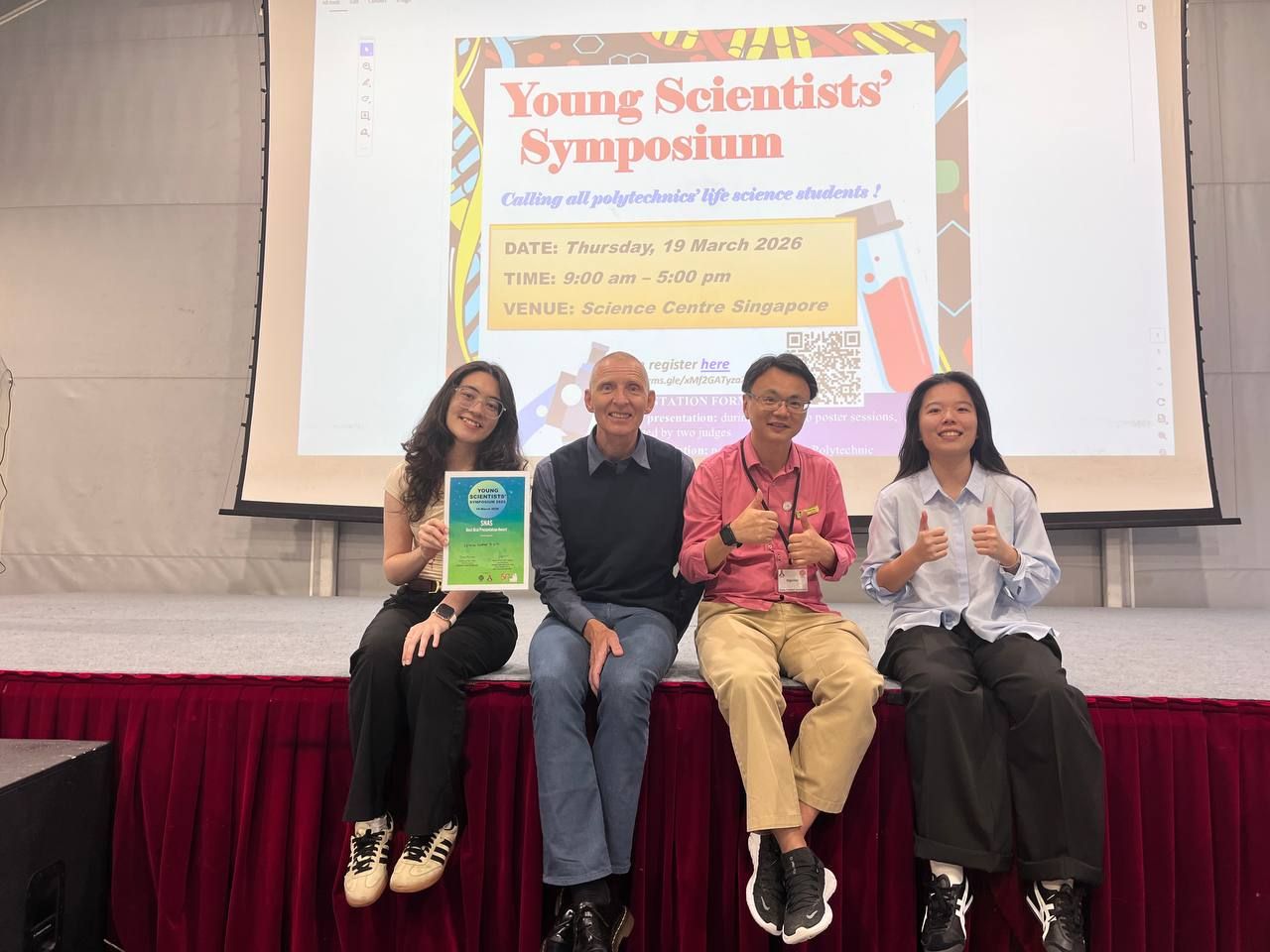
As discussed in last week’s post, for the past 10 plus years I have been in charge of organising the annual Young Scientists Symposium for Polytechnic Life Science students.
Student symposia, especially those targeted at early stage science students, are different from normal scientific conferences where researchers are naturally engaged and where scientific exchange happens as a matter of course.
In contrast to more experienced researchers, early stage students have only a very specialised knowledge and background and tend to be much more reserved when it comes to interacting with other researchers. As such, when organising a student symposium, one needs to take more specific measures and cannot leave things to chance!
Based on my experience, there are three approaches that I consider critical:
1. Keep the students engaged:
We try to make the symposium as fast-paced as possible, for instance by enlisting engaging student emcees and keeping the oral presentations short (15 minutes). In order to motivate students to pay attention, we flash up two audience questions based on the content of the talks after each oral presentation. The student team who answers the most audience questions correctly receives a prize at the end.
As discussed last week, this year we also introduced a Three Minute FYP (Final Year Project) presentation session, in which ten students (two from each Poly) compete in explaining their research project to a lay audience in 3 minutes or less. This session ended up being very exciting not only because many presentations were immensely engaging, but also because students supported their friends representing their Poly.
Finally, there are the two poster sessions, which we plan so that each student presenter is describing his or her work to two independent judges (Poly lecturers or NUS PhD students). This means that the students are engaged throughout the poster sessions to discuss their work and answer questions by the judges.
2. Introduce competitive elements:
In our symposium, students not only compete to win the audience question competition. We also award prizes for the best oral, poster and Three Minute FYP presentations.
One may argue that giving out prizes may send the wrong message to students. After all, we are not doing research to be the best and win awards, but to uncover new knowledge and find novel solutions.
On the other hand, as discussed above, early stage students have very specialised expertise, making it more difficult to interact with other researchers. Hence, it is crucial to find other means to motivate and excite students to share their work and pay attention to that of others.
3. Make it relevant:
In the past, we used to invite established scientists to share their journey and give students tips on how to succeed in their future career. However, it seemed hard for students who were just about to graduate from Polytechnic to relate to the experience of researchers who graduated from University 20 or 30 years, at a time when things were rather different.
As such, several years ago we started to invite relatively recent Poly graduates, who discussed their struggles and joys in University and described their experiences with choosing their career path. They also tended to provide useful and relatable advise on how to survive and enjoy University or find a satisfying career.
And this year I also shared my own experience with imposter syndrome, which (not surprisingly) turned out to be very relatable to a lot of the students.
HIGHLIGHTS FOR WEEK OF 16 – 22 MARCH 2026
Young Scientists’ Symposium 2026
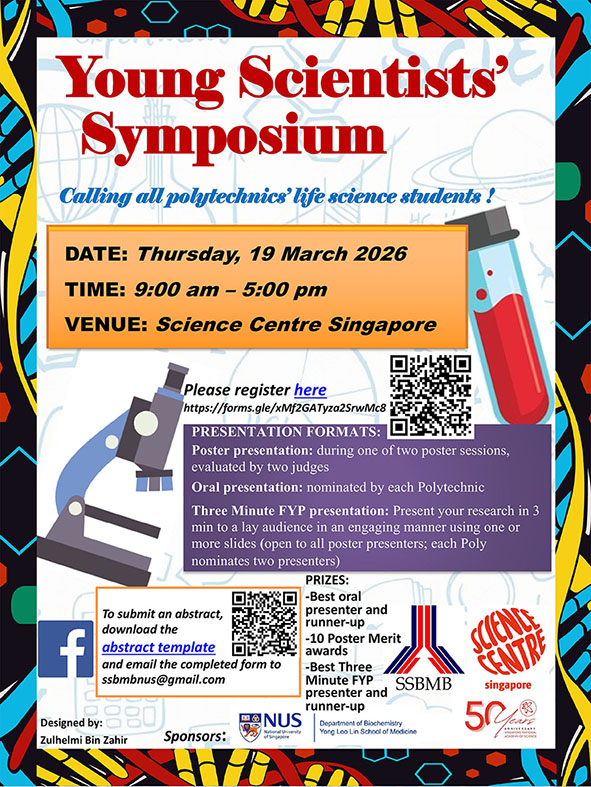
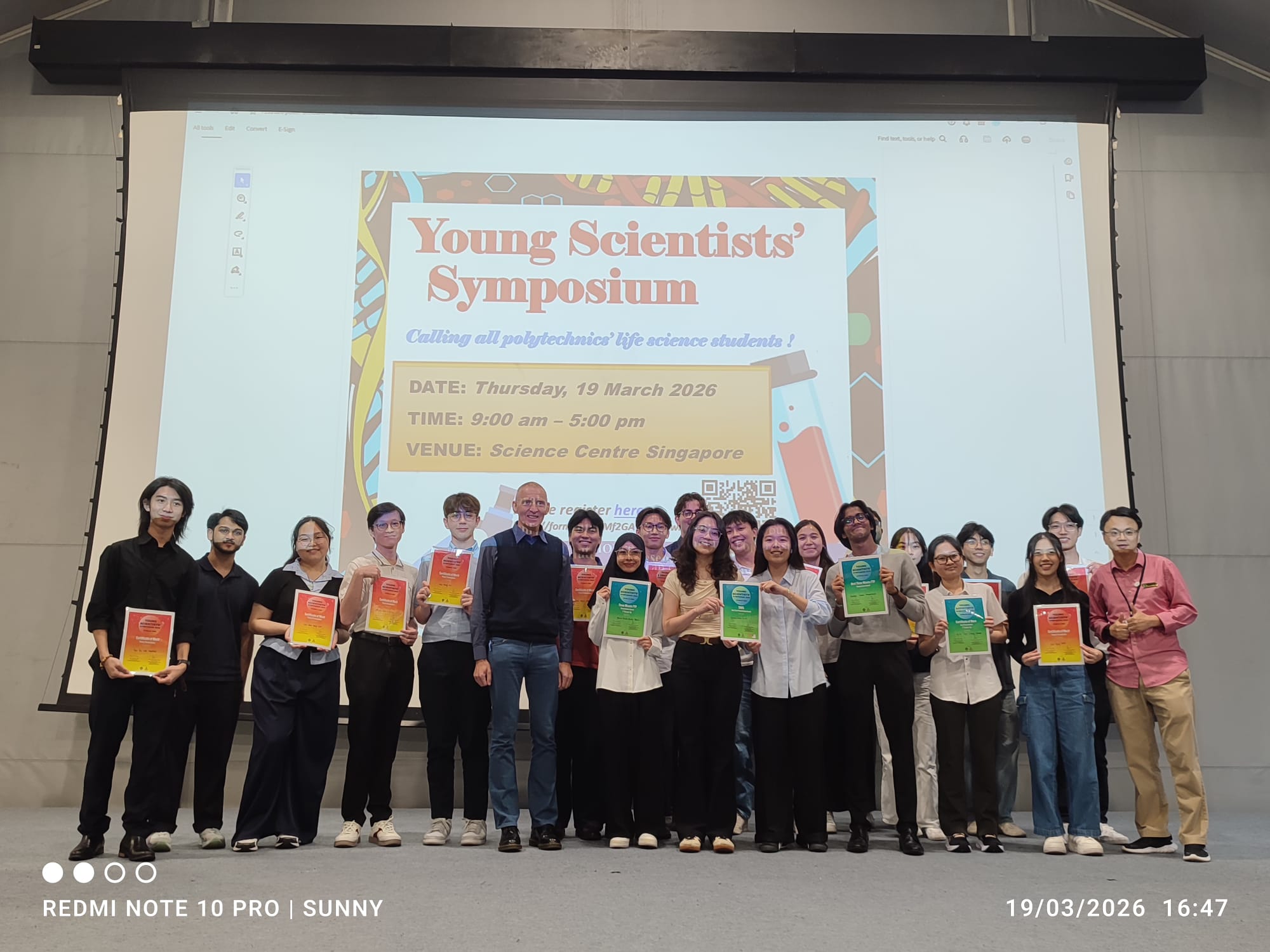
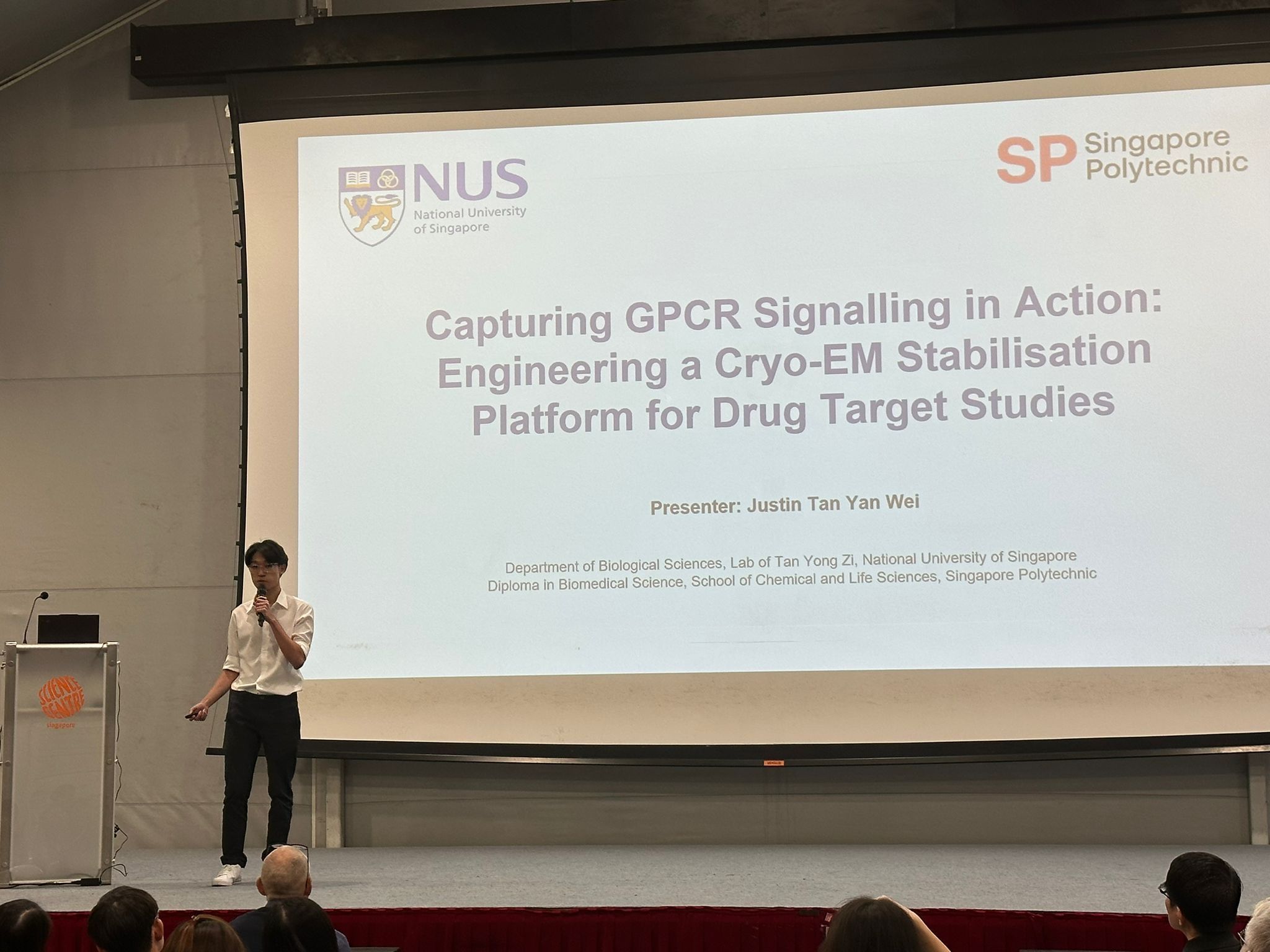
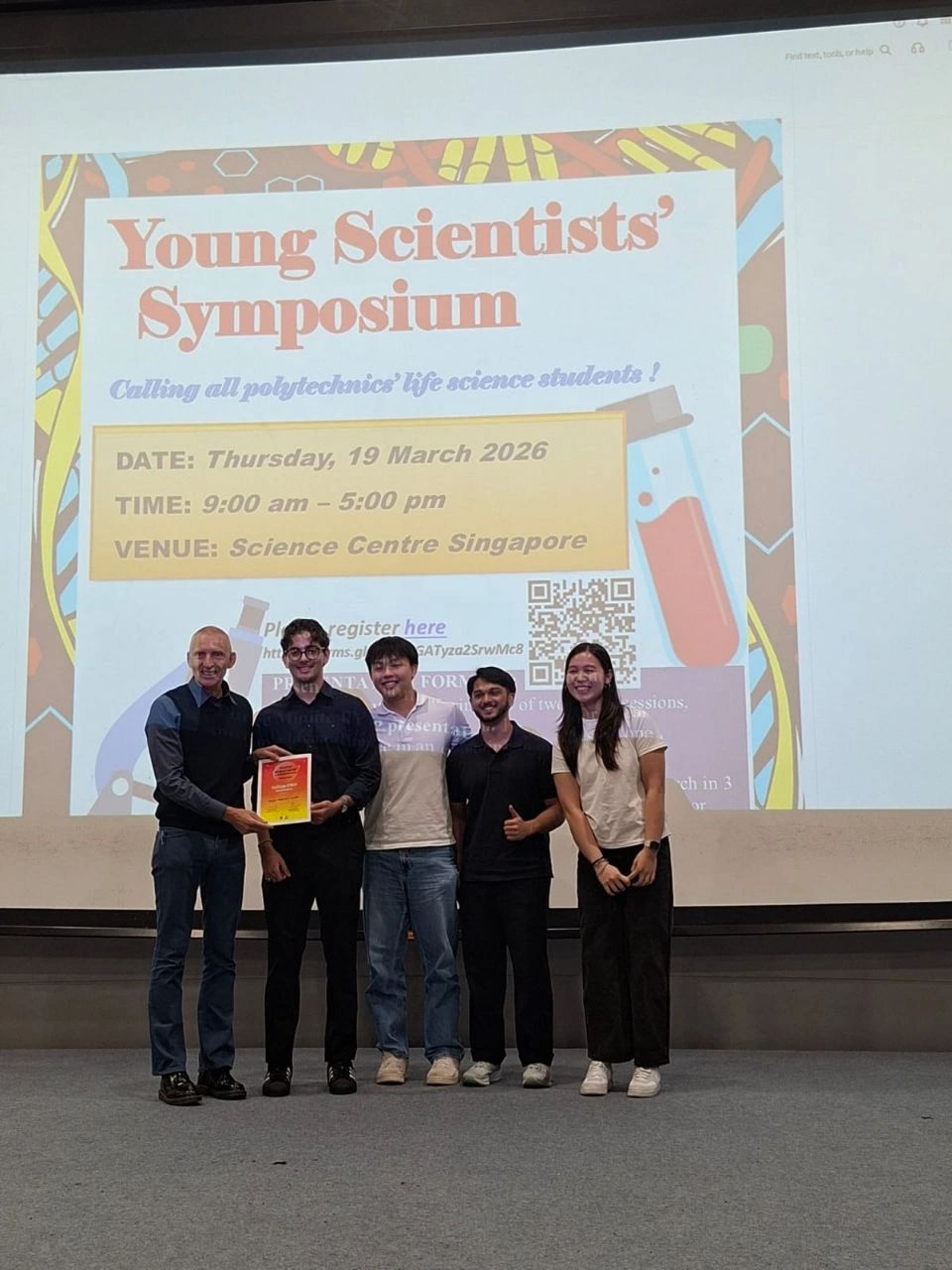
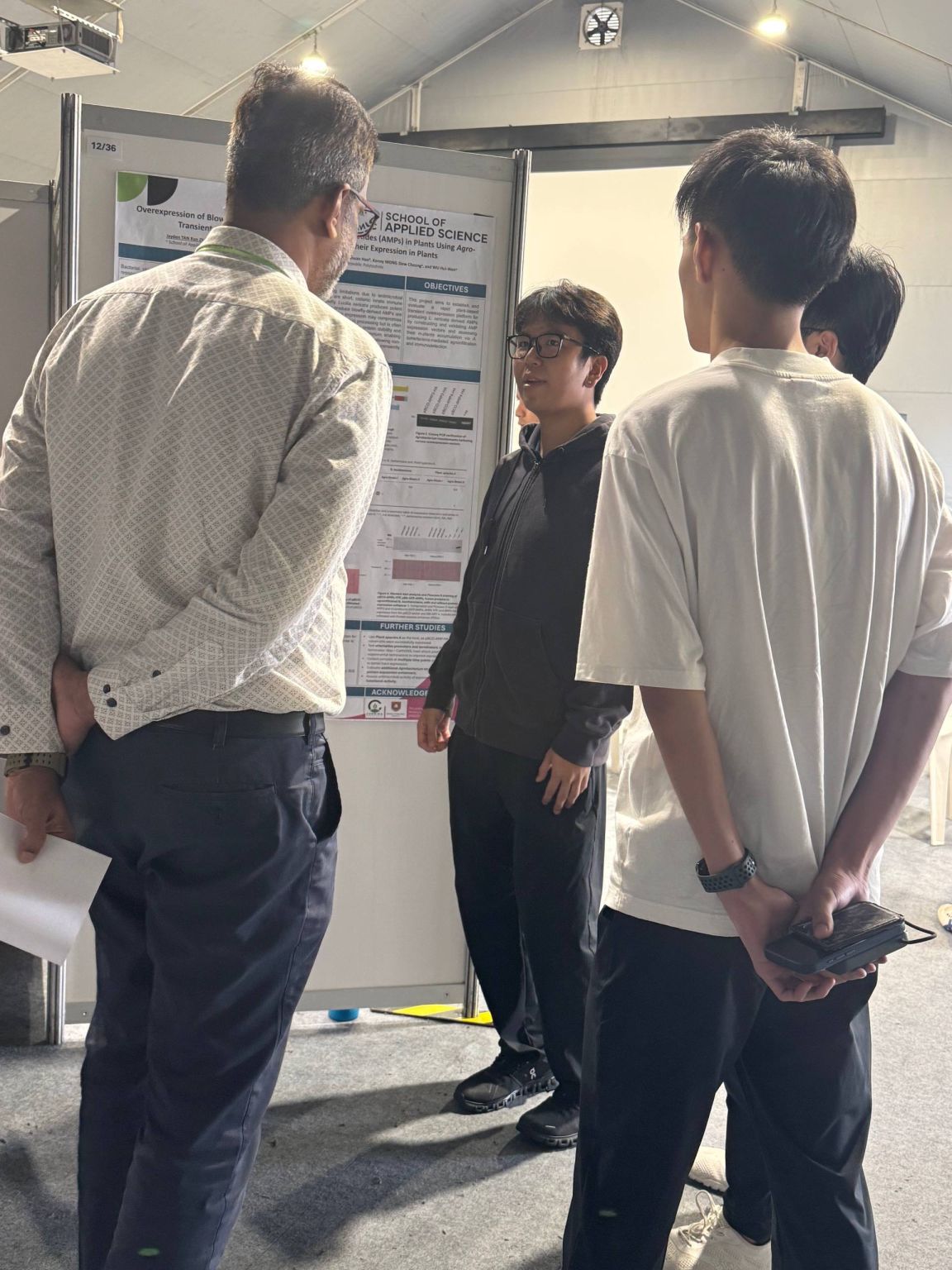
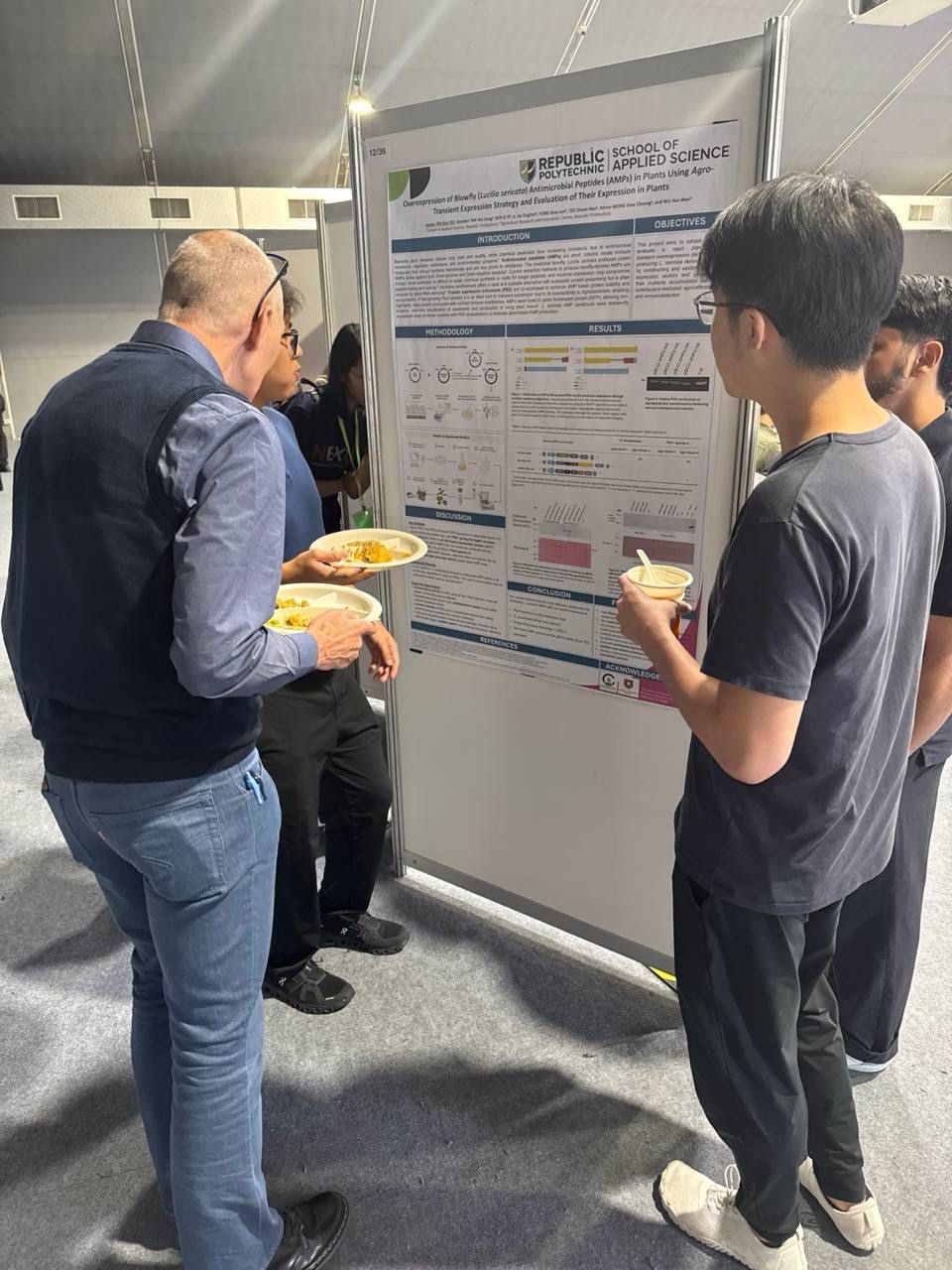
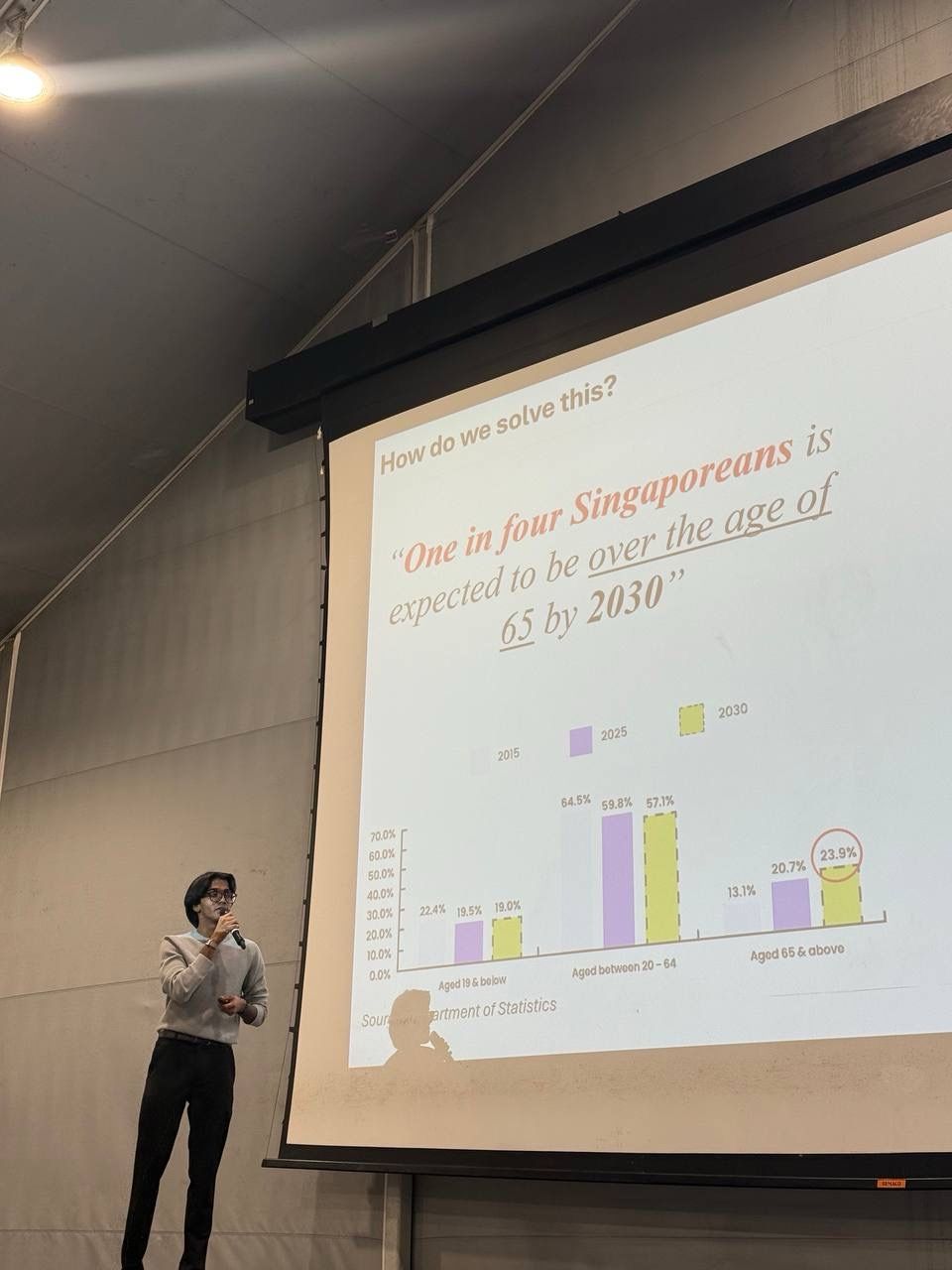
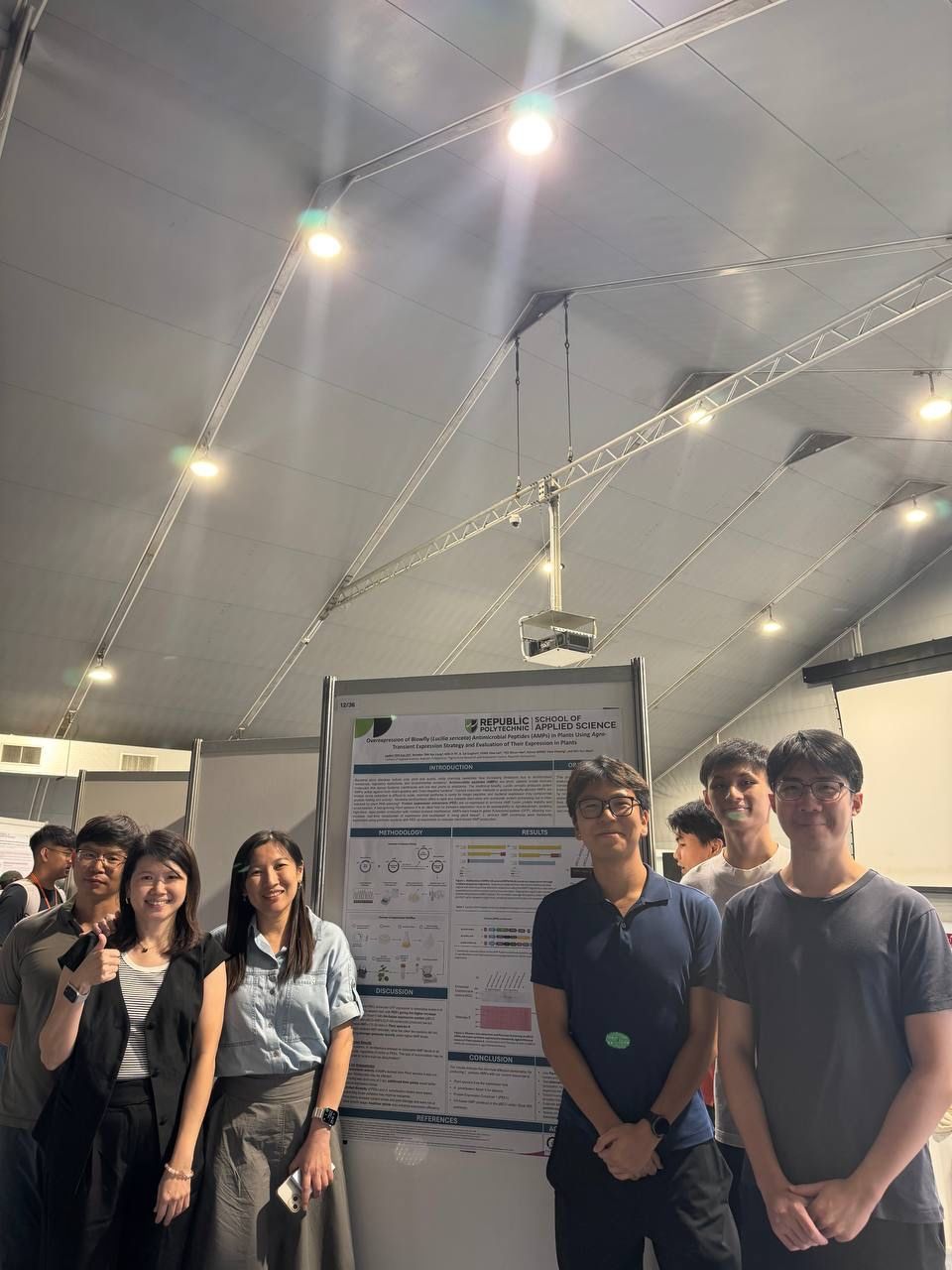
This week marked another edition of the Young Scientists’ Symposium, an annual event where polytechnic students showcase their internship and final year project (FYP) research projects. As every year, we had oral presentations and poster presentations.
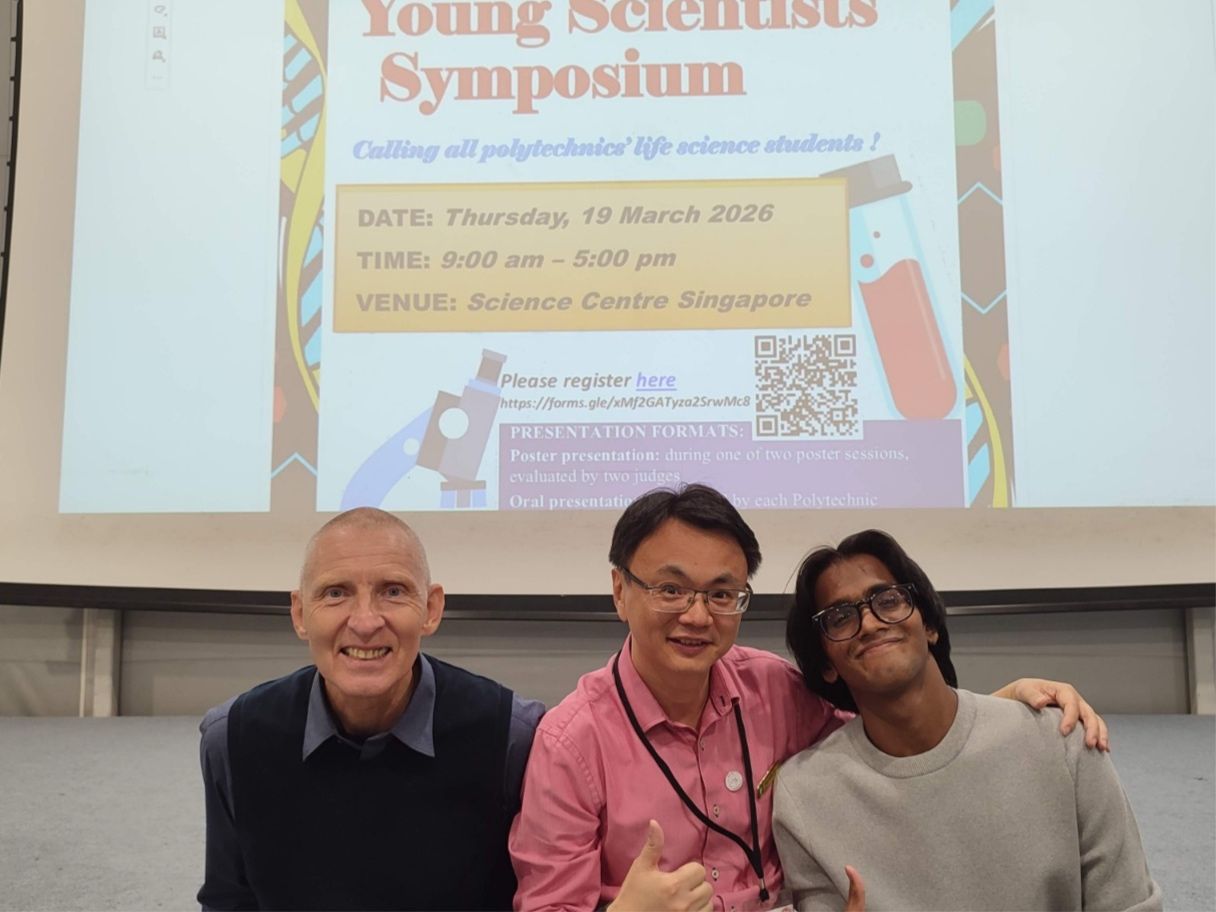
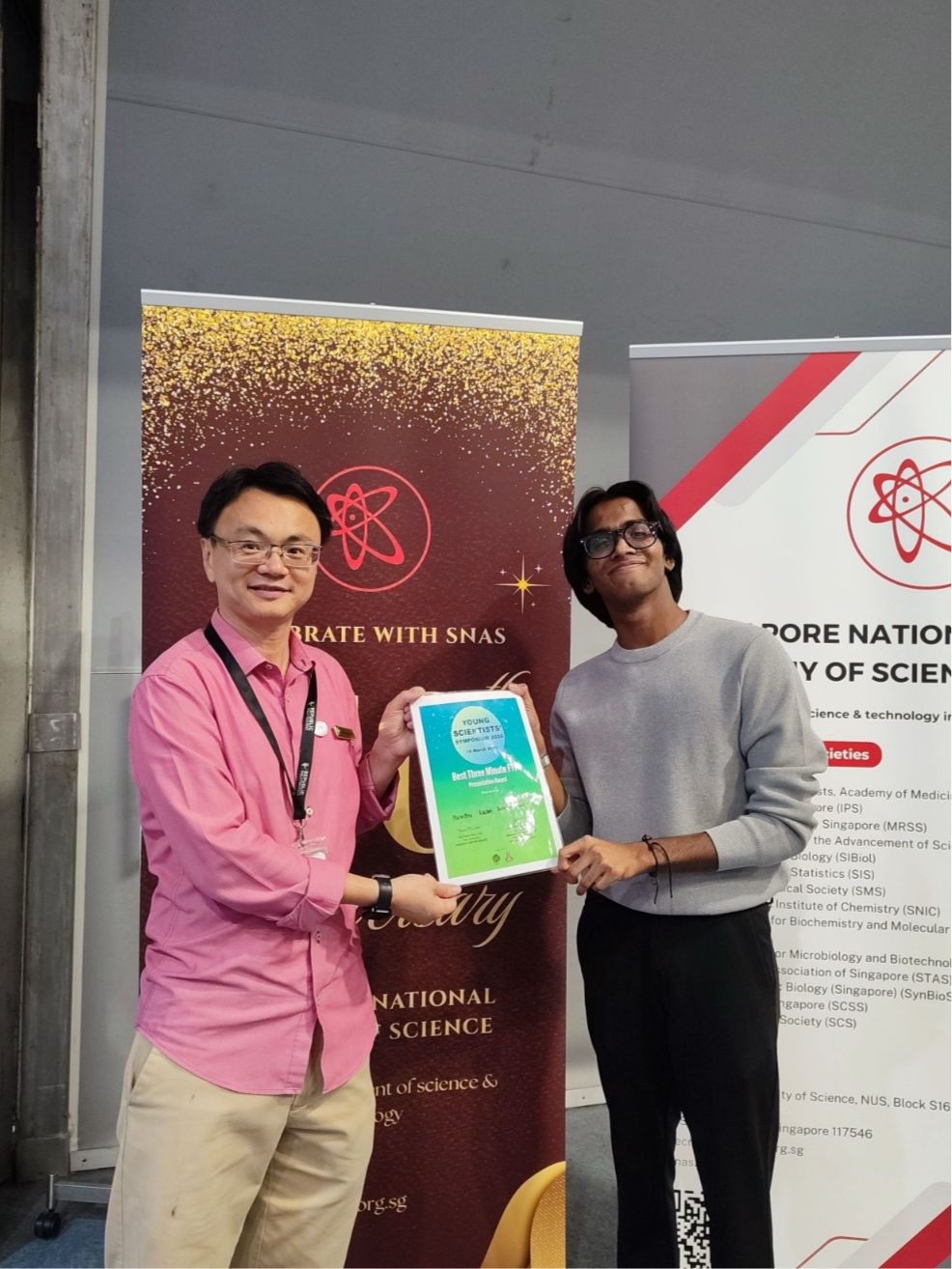
For the first time, we also included a so-called “Three Minute FYP” presentation session, in which students had to explain their research project in layman’s terms in just three minute. The session turned out to be a success, as was the whole symposium, based on the feedback we received from many students. As such, even though preparing the symposium turned out to be a lot of work for me and my dedicated co-organiser Guangwen from Republic Polytechnic, it was all worthwhile!
I was particularly impressed by how proactive many student participants were to post their experience (and prizes!) on LinkedIn. It goes to show how normal it is for young people to communicate online.
HIGHLIGHTS FOR WEEK OF 9 – 15 MARCH 2026
What is a good research question and how do we find and choose one? (Part 1)
(Here is a downloadable podcast based on the article below, generated by Google NotebookLM:
This is the first part of three part-series on research questions, a topic that has interested me for a long time. This is in part because I have to come up with research projects for my students, and in part because I want to teach students how to ask good research questions. To be able to do these things well, it is useful to have some framework.
In a recent talk I gave to postgraduate students, I tried to list the criteria based on which I define a good research question.
Firstly, there is the question of whether YOU (the student or researcher who is going to do the work) is interested in the question?
Researcher Piotr Wasylczyk discussed this point in an article in Science from 2016, entitled “Three lessons rarely taught“. These three often neglected lessons are:
1. Play around – In other words, try wild things even if you don’t know what will come out of it or what will happen.
2. Be sure to have fun – One of Piotr Wasylczyk’s advisors told him “It is only worth doing science if you are still having fun doing it.”. He realised that to have fun, we have to find and pursue interesting interesting ideas. This can also involve changing research directions, something that we should not be afraid of.
3. Find what suits you – This highlights that what researchers find interesting may vary from person to person, and we need to search for what excites us.
Piotr Wasylczyk closes with the motto he chose for his own lab, which he was about to start: “Which research project would you start today if you were certain you would succeed?”
This motto underscores the importance of pursuing a question we care about. But it also implies that in order to do so, we must be willing to take some risk.
This brings me to the second criterion by which I define a good research question – feasibility. Importantly, feasibility refers to whether we have or are able to establish a relevant experimental system. It does not refer to the goal of the research project. This means that we can pursue an ambitious or risky goal, but we must have the means and expertise to pursue it.
For instance, while some research questions are based on our own experimental observations, many research questions are based on phenomena observed by others, be it members of our own laboratory or published findings by other groups. It would be a mistake to formulate a research question or objective that is based on the work of other researchers, without confirming that we can reproduce the phenomenon we are trying to study.
Sadly, the failure to reproduce findings from others is more common that one would hope. This could be due to our own lack of the necessary experimental skills. However, more often than not it is caused by a lack of reproducibility of the original results, manifesting itself in what is often referred to as a reproducibility crisis in many areas of scientific research. Common reasons for this are the absence of details in the description of experimental procedures, or poor research practice, such as a lack of accurate, rigorous and critical analysis of statistical and biological significance of experimental results.
There are, however, nuances to the general recommendation to pursue ambitious and potentially risky projects provided that we have the required means and expertise. One nuance is the stage at which we are in our scientific career.
For instance, graduate and undergraduate students often face time constraints, which may limit the scope of their research question. Graduate students are also frequently advised to not be pioneers by trying to establish sophisticated methodologies from scratch if relevant expertise in their lab is lacking. Undergraduates, on the other hand, typically do not have the pressure to produce results. Therefore, letting them try to set up difficult methodological approaches could be exciting for some students, even if they fail.
On the other hand, early success in research is also a great motivating factor for many students, and may even be a deciding factor for whether they will pursue a research career. Hence, “safer” and more well-defined projects may be more suitable for some students, while others may prefer to pursue “crazy ideas”. What this goes to show is that there is no one-fits-all approach to choosing a research project and that time constraints, personal goals and individual preferences are an important factor.
The requirement to have the means necessary to complete a project is also not absolute. This is especially true when we are trying to pursue a research question that thus far nobody has been able to solve and when we can afford to take a long term view.
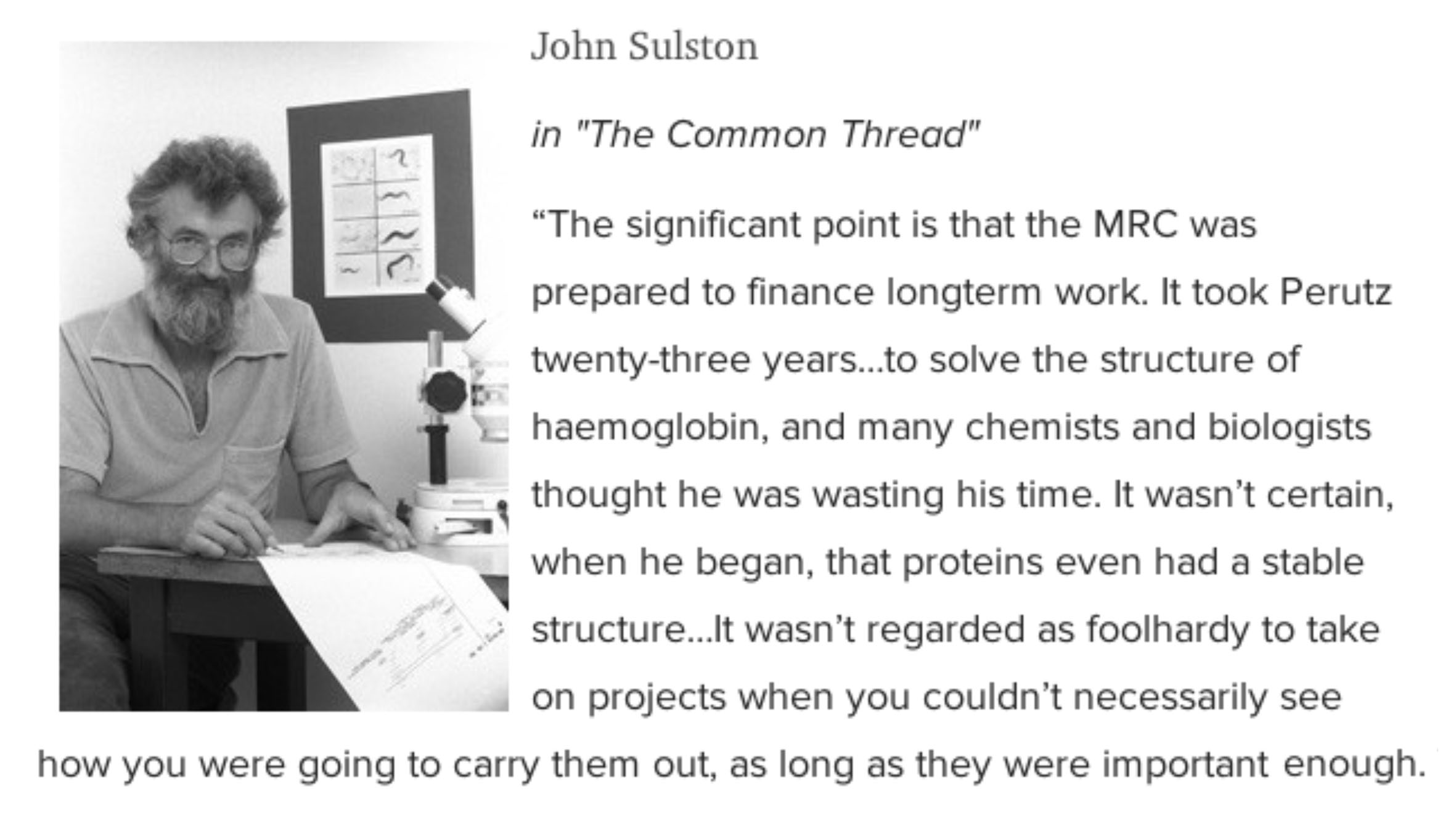
An example is Max Perutz endeavour to determine the hemoglobin structure, as described in this quote by John Sulston:
That said, in the current competitive and achievement-based research climate it is increasingly difficult to take a long term view.
Apart from being invested and interested in a research question and considering its feasibility, a third important question to ask is whether the proposed research question is truly novel. Based on my experience, this requires a proper search, especially if we plan to pursue research questions that are outside our main area of expertise. By not doing this, we potentially risk wasting a lot of time.
We should also ask ourselves what the potential significance and impact of answering our research question would be. That said, it is often difficult to precisely predict what significance or impact a research project might have. Nonetheless, at the minimum we should be able to convince others that our research question is an interesting one. This raises the important question of what makes a research question interesting for an audience, which I will come back to in a moment.
Before that, there is one additional questions that is crucial when choosing a research project: How likely is it that other groups are also pursuing the same question?
The reason for asking this question is twofold.
Firstly, if it is likely that other research groups pursue the same question, then it is crucial to consider what we will do if another group answers the question before us, and whether we have any particular technologies or background information that makes us more likely to “win the race”.
Secondly, we should consider the very question of whether we want to enter a “race” to answer a research question. As Bruce Alberts wrote in his classic article “A wake-up call“, what is the point of trying to address a question that if we don’t solve it, someone else will.
What makes a research question interesting for an audience, such as the scientific community or the public?
I started out discussing that it is critical that we care about a research question. However, it is also important that other people care.
One common misconception is that for a research question to be interesting to an audience, it must have importance and significance.
What matters much more than importance and significance is emotional connection. We can see this in our own lives. We care most about things that we have learned or heard about before or that we have struggled with ourselves, irrespective of whether these things are of major importance in our society. We care about arts and entertainment, even though they are not essential to our survival. We care much less about things that are not relevant to us, even if they are important, unless we expect that they may become relevant to us in the future.
The same is true for how scientists feel about their own field of research. They care about their research primarily because they feel connected to it, not because it is important or significant.
Therefore, in order to get an audience that does not know much about our research field interested in what we do, it helps less to emphasise the importance of our research. What matters more is that we build an emotional connection. It is for a reason that the number one rule for public speaking is to start a talk by building a connection with the listeners by getting them to care about the topic we want to discuss.
However, researching about something that an audience, whether it is other scientists or the public, feels connected to is not enough, as I have learned from an assay by Murray S. Davis, entitled “That’s interesting”, which was published in 1971.
As Murray Davis writes, an interesting theory “denies the truth of some part of the routinely held assumption-ground”. In other words, what this means is that interesting theories deny commonly held assumptions, while non-interesting theories affirm commonly held assumptions.
This implies that for an audience to find a theory (or a research question) interesting, it firstly must have an assumption ground. In other words, the audience must have knowledge and hold some opinion about the phenomenon we want it to get interested in. If not, then the audience will consider the theory or problem as irrelevant. Secondly, as Murray Davis writes, the audience members find a proposition interesting “if it tells them some truth they thought they already knew was wrong”.
Murray Davis makes a third point: “… a proposition will be considered “non-interesting if, instead of denying some aspect of their assumption ground, the proposition denies the whole assumption ground. … In effect, the proposition is saying to its audience: … ‘Everything you always thought was true is really false.’ … The audience’s response to propositions of this type will be ‘That’s absurd!'”
Murray Davis points out that for scientists who question widely held beliefs, there is a fine line between being considered a lunatic or a genius.
To make groundbreaking discoveries, it may be necessary to challenge widely held assumptions, and as Murray Davis writes, “It is perhaps for this reason that genius has always been considered close to madness.”
The distinction between being considered a lunatic or a genius is often only resolved when the dissenting theory has been proven to be true or false. Thus, someone who may have been considered a lunatic could turn into a genius if his or her theory turned out to be correct.
The best example that comes to my mind is Lynn Margulis, a scientific pioneer who proposed that mitochondria are derived from bacteria long before anyone considered this a plausible proposition.
Finally, Murray Davis highlights that whether something is perceived as interesting is dependent on the audience to whom a proposition is directed. For instance, there is often a difference in the assumption ground between a lay audience and an expert audience. As a result, what is interesting to one audience may be obvious to the other. Moreover, the assumption ground of an audience may change over time.
To summarise what I have discussed thus far, when trying to identify a research question, it is important that we ourselves are truly interested in the question.
To get other people interested, the research outcome should potentially defy expectations of our audience.
The research question we plan to pursue should not be one that will be answered anyway, irrespective of whether or not we pursue it.
Finally, answering our question should have the potential to make a difference, and this point becomes increasingly important for more senior researchers.
With this in mind, we can now consider what different kinds of research questions there are and how they fit these criteria, which I will discuss in another post.
HIGHLIGHTS FOR WEEK OF 2 – 8 MARCH 2026
Agentic AI
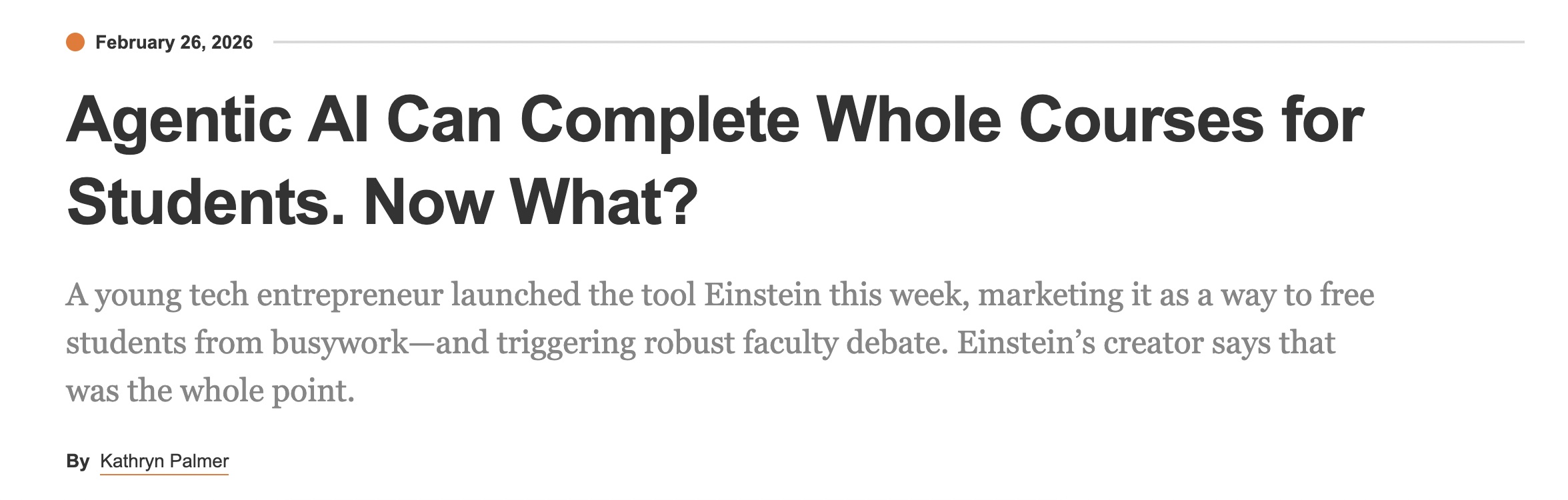
Agentic AI seems to be everywhere, including in education, as I read in a recent, rather scary article on the ‘Inside Higher Ed’ blog, entitled “Agentic AI Can Complete Whole Courses for Students. Now What?“
The article discusses how a young tech entrepreneur by the name of Advait Paliwal launched an agentic AI tool called Einstein, which on its initial launch was described as: “He [Einstein] logs into Canvas every day, watches lectures, reads essays, writes papers, participates in discussions, and submits your homework—automatically.”
Paliwal initially marketed Einstein as “a way to free students from busywork”. By doing so, he wanted to help start a debate over the disruptive potential of agentic AI systems in higher education. However, in its current form, Einstein is branded as a tool to help students master course content at their own pace and educators create virtual courses.
As an observer, the emergence of agentic systems like Einstein gives me the impression that generative AI does not just improve linearly or even exponentially, but seemingly in quantum steps that enable things that previously appeared in the realm of the impossible.
The article made me reflect once again about AI and its impact on education, raising a number of questions, all of which I have contemplated before. But I will need to continuously reevaluate these questions as AI capabilities improve.
These questions include:
- Does agentic AI make my own course obsolete?
- Does it make my course unfair?
- Should I adapt my teaching to this new emerging capability?
- What does this mean for higher education as a whole?
Firstly, does this make my course obsolete?
I do not think so. My course primarily focusses on understanding research data and research papers. Doing research will always require the ability to understand scientific techniques, interpret scientific data and understand how to test scientific hypotheses conclusively, provided that humans will remain in charge of defining the questions and direction of scientific research. This premise will hopefully remain true, even though there are already efforts to outsource the entire process of generation of new knowledge and new solutions to AI. This includes even defining the research questions, which obscures the original purpose of developing AI tools to help us to solve problems. It begs the question of what we gain when making ourselves obsolete in the research process.
Secondly, does agentic AI potentially make my course unfair, in other words, does it allow some students to cheat and get unfair advantages by using AI tools?
As the article points out, the courses that are currently most vulnerable to agentic AI are “content-based ones that use quizzes, asynchronous discussions and term papers to assess a student’s understanding of the material”. Most of these do not apply to my course.
My course is not primarily based on content, but instead on skills. I have no term papers. I do have discussions, but they happen during class.
I also have quizzes, which also take place during class and are mainly based on research data. Although many questions can be answered by chatbots, the quizzes are meant to prepare the students for the midterm and final exam, where they have to answer questions related to specific research papers that are currently not answerable by AI. As such, students who do use chatbots during the quizzes to answer questions for them sabotage their own performance in the course.
Thus far, my strategy has been to test students on problems that AI cannot do, or on tasks that require AI, mainly by letting students evaluate AI output. I have been able to achieve the former by assessing students based on research papers, where students need to apply concepts to highly specific scenarios. This strategy may prove more difficult going forward, which could mean that at some point, I may have to revert to open book, but closed internet assessments.
On the other hand, doing exercises that require the use of relevant AI tools (and testing students’ mastery of these in my assessments) is something I can and should expand on. Currently, I am applying AlphaFold to let students answer research questions. Going forward, I would like to use other tools, including agentic AI. However, this requires that I myself learn how to use these tools first, which is what I am currently trying to do!
Hence, when asking whether I should adapt my teaching, the answer is yes. The main strategy is in my opinion to focus on skills that may be useful for students in their future. This includes skills that AI cannot replace, as well as skills related to using AI tools.
In addition, it seems important to focus on the joy and excitement of research, for instance by letting students engage with real research. I try to achieve this by letting students watch research talks and answer research questions using databases, search tools as well as AI tools. Instilling enthusiasm for research is something that AI cannot do because it requires actually being involved in the process of research or experiencing it from first hand experience.
All that said, it may be possible that in the not too distant future students will be able to do reasonably well in most University courses by using agentic AI and achieve passing or even higher levels without actually having to learn anything. But the question is whether students would want to. If we make learning meaningful and fun, I believe that most students will not.
But the emergence of agentic AI clearly does have implications for higher education as a whole. As long as grades and course achievements remain the major emphasis, students will try to take shortcuts, even if they find the learning activities meaningful.
As such, I believe that there should be a re-emphasis in higher education from grades and course completion to developing skills, and coming up with good ways to measure them. In a perfect world, we would stop awarding grades altogether, and instead assess levels of proficiency in specific areas. Ideally, students should also be able to improve their evaluations through further studies. Importantly, student proficiency levels in specific areas would also be much more useful information for future employers or scholarship providers than grades are.
HIGHLIGHTS FOR WEEK OF 23 FEBRUARY – 1 MARCH 2026
Impermanence
I have recently noted a paradox. The happier I feel, the more I am afraid of dying.
The opposite is also true. This perhaps explains why people living in desperate circumstances may be more ready to lose their lives (?), or why people who suffer from debilitating diseases are less afraid of dying.
As such, when seeking happiness, there is also a need to become comfortable with dying even during times when we feel happy.
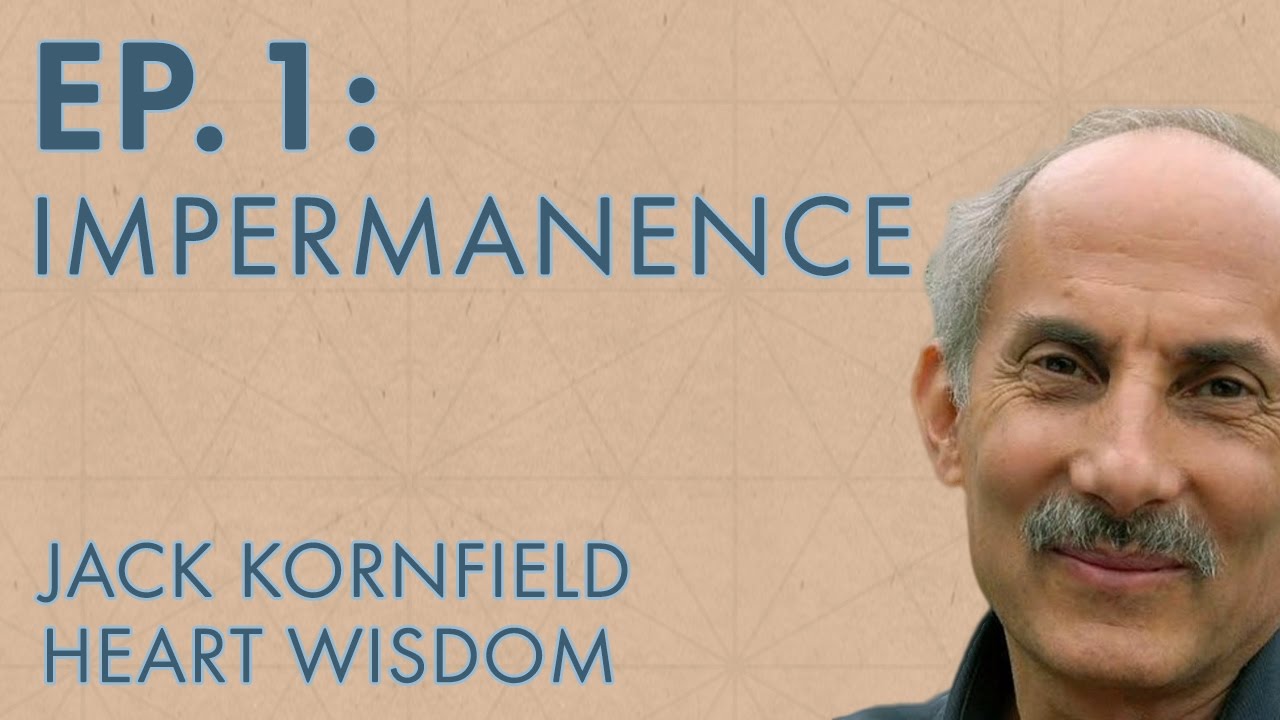
I recently listened to a talk by Jack Kornfield, a buddhist monk and writer. In his talk, Jack Kornfield discusses impermanence and reminded me that we live in a world where nothing is permanent. The talk prompted me to try to embrace the idea of impermanence in my daily living.
He told the story of a Buddhist monk, who held a beautiful Chinese vase in his hand and exclaimed “For me, this vase is already broken.” With his words he expressed the truth that one day the vase will surely break, and that it would be futile to try to hang on to the thought of owning the vase for good. Nonetheless, despite knowing that the vase will break one day, he can still enjoy and cherish the vase in the present moment.
How often in our lives do we try to secure our material possessions, or are determined not to lose our physical fitness. I think there is nothing wrong with valuing material possessions and physical fitness in the moment, but we should do so without being afraid of losing them. Or else, as one student told me in our one-to-one zoom conversation, our material possessions have us. Enjoying to have things in the moment does not mean that things have to stay with us forever.
The desire to maintain things we have is probably rooted in our need to strive for certainty. It seems that most people even prefer to be certain about negative things that might happen to us over being uncertain about the future.
However, certainty is often an illusion. More likely than not, things will be turn out entirely different from what we expect them to. Even in cases where the facts may be certain, it is impossible for us to predict how we will feel about these facts and deal with them in the future. As such, it seems to be a waste of time and energy to try to spend too much effort in order to ensure a certain future.
A much better strategy may to be to focus on the moment and on what we care about now. Our efforts will likely lead somewhere. This approach seems much more authentic and genuine than directing all our efforts towards an imaginary future.
All this also applies to the ultimate uncertainty of when I am going to die, which in fact could be today, tomorrow, or in many years to come.
In an interesting New York Times interview, author George Saunders talked about our perception of our own uniqueness. In other words, we view ourselves as the central player in a movie that assigns all other people to supporting roles.
He suggests that freeing ourselves from the idea that without us, things will not be the same, is liberating.
It is indeed true that when I listen to news of people who have died or who are dying, even though I try to imagine myself in their shoes, I fundamentally believe that this cannot happen to me and that I am different.
However, it is certain is that one day this illusion will be taken from me. It would be good to accept this fact now.
I recently listened to an interesting BBC podcast about a Dutch couple who chose to die together by assisted suicide, which in the Netherlands is referred to as duo-euthanasia. The husband suffered from chronic pain, the wife from early dementia.
What struck me was how the husband said that he is ready to die because he has lived his life.
The reason this struck me is because I feel that we must strive to achieve a state where we can say that we have lived our life and have achieved what is most meaningful to us. Not having achieved this is for me what makes me fear death.
If I look back at the things that I have achieved (of which there aren’t that many), the one that truly satisfies me the most is the personal improvement I have achieved.
I feel that the more I have achieved personal improvement to become the person I want to be, the more I am ready to die.
My biggest achievement of all is to be at peace with myself as a result of having found what makes me most happy and avoiding those things that don’t. It is as though this was the race that I was running all my life, to try to seek what gives me happiness and to overcome the obstacles that prevent me from living a happy and productive life. And the purpose of my life was not the result of achieving that, but the journey there.
HIGHLIGHTS FOR WEEK OF 16 – 22 FEBRUARY 2026
How to maintain happiness when the routine sets in
The semester is in full steam and the daily routine has set in again. There are lots of things to do, some of which aren’t things that I always enjoy or look forward to.
Adding to this, getting older comes with its own challenges like some chronic pain and joint problems. I also find myself having to take a lot more breaks than I used to.
Finally, I also feel a lot of uncertainty about whether things I have planned will work out and worry sometimes that unexpected things might happen.
How to maintain a sense of happiness on a daily basis under these conditions?
Firstly, it is crucial to take action, because feeling happy doesn’t just happen on its own, at least in my experience. On the other hand, in many years of seeking to live a happy life I have also realised that whatever I try, there is no guarantee that I will achieve happiness, even if I am doing things that have previously made me feel happy. As such, all I can do is to create conditions to experience feelings of happiness.
This in turn requires that we find out what has the greatest potential to make us happy and what impedes our ability to experience happiness. We then need to prioritise to make time for the things that potentially make us feel happy, and find ways to eliminate the things that don’t. Both of these are equally important.
All this is easier said than done. On the other hand, gratification does not only come from achieving the end goal (finding happiness). The process of finding ways to achieve the goal, by exploring what things make us feel happy and discovering new ways to eliminate time spent on things that do not bring us happiness or prevent us from feeling it, can be very exciting and rewarding as well.
However, in this post I want to talk about something else I can do – accepting things and changing the way I look at tasks that I have committed to.
Firstly, it is worth reminding myself of how fortunate I am! For the most part of my days, I have the freedom to plan my time in the way I want to and the opportunity to do meaningful things. In my personal life, I am able to do the things I want to without having to think about major financial constraints and above all, I have the privilege to live and work in a beautiful country.
I must say that I regularly do acknowledge how privileged I am (in fact almost every day). But naturally, that by itself is not sufficient to feel happy.
Moreover, it may not be helpful to attach ourselves too much to the privileges we have because there is the possibility that they are taken away from us at any time. And there are people who manage to feel a sense of happiness and meaning despite living in far more difficult circumstances than I do. The opposite, of course, is also true.
This is why the mindset is important. There are always two ways to look at tasks: as something we have to do, or as something we want to do.
However, doing the latter often seems difficult. What makes it difficult? What is it that makes a task uncomfortable or dreading?
This is an important question to ask ourselves. For me, what makes a task uncomfortable or dreading is almost always a sense of uncertainty.
A good example are my running sessions. If I have planned an exciting or fun workout, I look forward to a session. I also look forward if I feel certain that the workout is not too hard and not too easy. For instance, there are times when I try the workout myself before our training session, allowing me to adjust the workout intensity and feel certain about the degree of difficulty. This greatly helps me reduce my anxiety and increase my excitement about training sessions. However, due to injuries or my own training priorities, it has not been possible to do this routinely.
Another example is the student symposium (Young Scientists’ Symposium) I organise every year around this time. If there is something I have prepared (such as a speech) that I feel excited about, I tend to look forward to the event. If not, I tend to perceive the symposium as an emotional burden that affects my sense of happiness.
The same is true in many areas of my professional life, such as my classes or my student one-to-one conversations. If I have devised exciting activities for a class or feel emotionally well-prepared for my student conversations, I look forward to them.
As such, it is best to face the uncertainty and anxiety I experience about upcoming tasks, by taking action to prepare and come up with exciting ideas. And if it is not immediately clear how to come up with these ideas, we have to search for ways! There is a solution to any problem, if only we take the time to find it.
HIGHLIGHTS FOR WEEK OF 9 -15 FEBRUARY 2026

Wings Cross Country Championships 2026
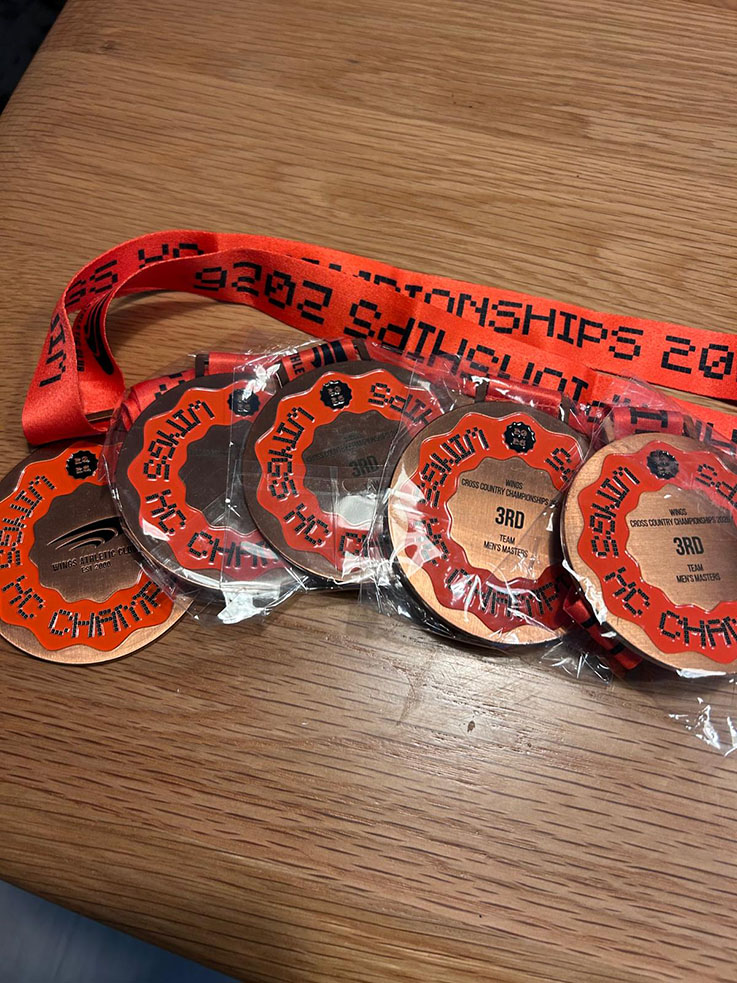
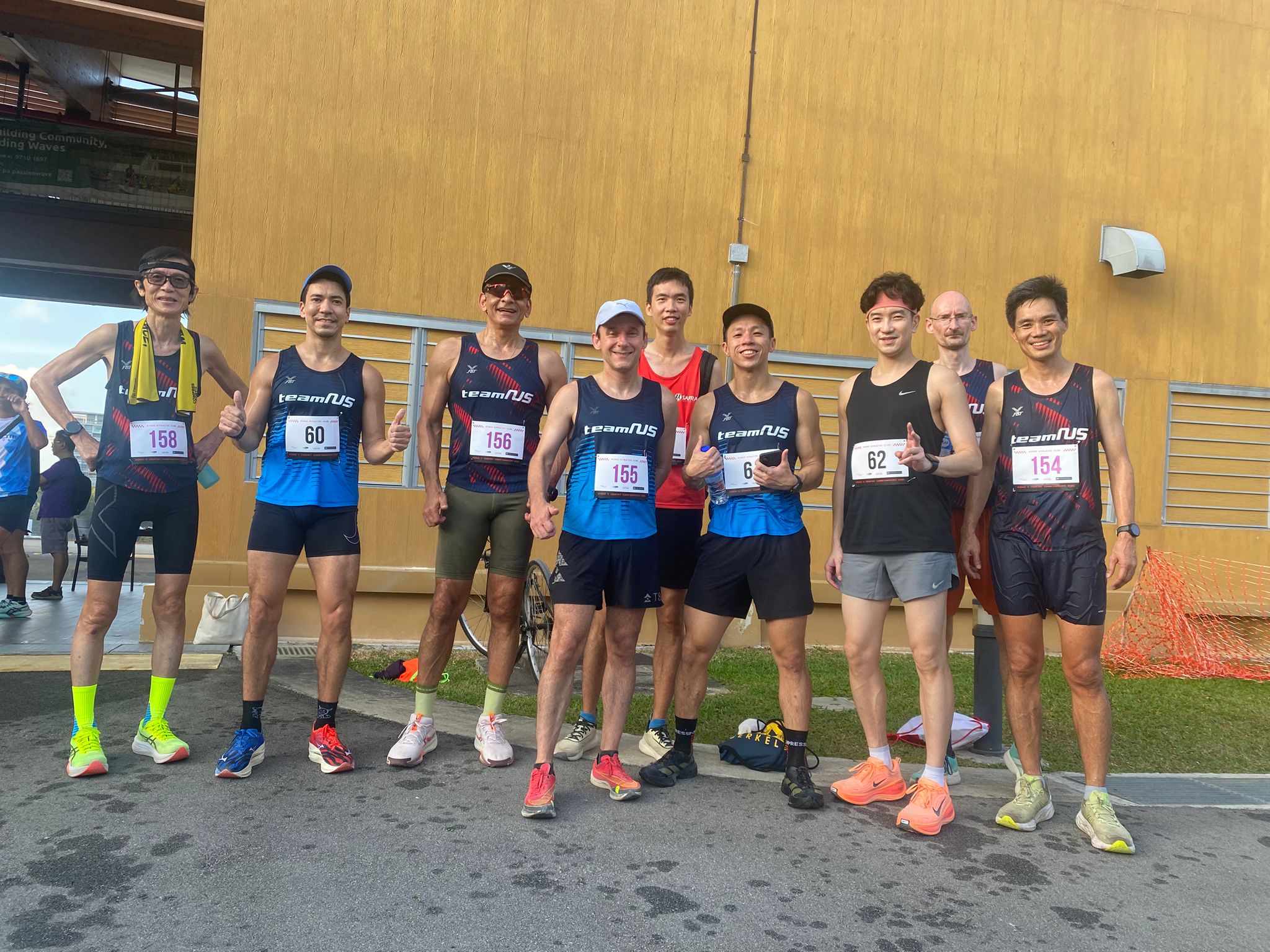
This Saturday, our staff running group saw two teams, our Men’s Open and Men’s Masters teams, compete in the Wings Cross Country Championships 2026 at Bedok Reservoir. For our runners, it was a great experience to compete with the running elite in Singapore. Unexpectedly, despite competing against the best clubs in Singapore, our Masters team even won the Bronze medal, which made it an even more memorable event!
HIGHLIGHTS FOR WEEK OF 2 – 8 FEBRUARY 2026
Activating the NRF2 transcription factor
Many years ago I was greatly inspired by a research paper by Gerald Shulman’s group at Yale. His lab developed a liver-selective mitochondrial uncoupler drug. His group developed a prodrug that is normally inactive, but can be converted to an active uncoupler by drug-metabolising cytochrome P450 enzymes, which are exclusively expressed in the liver. As a consequence, the active uncoupler only accumulates in liver tissue, thus avoiding on-target and off-target side effects in other tissues.
Most new ideas are inspired by other ideas. Hence, being fascinated by the uncoupler prodrug idea, I tried to come up with related research questions. For instance, one project that Ying Yee, an amazing UROPS student in our lab, conducted several ago was to develop a novel prodrug delivery system to kill tumor cells.
A major problem in conventional cancer therapy is dose-limiting drug toxicity. Although most anti-cancer drugs have some selectivity towards cancer cells, this selectivity is usually only partial and they commonly also affect normal cells to some degree. As a result, the doses of anti-cancer drugs that can be given to patients are often limited.
In Ying Yee’s project, we utilised 2-methyl-antimycin A as the prodrug of the cytotoxic complex III inhibitor antimycin A. The end goal of her project was to engineer a cytochrome P450 (CYP450) enzyme that can metabolically activate 2-methyl-antimycin A. The engineered enzyme could potentially be targeted to tumours via cell-based or adeno-associated virus (AAV) delivery systems.
Before trying to engineer such an enzyme, we had to ensure that 2-methyl-antimycin A is not cytotoxic before its conversion, as well as that endogenous human CYP450 enzymes in the liver do not activate 2-methyl-antimycin Ying Yee was able to confirm both of these prerequisites. She also found that expression of CYP450 enzymes in non-hepatic cells is in principle sufficient to mediate prodrug activation, without the need of cotransfecting CYP450 reductases, which appear to be expressed at sufficient levels in non-hepatic cells.
Sadly, engineering a CYP450 enzyme that could activate 2-methyl-antimycin A proved more difficult than expected. And when Ying Yee’s UROPS project ended, the project stopped there, too.
However, another attempt to establish a cytochrome P450-mediated prodrug system proved more successful, and this is the subject (in part) of our most recent publication.
In the project, Mei Ying, who used to be a PhD student in our lab and now is a postdoc at Dana-Farber Cancer Institute, tried to find new prodrugs that could be activated in a liver-selective manner.
In our study, we focussed on the transcription factor NRF2 (short for Nuclear factor-erythroid 2-Related Factor 2). NRF2 has been shown to have beneficial effects in various human diseases and conditions. These include fatty liver disease and its more advanced form, nonalcoholic hepatosteatitis (NASH), which in addition to fat accumulation is characterised by inflammation of liver tissue.
Fatty liver disease and NASH are not only extremely common, they are also worrying because they often progress to liver cirrhosis, liver failure and liver cancer. Furthermore, they are often associated with insulin resistance.
NRF2 functions to induce the expression (via transcriptional activation) of different target gene families, including drug-metabolising enzymes, anti-inflammatory factors as well as enzymes involved in scavenging or detoxifying reactive oxygen species. Both anti-inflammatory and antioxidant mechanisms are likely to contribute to the beneficial effects of NRF2 activation in NASH. As such, many research groups and pharmaceutical companies have been trying to find new activators of NRF2.
Indeed, numerous NRF2 activators have been identified and developed, most of which work by inhibiting its negative regulator, the E3 ubiquitin ligase KEAP1.
Yet, the therapeutic strategy of NRF2 activation has proved difficult to translate into the clinic. This is because activating NRF2 can also have unwanted negative consequences. As we wrote in our original paper:
“… NRF2 activation is known to promote tumorigenesis as well as mediate chemoresistance. Inactivating mutations in KEAP1 or activating mutations in NRF2 are frequently found in a number of cancers, including cancers of the lung, gallbladder, and liver. While generally cytoprotective, NRF2 activators can also exert important other adverse effects. For instance, NRF2 activation has been reported to promote hypertension in diabetic mice via the transcriptional induction of angiotensin and angiotensin-converting enzyme in renal proximal tubule cells. Nrf2 activation in regulatory T cells has been shown to promote regulatory T cell loss and to induce an autoinflammatory phenotype in mice. NRF2 has also been reported to play an important role in regulating hematopoietic stem cell quiescence. In addition, electrophilic NRF2 activators are also likely to have off-target effects by reacting with other target proteins with reactive cysteine residues.”
What these studies suggest is that long-term treatment with NRF2 inducers can promote tumor formation, as well as lead to unwanted side effects in different tissues. Indeed, a clinical trial for the treatment of patients with type 2 diabetes and chronic kidney disease with the Nrf2 activator drug bardoxolone methyl was interrupted prematurely because of an increased incidence of adverse cardiovascular events and death in trial participants.
As such, the challenges associated with developing NRF2 activators are similar to mitochondrial uncouplers, which also have great potential in the treatment of obesity and fatty liver disease, but which at the same time can cause toxic side effects.
Hence, in our project, Mei Ying set out to identify compounds that are inactive in inducing NRF2 activation on their own but that can be activated by hepatic CYP450 enzymes. And it was a very exciting moment when she succeeded to find a number of such compounds!
Specifically, as shown in the figure below, Mei Ying found that three compounds, 3-methylphenol, 2-tert-butylphenol and 3-tert-butylphenol, induced the expression of NRF2 after preincubation with rat liver microsomes (i.e. liver endoplasmic reticulum particles that contain CYP450 enzymes). These compounds were inactive without prior activation (not shown in the figure). Moreover, the prodrugs were only activated when the CYP450 co-substrate NADPH was added during the preincubation with liver microsomes.
The three prodrugs are converted into the active compounds 4-methylcatechol (4-MC) and tert-butylhydroquinone (tBHQ), respectively. As expected, the figure also shows that 4-MC and tBHQ themselves activate NRF2 without requiring NADPH-dependent preactivation.
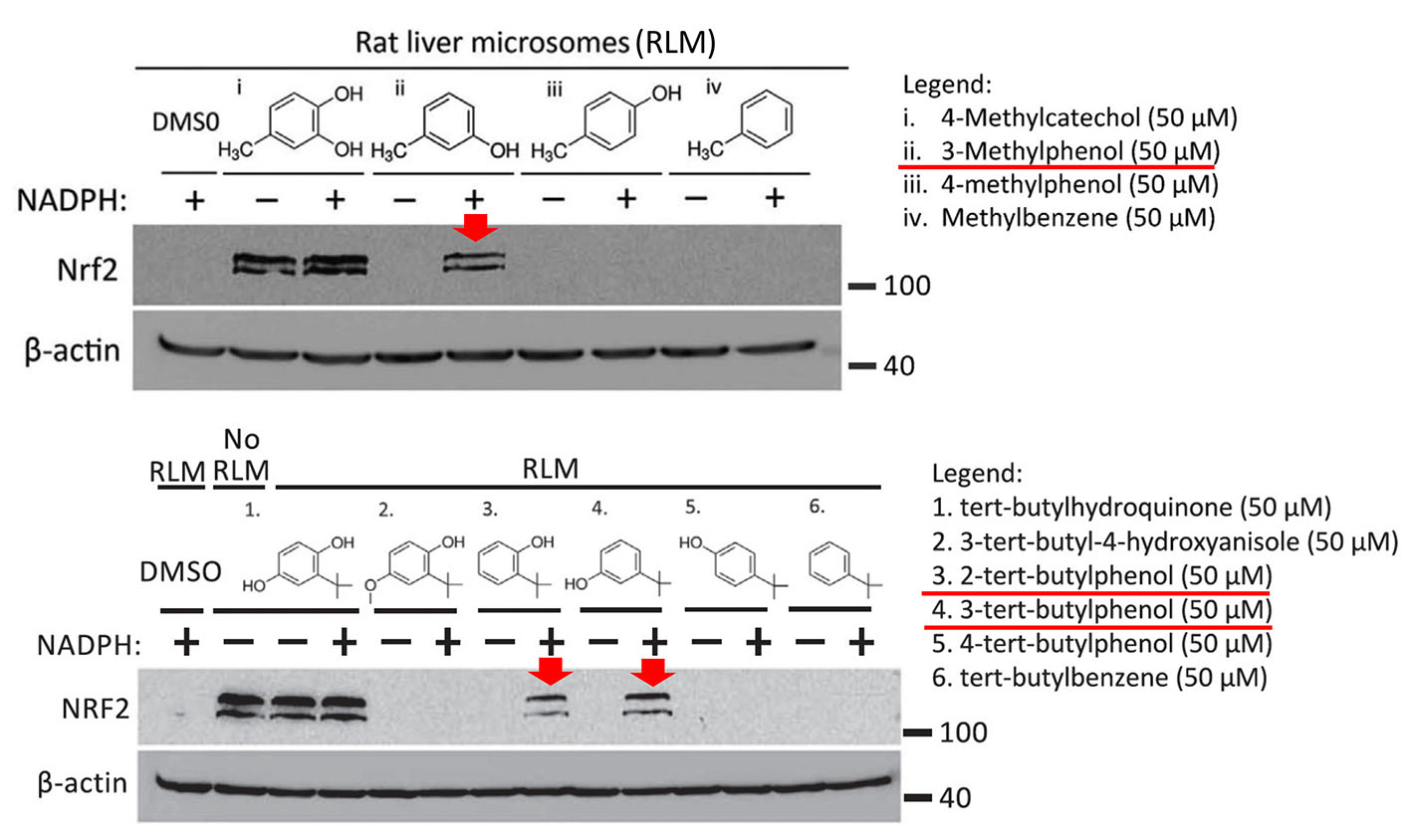
In the shown experiments, HEK293T cells were treated for 4 h with the known NRF2 activator 4-methylcatechol (top panel (i)), or the indicated prodrug analogs of 4-methylcatechol (ii, iii, and iv). In the bottom panel, cells were treated with another NRF2 activator, tert-butylhydroquinone (1) or its prodrug candidates. Prior to the cell treatment, all drugs were preincubated with rat liver microsomes (containing CYP450 enzymes) in the presence or absence of the CYP450 co-substrate NADPH. The results suggest that the prodrug candidates indicated with the red arrows were converted to their active metabolites.
Cytochrome P450 enzymes utilise oxygen as a co-substrate. Given that our experiments were conducted at an atmospheric oxygen concentration of 21%, one valid question is whether the CYP450-mediated prodrug activation also occurs under physiological conditions in vivo, where the oxygen concentrations are much lower. For instance, the physiological oxygen concentration in the liver is only around 4%.
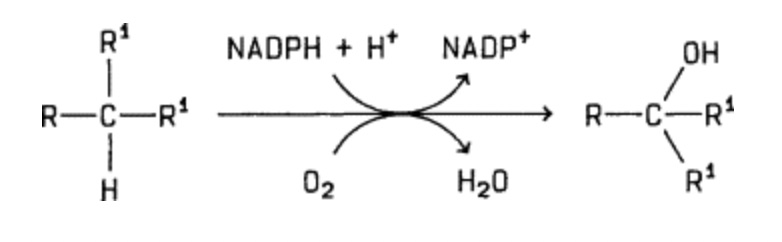
General reaction of CYP450-catalyzed hydroxylases to catalyse substrate hydroxylation
While we did not address this question in our study, it appears likely that the reaction does happen in vivo, given that CYP450 enzymes normally operate under these conditions. Indeed, CYP450 enzymes are known to have a rather high affinity for oxygen.
However, more significantly, upon activation of our prodrugs via hydroxylation, the activated quinol compounds (4-methylcatechol (4-MC) and tert-butylhydroperoxide (tBHQ)) need to undergo a further autooxidation to be able to bind to and inhibit the E3 ubiquitin ligase (i.e. KEAP1) and induce NRF2 expression. This autooxidation gives rise to reactive quinones, and importantly, is also oxygen-dependent.
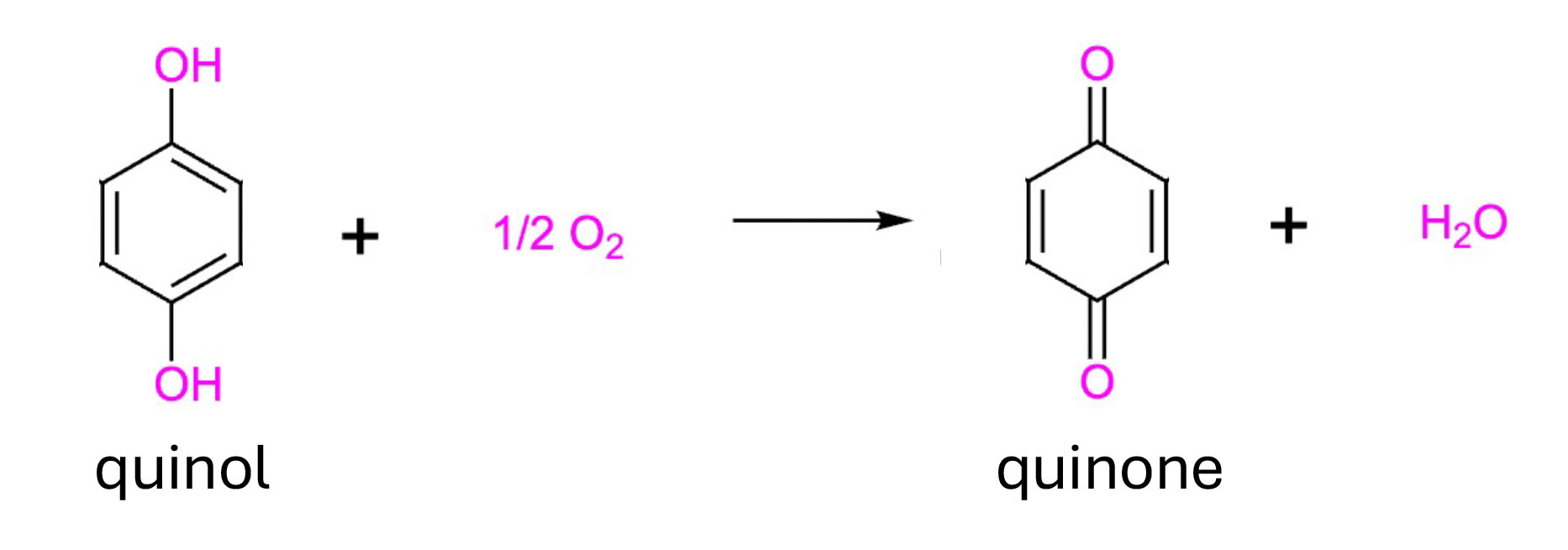
Oxygen-dependent autooxidation of quinols
The activated quinols react with with their KEAP1 target by forming covalent bonds with cysteine residues, leading to protein inhibition.
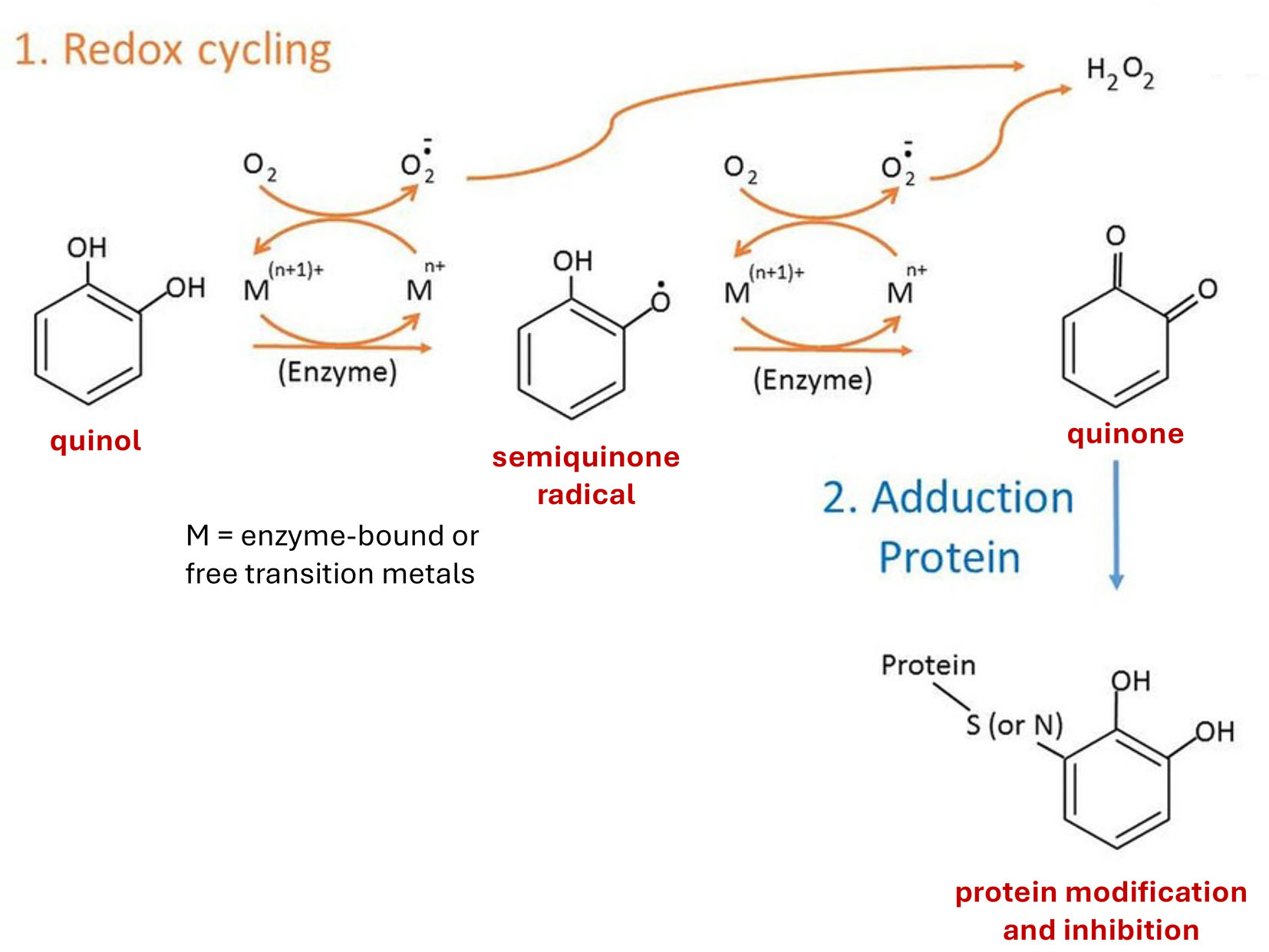
Autooxidation of catechol quinol and covalent binding to reactive cysteines in proteins (Figure derived from Chen and Li (2019))
Given that the autooxidation of our activated quinol compounds is oxygen dependent, we compared the ability of the compounds to induce NRF2 in normoxia versus hypoxia. We noted that both 4-MC and tBHQ had a markedly reduced activity in hypoxia.
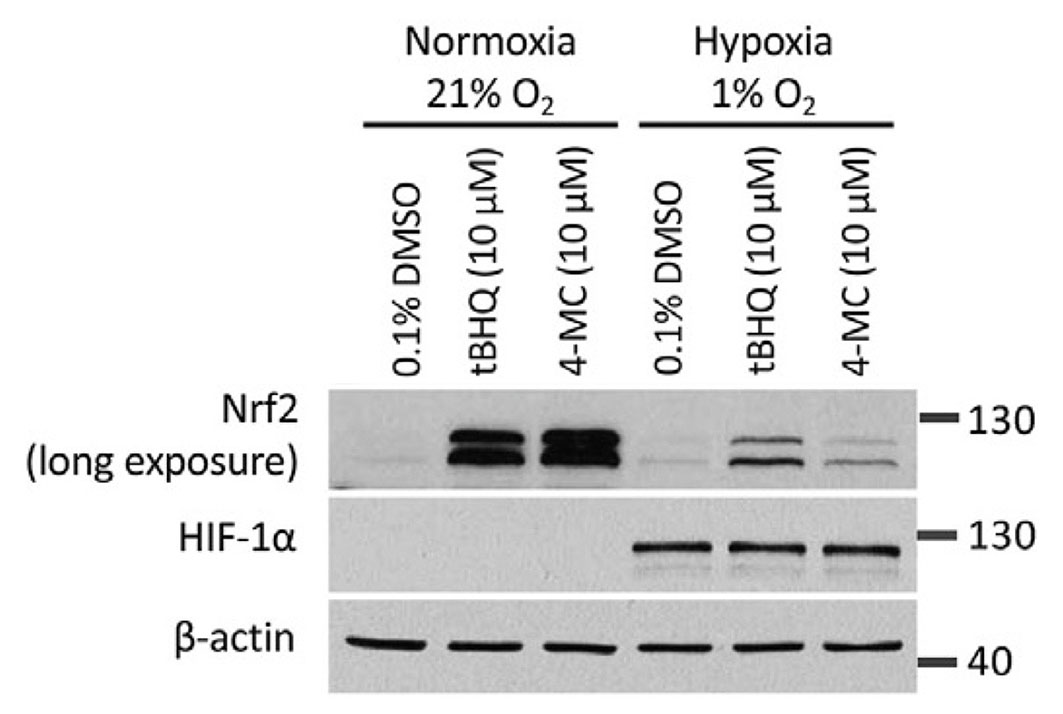
In the experiment, HEK293T cells were treated with 4-MC and tBHQ for 4 hours under normoxic (21% O2) or hypoxic (1% O2) conditions and the abundance of NRF2 was determined by Western blotting. The abundance of HIF-1α protein levels was measured as a control for the induction of hypoxia.
What is more, even under condition of so-called physioxia, i.e., an oxygen concentration of 4%, which is in the range of the normal oxygen concentration found in the organs in our body, both compounds had a lower activity compared to an atmospheric oxygen concentration of 21%.
We next wanted to know whether the oxygen dependence is indeed a consequence of the need of these compounds to undergo autooxidation. Towards this end, we utilised 4-methyl-1,2-benzoquinone, the oxidised active metabolite of 4-MC.
Given that 4-methyl-1,2-benzoquinone is already active and does not require oxygen-dependent autoactivation, we expected that the compound would show a similar activity in both normoxia and hypoxia. However, unexpectedly, the activity of 4-methyl-1,2-benzoquinone was also dramatically inhibited in hypoxia.
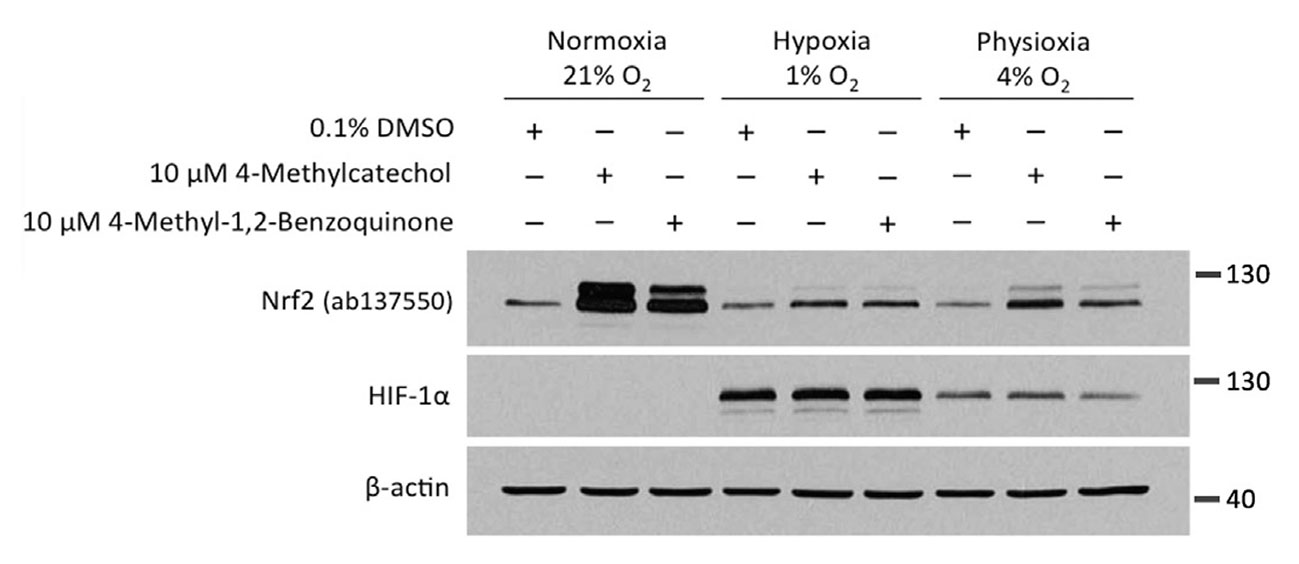
In the experiment, HEK293T cells were treated with 4-MC and its active metabolite, 4-methyl-1,2-benzoquinone, for 4 hours at oxygen concentrations of 21%, 4%, or 1%, followed by Western blotting for NRF2 and HIF-1α.
This result suggested that the low activity of 4-MC (and presumably of tBHQ) in hypoxia may not be due to a lack of autooxidation. In further support of this, when measuring the oxygen dependence of the quinol autooxidation reaction, we found that it still proceeds at a normal rate at an atmospheric oxygen concentration of 1% (i.e. in hypoxia).
Most importantly, we found that other NRF2-inducing compounds that function via a similar mechanism as 4-MC and tBHQ, but that do not require autooxidation, also have a markedly lower activity in hypoxia.
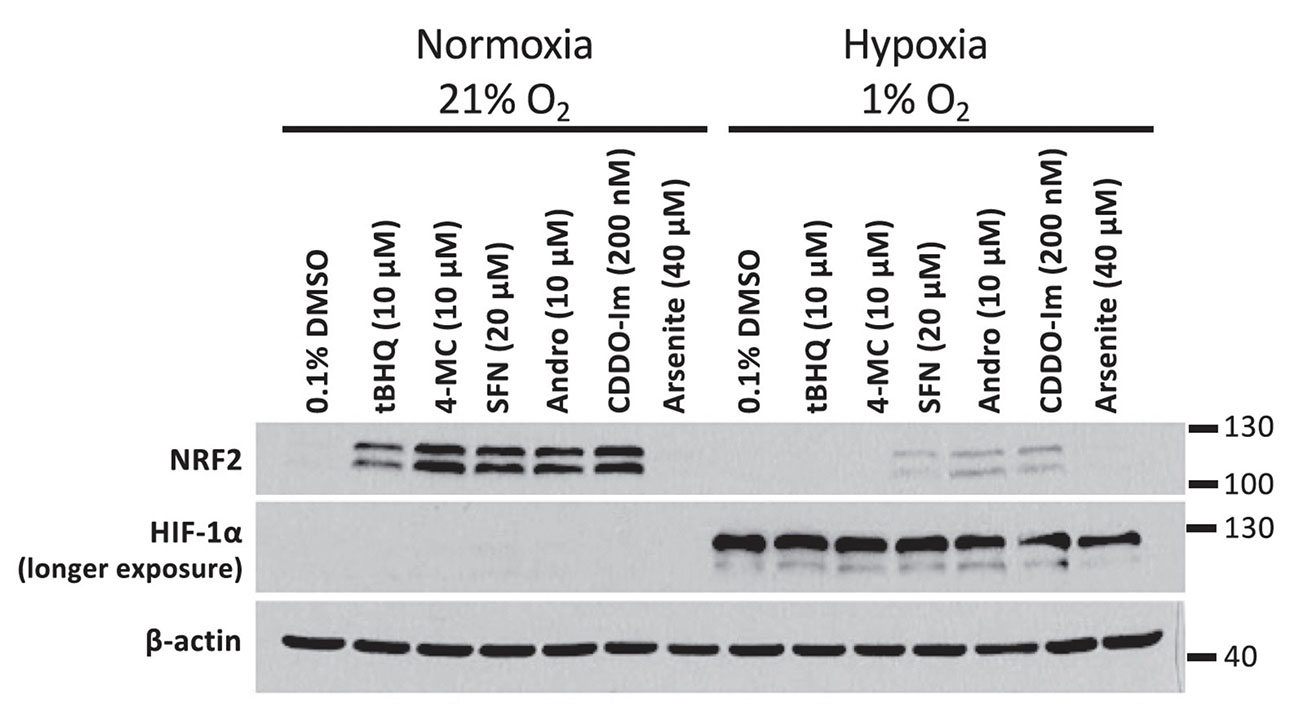
The inhibition of NRF2 activation by hypoxia is not limited to 4-MC and tBHQ, but was also observed upon incubation of HEK293T cells with other NRF2 activators: SFN = sulforaphane, Andro = andrographolide, and CDDO-imidazole.
Taken together, we thus concluded that hypoxia must inhibit NRF2 activation by 4-MC and 4-methyl-1,2-benzoquinone as well as various other compounds via an entirely different mechanism.
Naturally, we also tried to elucidate what this mechanism is. In the course of these studies, we managed to rule out various potential mechanisms, including a change in the cellular redox state or inhibition of NRF2 translation due to lack of ATP in hypoxia or mediated by hypoxia-sensitive pathways such as mTORC1 or the unfolded protein response.
When we finally measured the rate with which the NRF2 activator compounds bind to the most reactive cysteine in KEAP1, Cys151, we found that this rate is lower under hypoxic conditions, both in cells and under in vitro conditions. The mechanistic basis for the different rates in normoxia versus hypoxia are, however, currently not clear. And so I am currently actively searching for potential mechanisms!
What are the implications of our findings? Firstly, they suggest that NRF2 activators might have low activity in tumors, which are commonly hypoxic. This is significant because NRF2 is not only beneficial and cytoprotective in normal cells, but also in cancer cells. In fact, NRF2 activation, often as a consequence of loss of function mutations in KEAP1, is a hallmark of some types of cancer, most notably lung cancer.
Therefore, our results suggest that the tumor-promoting effects of potential long-term treatment with NRF2 activators may be less of a concern when considering NRF2 activation as a treatment strategy for chronic diseases such as NASH.
Second, the results imply that it is important to take into account the effect of the oxygen concentration when evaluating any new NRF2-inducing compounds. In other words, pharmaceutical companies or labs developing new NRF2 activators would be well-advised to test their compounds at physiological oxygen concentrations present in the tissues in our body as well as at low oxygen concentrations found in tumors.
HIGHLIGHTS FOR WEEK OF 26 JANUARY – 1 FEBRUARY 2026

Goals for 2026
As discussed in last week’s post, last year I tried to focus on accomplishments and achieving ambitious goals. However, not only did I fail, but I also realised that planning to do too many things is not helpful when trying to live a happy life.
As such, my main goal this year is to live a happier and more meaningful life, by firstly committing to less. This may be difficult, given the number of things to which I have already committed. Nonetheless, I will try to maintain a focus on the things that are most meaningful for me.
Secondly, I want to become a become a more flexible person who is able to accept and embrace change, which normally goes contrary to my preference for routines and predictability.
I have always found it difficult to change my plans. Even as a child, when I had planned to play a game by myself, I found it hard to accept other kids who wanted to join in.
For all my life, I have also found it a challenge to be flexible after I start something and realise that things do not go according to my plan. For instance, during my Christmas holiday at my parents home in Germany, I encountered difficulties accessing some websites while doing my morning work routine. Instead of staying calm and waiting to re-visit the problem at a later time, I panicked and insisted on trying to solve the problem immediately, eventually switching on data roaming and hotspot Wi-Fi sharing. This led to SingTel quickly charging me over 500 dollars for the service. Thankfully, SingTel subsequently waved the charges. But the incident still caused me much self-inflicted emotional agitation.
When reading an interesting post by behavioural analyst Amy Sippl, I realised that I lack two “key characteristics of flexible thinkers”:
The ability to adapt to unexpected changes. Flexible thinkers can switch gears when plans change or routines are disrupted.
Comfort with trying new strategies or ideas. Flexible thinkers are also more willing to experiment with creative solutions and step outside their comfort zone.
Of course, it is easy to tell myself to be more flexible. However, the main difficulty is usually not figuring out what we should do, but knowing how to do it. Most people know what their weaknesses are, but they lack the knowledge of how to overcome them.
As such, I was interested in Amy Sippl’s suggestions to practice flexibility.
Firstly, there are common recommendations, such as to make back-up plans in case things do not go according to plan, and learning to not fear unfamiliar situations or new challenges by viewing mistakes as learning opportunities. However, the real problems for me typically arise when the contingency plans also fail. Moreover, the problem is not that I do not know that change is good, but that I lack the mindset to welcome and embrace change.
One way to look at uncertainty and change is that they are the normal states in the world and in our lives. There is continuous progress in the world, and this affects every part of our lives. Everything we own is constantly getting older and is getting out of fashion or demand. The same is true for our physical state and our skills and capabilities. As such, it does not make any sense to hold the expectation that what we experience today will also be true tomorrow.
What else could I actually do to become more ready to adapt to unexpected changes?
One approach is to consciously introduce change into my daily life. One example is my recent new practice to take the bus (or buses) in the morning instead of the subway. This has added uncertainty to my morning journey because unlike the train, which I can count on to arrive every 3 or so minutes, buses tend to not come at fixed times.
As an added benefit, taking the bus has made my morning rides so much more calm and enjoyable because I get to sit and watch the outside peacefully (especially because I usually go to work early when the buses are still empty!).
Amy Sippl suggests using change cards to introduce controlled disruptions. These days there are of course digital versions, such as random reminder apps that I could use as prompts to change what I am currently doing or to take a break.
After considering this approach, I eventually decided against it because I feel that it would affect my ability to enjoy my work.
What beliefs are stopping me from being able to calm down in the moment and stay with the uncertainty, or consider doing something that I had not planned?
There is my belief that without being certain, I won’t be able to think of anything else and remain productive.
There is the belief that I won’t get done what I had planned, which will spiral down to messing up all my plans.
There is also my belief that if I have planned something in one way, I have to complete it in this way.
Finally, here is the belief that by changing my plans, I will miss out on enjoyment (even though the disruption has already spoilt my ability to enjoy what I am doing.
What would it take to change these beliefs?
I could focus on thinking about how important what I had planned really is and how I can achieve the outcome in a different way.
I could focus on considering what I could potentially gain by changing my plan instead of thinking about what I might lose.
I could even try to come up with positive aspects about changing my plan.
Based on this, I came up with a Three-step plan that I will try to follow in the future:
1. How important is what I had planned?
2. If it is important, how can I achieve the goal in a different way?
3. What is a positive aspect of changing my plan?
Finally, my last goal for the coming year is to derive more joy from being, as opposed to from having and achieving stuff, and from doing good things for others, as opposed to for myself.
With regards to this last goal, I have already observed a major change as a result of having managed to resist my daily urge and habit to check out music and record websites.
This has led to two consequences. The first is the gradual disappearance of the urge to visit these websites. It reminds me of what some (although not all) Australian teenagers felt a short while after their social media ban took effect – a sense of freedom.
The second consequence is the gain of time, which has allowed me to go home on time and start the next day earlier. I hope that this trend will continue! There is some reason to believe so because positive experiences tend to reinforce newly gained habits.
HIGHLIGHTS FOR WEEK OF 19 – 25 JANUARY 2026
My 2025 goal review
I started 2025 with three main goals on my mind. My first goal was to accomplish things, in order to “have something to show for all the things that I have been learning and improving”. In fact, my original goal for the last year was to accomplish one major achievement that I could add to my CV every month.
Secondly, I wanted to increase the visibility of the things that I have been doing, specifically in the area of education. My main strategy to achieve this was supposed be to establish a LinkedIn presence.
Finally, I wanted to make progress towards my long term goals, such as coaching in athletics, health or pedagogy, and making an impact in society, for instance through outreach.
Sadly, overall I have failed in all three goals.
Although I have achieved some things (publishing a paper and finally publishing my book on education!), I got nowhere close to one achievement per month.
Publishing a research paper and especially a book is without much impact, unless I work on making them visible, which highlights why my second goal is so important. However, I ended up doing literally nothing towards this goal.
Finally, I also did not make huge progress towards my third goal, pursuing my long term goals. On closer scrutiny, I did manage to do something – I made some progress in developing and starting to implement an idea for an interesting outreach activity. Moreover, part of the reason for lack of progress in other areas were factors that were out of my control.
Nonetheless, the main reason for not achieving most of my goals last year was the lack of one important resource: Accomplishing things takes time!
Ironically, when I set my goals one year ago, I also emphasised:
“There are various ways in which I do not want to experience pursuing my goals and doing my work. I do not want to be in a constant fight with my time to get all the things done I set out for myself. I do not want to feel pressured to finish all the work and worry that I may not complete it. I do not want to feel I lost control over all the tasks that I have to do. I do not want to feel that I need to have managed to complete a long list of things in order to call the day a good day. Instead, I want to do things because I enjoy them.”
And I concluded:
“Hence, in the new year I firstly want to focus on a limited set of tasks, so that the things I do become more enjoyable. Secondly, I want to focus on enjoying the process of creating and doing things, without worrying about the achievement of perfection.”
Looking back at the past year, I felt the happiest during the semester break when I spent my days intentionally only focussing on one goal at a time. However, as the year progressed, I gradually slipped back into the habit of trying to do too many things.
The reason is likely that it is hard to resist the temptation of starting on new projects. All it takes takes is moment in which I feel excited about a new idea and start committing to it. And before I know it, I have saturated my daily capacity, leaving little or no time to regenerate and enjoy my days, and sooner or later starting to feel stressed.
As such, my biggest lesson from 2025 is how important it is to limit my daily tasks.
HIGHLIGHTS FOR WEEK OF 12 – 18 JANUARY 2026
“Going Infinite” and Feeling Depressed
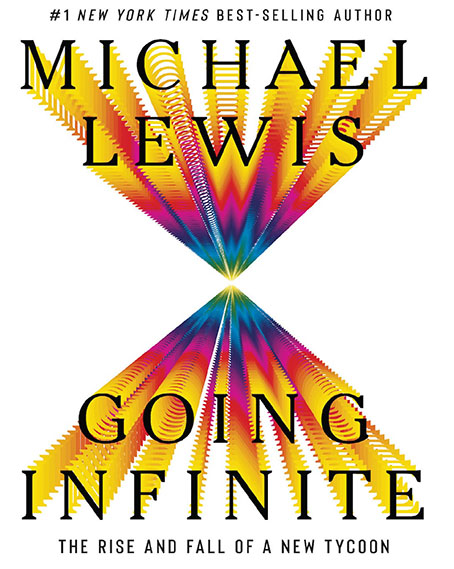
I am currently reading Michael Lewis’ “Going Infinite”, which is a book the crypto company FTX and its CEO, Sam Bankman-Fried. Because I have never been interested in crypto currency, I was skeptical that reading about someone who made billions of dollars through crypto would be of great interest to me.
However, learning about Sam Bankman-Fried turned out to be fascinating. I realised (thanks to Michael Lewis’ brilliant writing) that apart from being a convicted crypto criminal, he is also a one-of-a-kind person.
Sam grew up in an academic household, with parents who identified as utilitarians, who considered that “any law should seek not to maximize some abstract notion of freedom but rather the greatest good for the greatest number”.
Through his childhood, Sam was greatly influenced by these ideas in how he viewed the world. Michael Lewis quotes Sam as saying:
“When I was about 12 years old I was first becoming politically aware and started to think through social issues. Gay marriage was a no brainer—you don’t have to be a hardcore utilitarian to see that making people’s lives miserable because they’re completely harmlessly a little bit different than you is stupid. But abortion was nagging me a bit. I was pretty conflicted for a while: having unwanted kids is bad, but so was murder.
Then Sam framed abortion as a utilitarian might. Not by dwelling on the rights of the mother or the rights of the unborn child but by evaluating the utility of either course of action.
There are lots of good reasons why murder is usually a really bad thing: you cause distress to the friends and family of the murdered, you cause society to lose a potentially valuable member in which it has already invested a lot of food and education and resources, and you take away the life of a person who had already invested a lot into it. But none of those apply to abortion. In fact, if you think about the actual consequences of an abortion, except for the distress caused to the parents (which they’re in the best position to evaluate), there are few differences from if the fetus had never been conceived in the first place. In other words, to a utilitarian abortion looks a lot like birth control. In the end murder is just a word and what’s important isn’t whether you try to apply the word to a situation but the facts of the situation that caused you to describe it as murder in the first place. And in the case of abortion few of the things that make murder so bad apply.”
And then Michael Lewis concludes: “This was how Sam figured out who he was: by thinking about things for himself …”
And this made me think of how important this skill of thinking for ourselves is if we want to improve and succeed. Sam is a genius in Math and probably other areas as well. But one does not have to be a genius to think for oneself.
It made me think of my own journey of self-improvement, that always started with thinking about things I am not happy about, trying to think of the reason(s) and trying to think of possible solutions.
But I realised that it can also be applied to external spheres of my life.
It can be applied to politics, as Sam discovered as a boy when he went to a math camp. Michael Lewis writes:
“At math camp he had conversations with other people that resembled the conversations he’d been having with himself. When other kids spoke about politics, it wasn’t to express some dumb opinion. It was to figure out the best way to model elections and predict their outcomes. When they discussed their lives and how they might live them, they actually made sense to him. Math camp kids could think their way to a belief. “And if you can’t think your way to a belief, how can you think your way to an action?” asked Sam.”
When I thought about applying utilitarian principles to my teaching, I came to an important realisation. From a utilitarian standpoint, what matters most is not trying to make everyone happy (which I tend to worry about a lot), but striving to make an impact on the class as a whole.
Sam developed his own opinions about higher education while attending MIT. University is a place with unique potential to “encourage actions that lead to the greatest good for the greatest number [of people]”. Yet, this is not what Sam found. What he discovered was that “There was very little evidence that they [the professors] were doing much of anything to change the world. Or even thinking about how to have the most impact on the world.” And so Sam became disillusioned with academia.
Although much of what I see when I look around in my surroundings fits Sam’s description, I still maintain that there are great opportunities to make an impact. It is up to each individual to recognise this possibility and take action to produce results. And this of course not only applies to academia.

Over the past weekend I experienced something I normally rarely encounter – my mood has been depressed. It was probably not a very serious case of depression, because I still managed to do what I had planned. But it was more difficult than usual, and I did not enjoy it.
And so I have been wondering where this feeling suddenly came from. There is not way to be sure, but a potential reason could be some conflicting feelings that I have been experiencing.
I have been trying to increase my visibility by starting to record some pedagogy-related videos. While I initially felt very excited about the idea of charting my teaching journey over the coming semester through videos, I soon became depressed about the quality of my videos and my perceived inability to present an engaging narrative.
There are also conflicting feelings related to the new teaching semester. On the one hand, I want to try out new things (and know that I need to in order to stay relevant). At the same time, I feel afraid that I will fail putting my new plans into practice. Indeed, there are times when I feel like someone who does not really know what he is doing.
These are typical imposter syndrome feelings, and I have read and thought about this topic a lot. I have, for instance, learned that people who have these thoughts tend to be more successful because they try harder and make more conscious efforts. However, what helps me most is trying to remember that I am not my job or my accomplishments. There is no need to prove anything. Just being, enjoying life and trying is enough.
HIGHLIGHTS FOR WEEK OF 5 – 11 JANUARY 2026
Protein design
A few weeks ago I wrote about Pinal, the generative AI based protein design tool that can predict functional proteins from language instructions.
As also discussed in the post, I was keen to try out Pinal because it seems such an amazing, almost to-good-to-be-true, tool, and also because I could potentially use it in my teaching.
Over the past month, I have managed to actually design some novel proteins using Pinal, all thanks to my amazing colleague Xavier Chee.
Xavier is a new lecturer in our department, who used his coding expertise to set up the model on my laptop and write scripts to view the output.
Seeing what difference having some basic coding skills can make prompted me to commit to learning learn some basics of Python after the next semester and try a project (such as designing a decision tree-based teaching activity with the help of ChatGPT).
Having the Pinal tool up and running, I started by trying to design proteins that bind to glutathione with high affinity, because the ability of proteins to bind to glutathione is easy to evaluate in the lab.
I then evaluated some of the predicted protein sequences in detail, using various online tools described in the original paper by Dai at al. (2024).
Firstly, I was curious on how well the 10 sequence predictions provided by Pinal align with natural glutathione binding proteins. It turned out that the first design was more than 90% identical to human glutathione S-transferase A1 (based on NCBI protein blast). However, the other nine predicted sequences exhibited very low similarities to human glutathione S-transferases or to known glutathione binding proteins from other species (see the assessment of predicted protein novelty below).
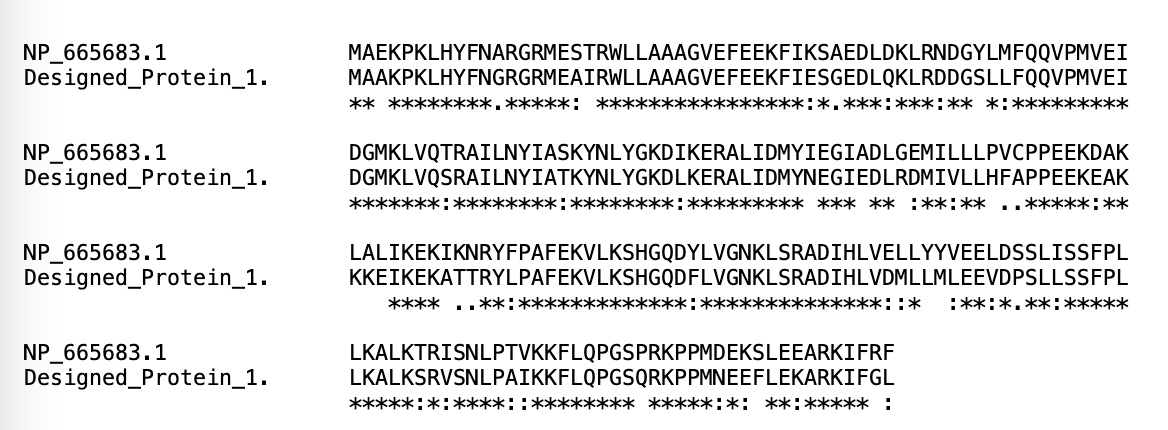
Alignment between human glutathione S-transferase A1 isoform 1 (NP_665683) and Pinal design 1 showed a more than 90% amino acid identity.
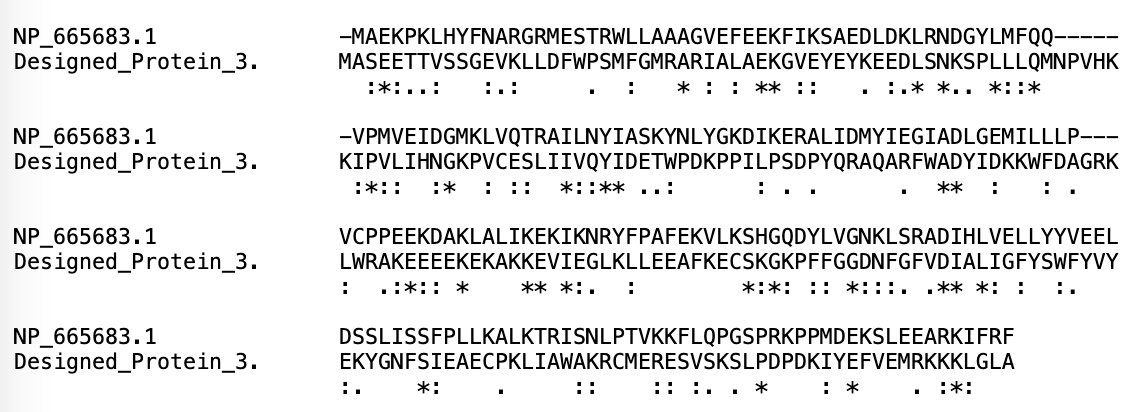
Alignment between human glutathione S-transferase A1 isoform 1 (NP_665683) and Pinal design 3 showed a low amino acid identity.
To assess protein foldability, I used AlphaFold 3, which not only predicts the protein structure based on the sequence input, but also provides measures of the likelihood with which the amino acid sequence folds into the predicted structure.
There is firstly the predicted local distance difference test (pLDDT). pLDDT measures the confidence in the local structures within the protein by assessing local distances between atoms and estimating how well they would agree with an experimental structure. As such, pLDDT provides confidence scores for individual residues and gives a value on a scale from 0 to 100 for each amino acid in a protein structure. According to Dai et al. (2024), pLDDT values above 70 are commonly considered to indicate high prediction confidence.
Secondly, there is the predicted aligned error (PAE). PAE estimates the distance error for every pair of residues. Thus, the PAE provides information about the relative accuracy between all pairs of residues. This is useful for measuring confidence in the relative positions of different protein regions. PAE is shown as a heatmap with amino acid numbers on both axes, where the colour indicates the predicted aligned error between a specific pair of amino acids. PAE values range from 0 – 35 Angstroms. According to Dai et al. (2024), PAE below 10 are commonly used thresholds indicating high prediction confidence.
As expected, given its high homology to human glutahione S-transferase, design 1 exhibited a very high foldability, with almost the entire sequence displaying pLDDT values above 90 and PAE values below 5.
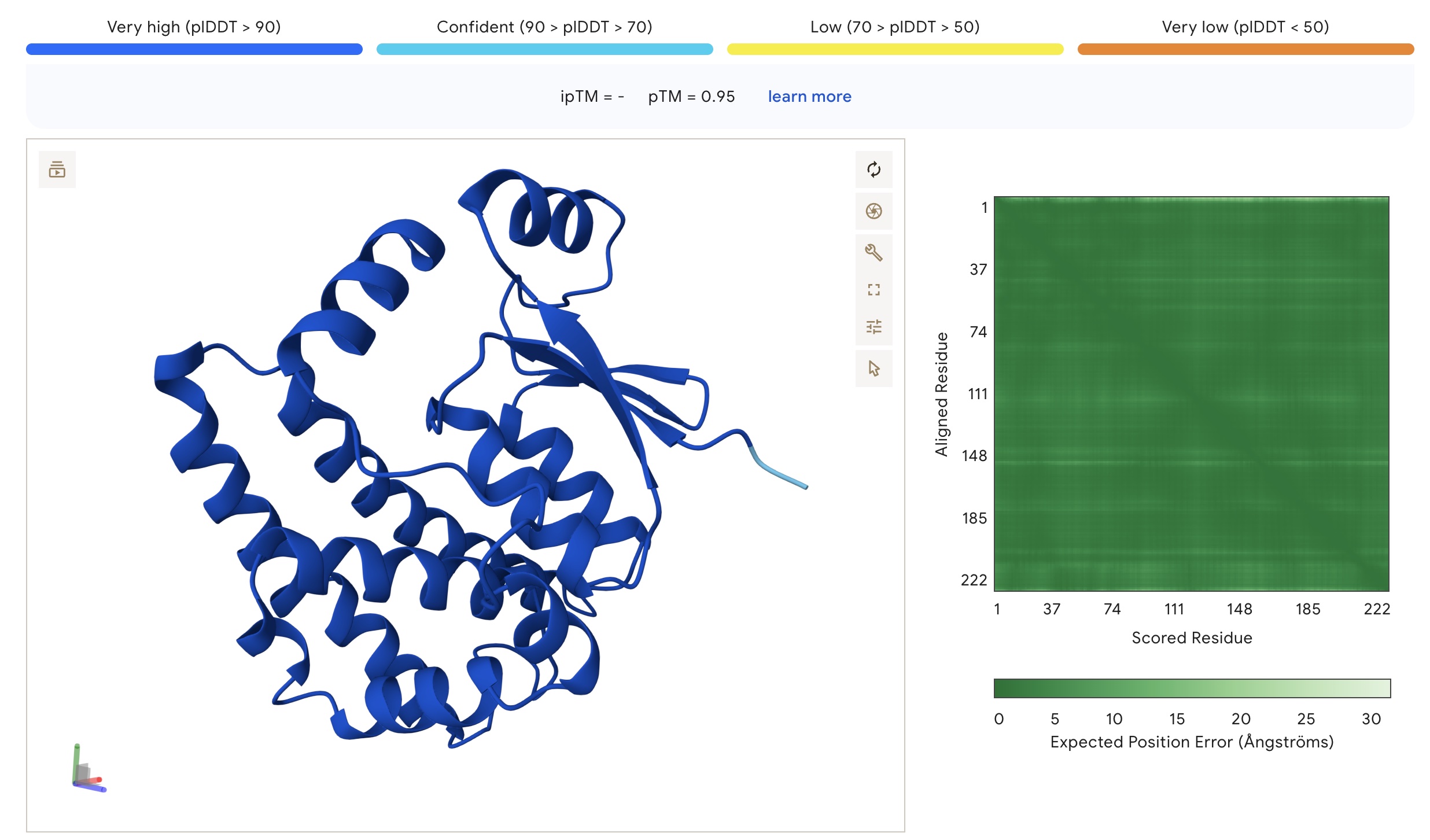
Foldability parameters of the structure of protein design 1 as predicted by AlphaFold
However, design 3 also gave pLDDT and PAE values that indicate high prediction confidence.
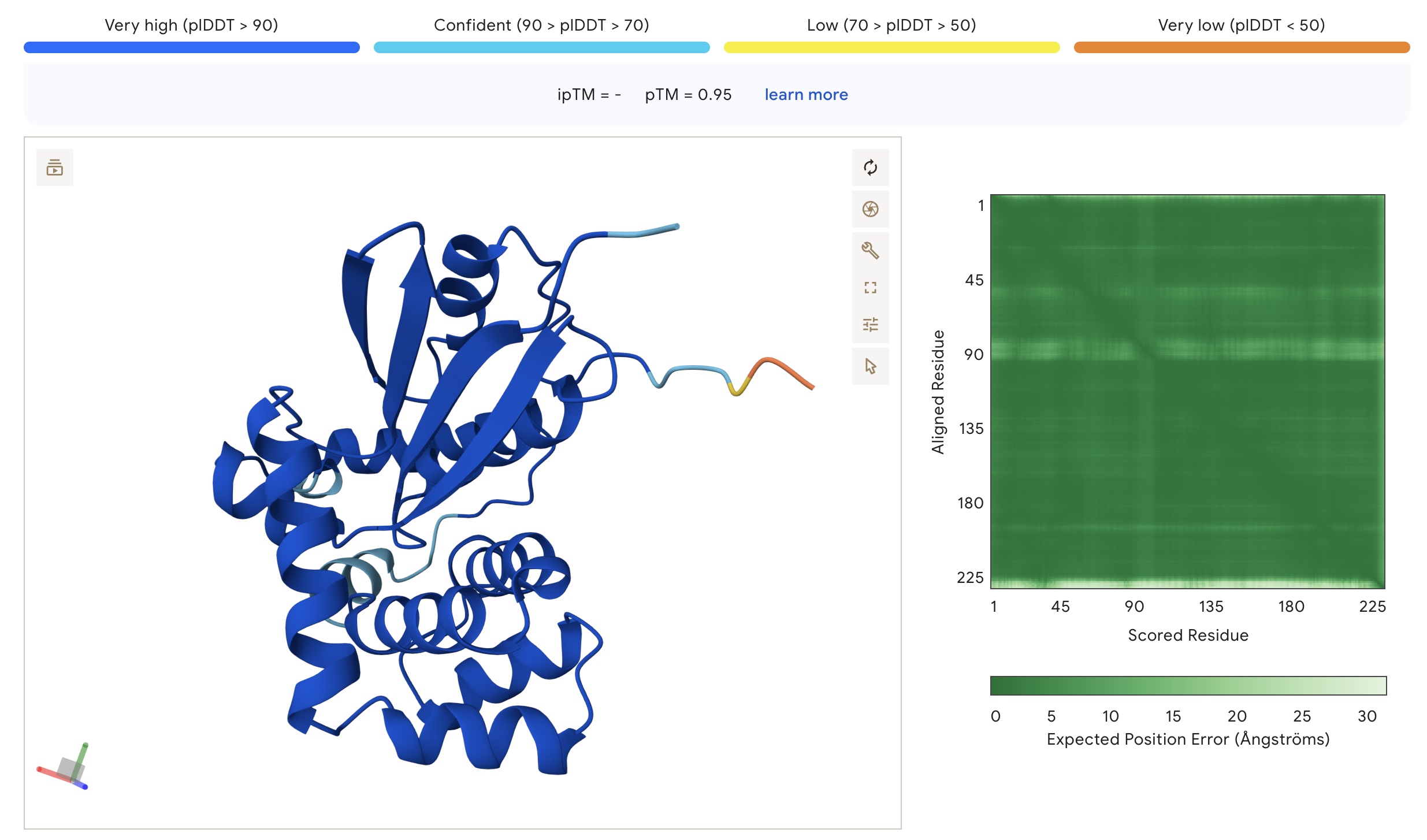
Foldability parameters of the structure of protein design 3 as predicted by AlphaFold
Not surprisingly, a structural alignment of human glutahione S-transferase A1 and design 1 using ChimeraX showed a nearly perfect match.
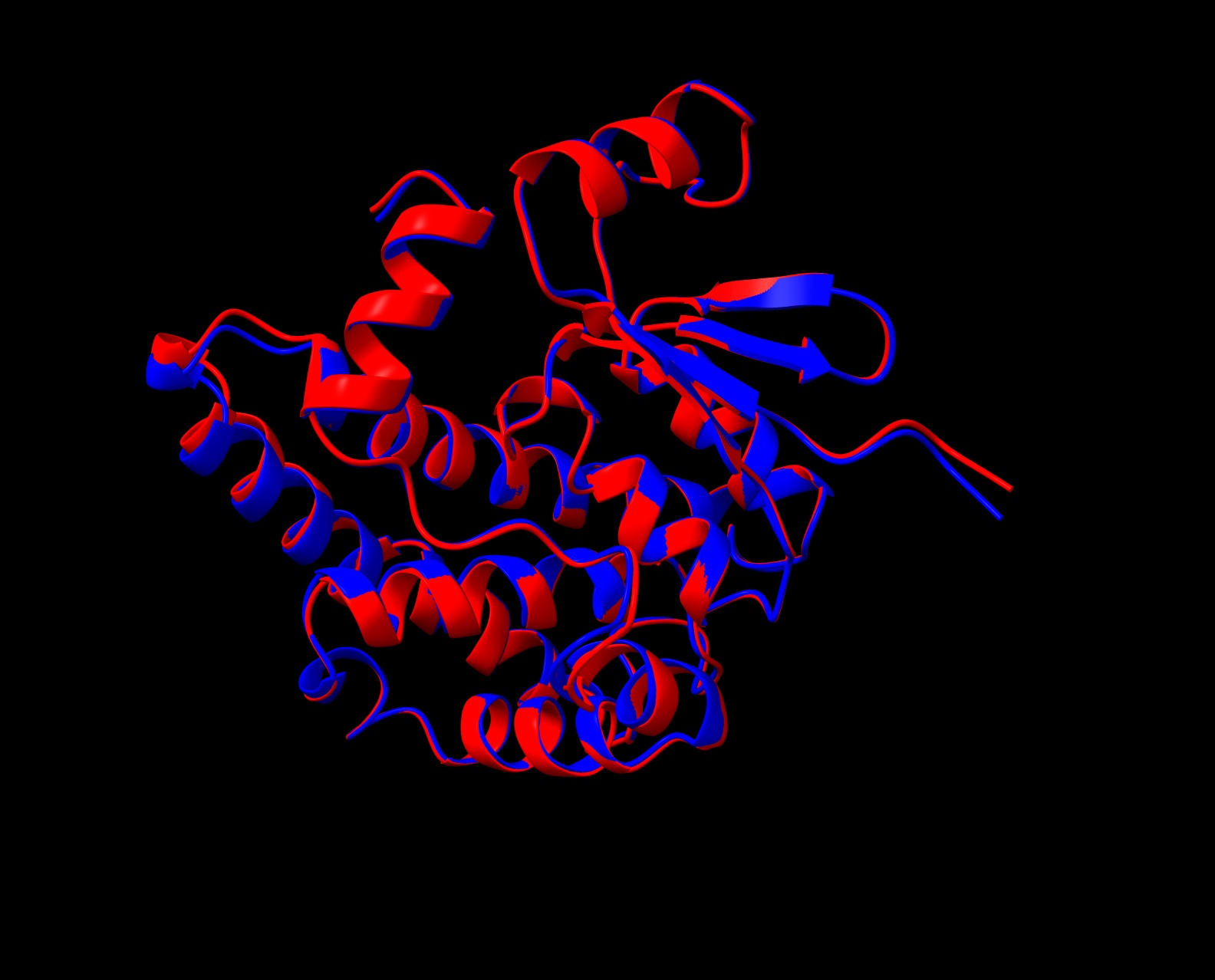
Comparison of the human glutathione S-transferase A1 predicted structure (red) and that of Pinal protein design 1 (blue) (using ChimeraX Matchmaker)
In contrast, design 3 has a very different 3D-structure from design 1, yet, exhibited good predicted foldability.
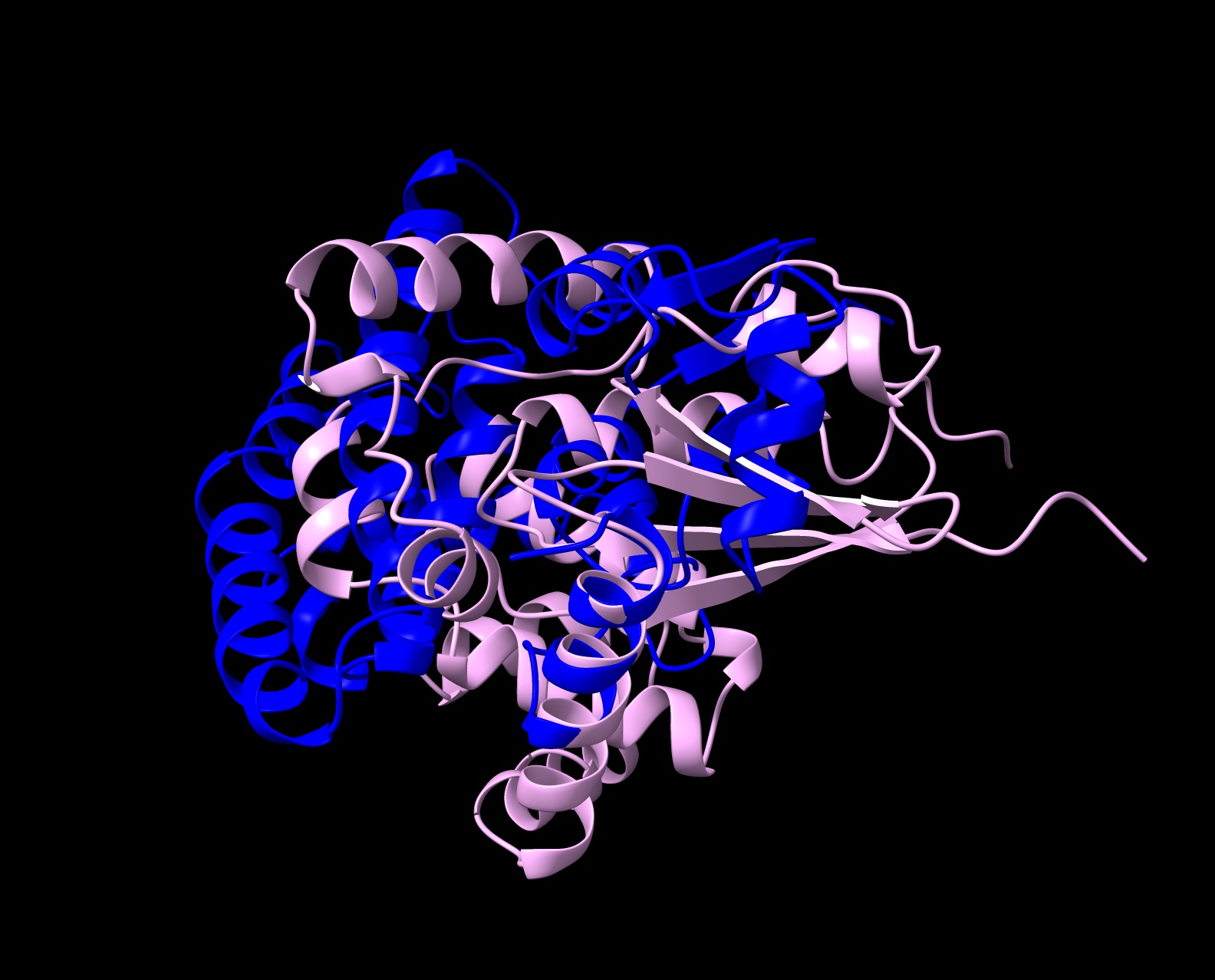
Comparison of GSH design 1 (blue) and 3 (pink)
I subsequently used designs 1 and 3 for further characterisations, first by using ProTrek.
As discussed in my previous post on Pinal, ProTrek is a tri-modal protein language model that can use either sequence, structure or text as both input and output. For instance, when using a given protein sequence as input, the tool allows one to assess the predicted function (textual output), find the closest matching structure among known proteins (structural output), and identify of the closest matching sequence of known proteins (sequence output).
When evaluating the sequence of design 1 as textual output, Protrek predicted the following function:
Design 1: Conjugation of reduced glutathione to a wide number of exogenous and endogenous hydrophobic electrophiles. Acts on 1,2-epoxy-3-(4-nitrophenoxy)propane, phenethylisothiocyanate 4-nitrobenzyl chloride and 4-nitrophenethyl bromide. Displays glutathione peroxidase activity with cumene hydroperoxide.
This result was expected, given the high homology of the design 1 sequence to human glutathione transferase.
However, design 3, despite its low sequence homology to known glutathione binding protein, gave a similar functional characterisation.
Design 3: In vitro, possesses glutathione S-transferase activity toward 1-chloro-2,4- dinitrobenzene (CDNB) and p-nitrobenzyl chloride (pNBC), and glutathione peroxidase activity toward cumene hydroperoxide and linoleic acid-13-hydroperoxide. May be involved in the conjugation of reduced glutathione to a wide number of exogenous and endogenous hydrophobic electrophiles and have a detoxification role against certain herbicides.
What is more, the matching score for design 3 was 18.89, which is even higher than that for design 1 (17.78).
Furthermore, when querying sequence to structure, highest match of design 3 was also a glutathione transferase enzyme (glutathione transferase Omega 3C from Trametes versicolor).
Finally, querying sequence to sequence confirmed that design 3 lacks close homology to known glutathione binding proteins. As the closest match to the sequence of design 3, ProTrek identified glutathione S-transferase from Arabidopsis (31.34% sequence identity).
In conclusion, based on the ProTrek characterisation, design 3 has a strikingly accurate functional annotation and is likely to function as a glutathione transferase enzyme, despite low conservation similarity in sequence and structure with to known glutathione tranferase enzymes.
Finally, I tried to address the novelty of design using the approach described by Dai et al. 2024, in which the authors compared the structure of the designed proteins, as determined by Alphafold, to known PDB structures. To achieve this, the authors used the TM score metric.
The TM score approach was developed as early as 2004 by Zhang and Skolnick. They defined the TM score, which stands for template modeling score, as an “an algorithm for protein structure alignment and comparison”.
The website interface allows the comparison of two structures (after converting the AlphaFold cif file output into a pdb file using openbabel).
When comparing Pinal’s GSH binding protein design 1’s structure, as predicted by AlphaFold, to the structure of the sequence-wise highly similar human glutathione S-transferase A1 , I obtained, as expected, a very high TM score of above 0.99, as well as a highly homologous structure, indicative of a near perfect match.
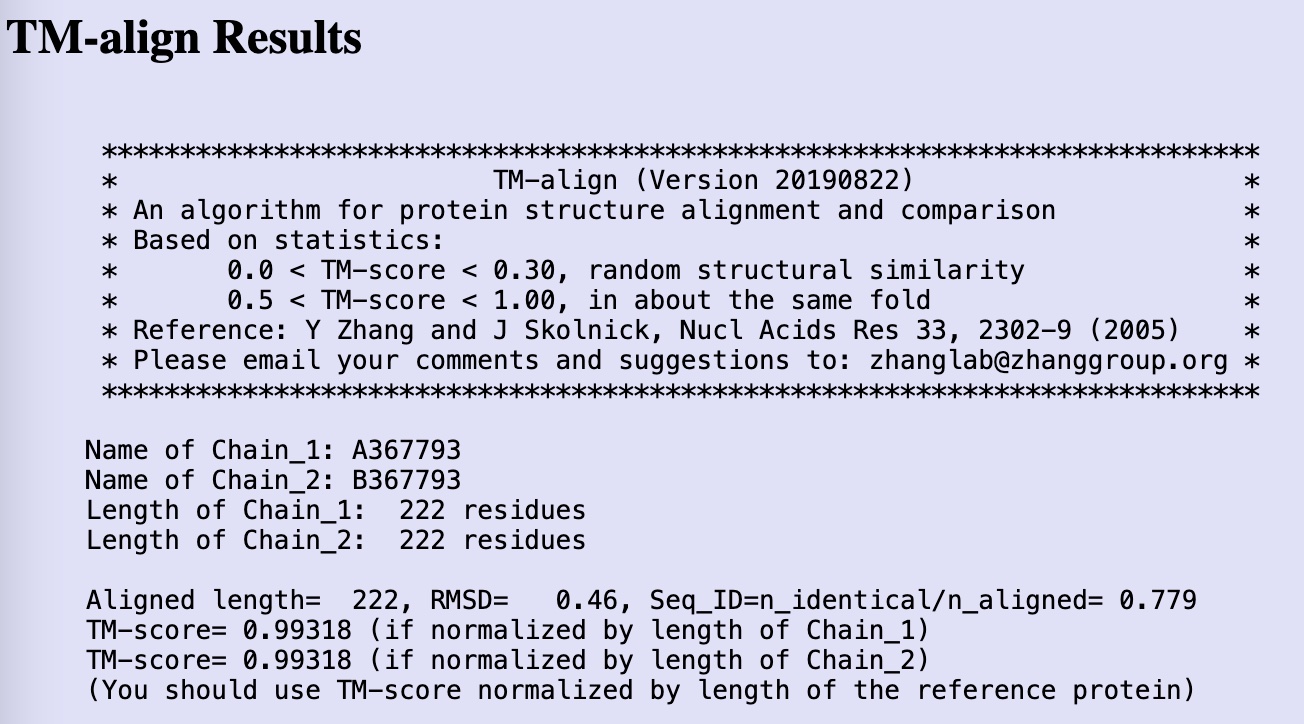

On the other hand, comparison between GSH binding protein design 3 and its closest structural match according to ProTrek, glutathione transferase Omega 3C from Trametes versicolor, gave very low TM scores.
According to the pdb structure of Trametes versicolor glutathione transferase Omega 3C (6SRB), the protein forms a homodimer.
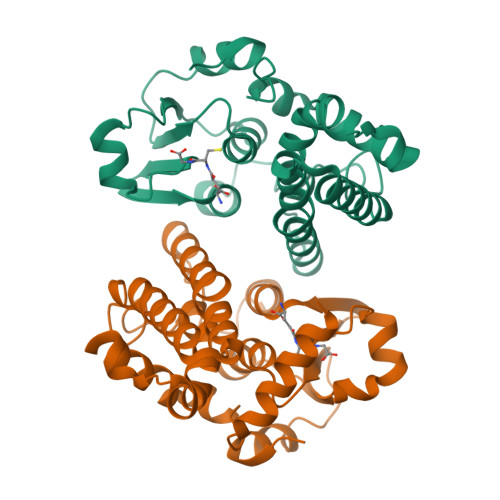
Pinal glutathione binding protein design 3 gave TM scores of 0.31 and 0.30 to the two chains of the homodimer, indicating a high diversion compared to its structurally most closely related protein, and thus representing a high novelty of the protein structure.
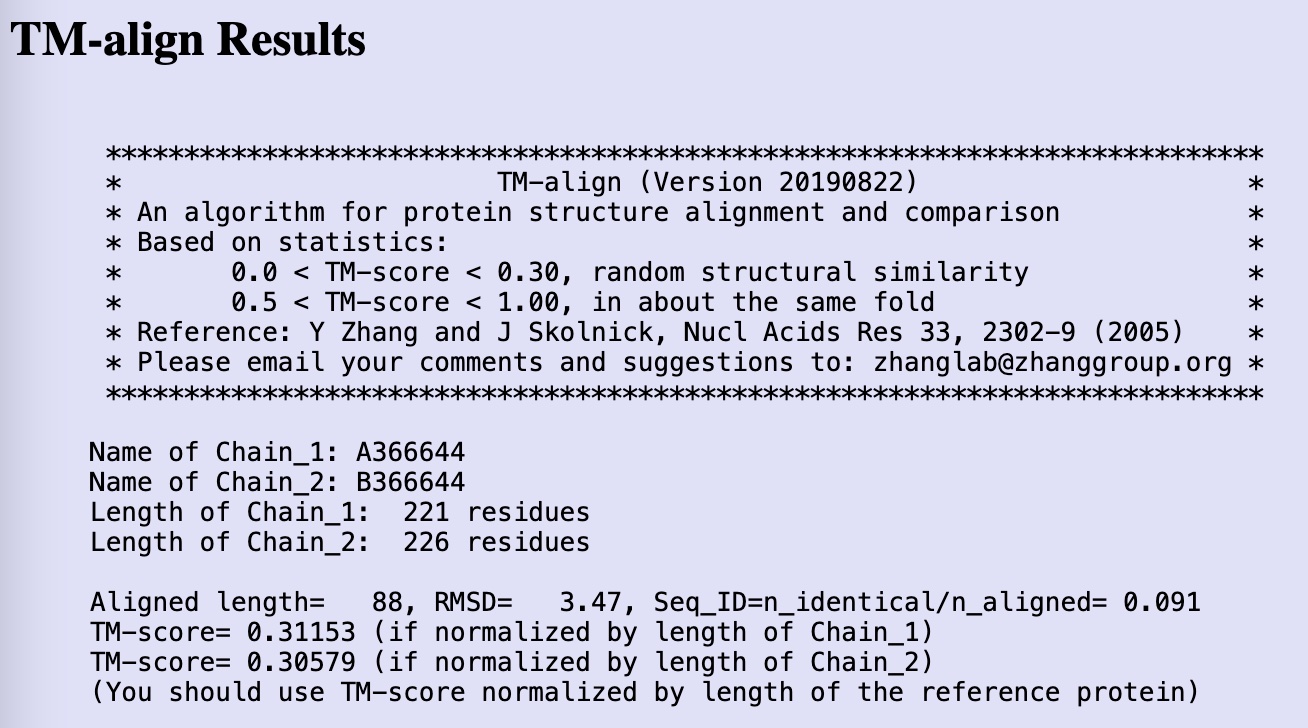
Therefore, overall, the overall bioinformatic evaluation of the design 3 sequence produced by Pinal suggests that the predicted protein is not only likely to function as a glutathione binding protein, but that it is also a highly novel protein that markedly differs from known proteins that carry out a similar function.
One caveat that I discovered, however, is that text-based instructions to restrict or define the amino acid number of the proteins to be predicted by Pinal were not successful.
What do I now do with all this?
One possibility is to use the tool in my research. However, the more exciting prospect is to utilise Pinal-based protein prediction and actual testing of predicted proteins in the lab for outreach activities. This is something that I have wanted to do for a long time.
As such, I have teamed up with the Young Educator in Science programme at NUS and their enthusiastic staff Kim Yong and Mei Ting, who are planning to develop the idea into a programme that hopefully lets MOE students experience what scientific discovery through testing new hypotheses in the lab can be like and that I can hopefully be a part of.
For older posts click HERE